You're probably somewhere between excitement and spreadsheet fatigue right now. You've found a venue you like, or maybe three, and the big question is whether keeping the ceremony and reception in one place will make the day feel smooth or make everyone stand around while the room gets turned over.
That's the part couples often miss at first. A ceremony and reception same venue setup isn't only about convenience. It's about what happens in the in-between. The vows end, guests clap, and then one of two things happens. People either flow naturally into the next part of the celebration, or the energy drops while everyone wonders where to go, what to do, and why dinner still isn't starting.
The good news is that same-venue weddings can work beautifully when the property, timeline, and transition are planned on purpose. The cocktail hour isn't just a pleasant extra. In many weddings, it's the working bridge that gives staff time to reset the space and gives guests a clear next step.
Table of Contents
- Why Couples Are Choosing One Place for Everything
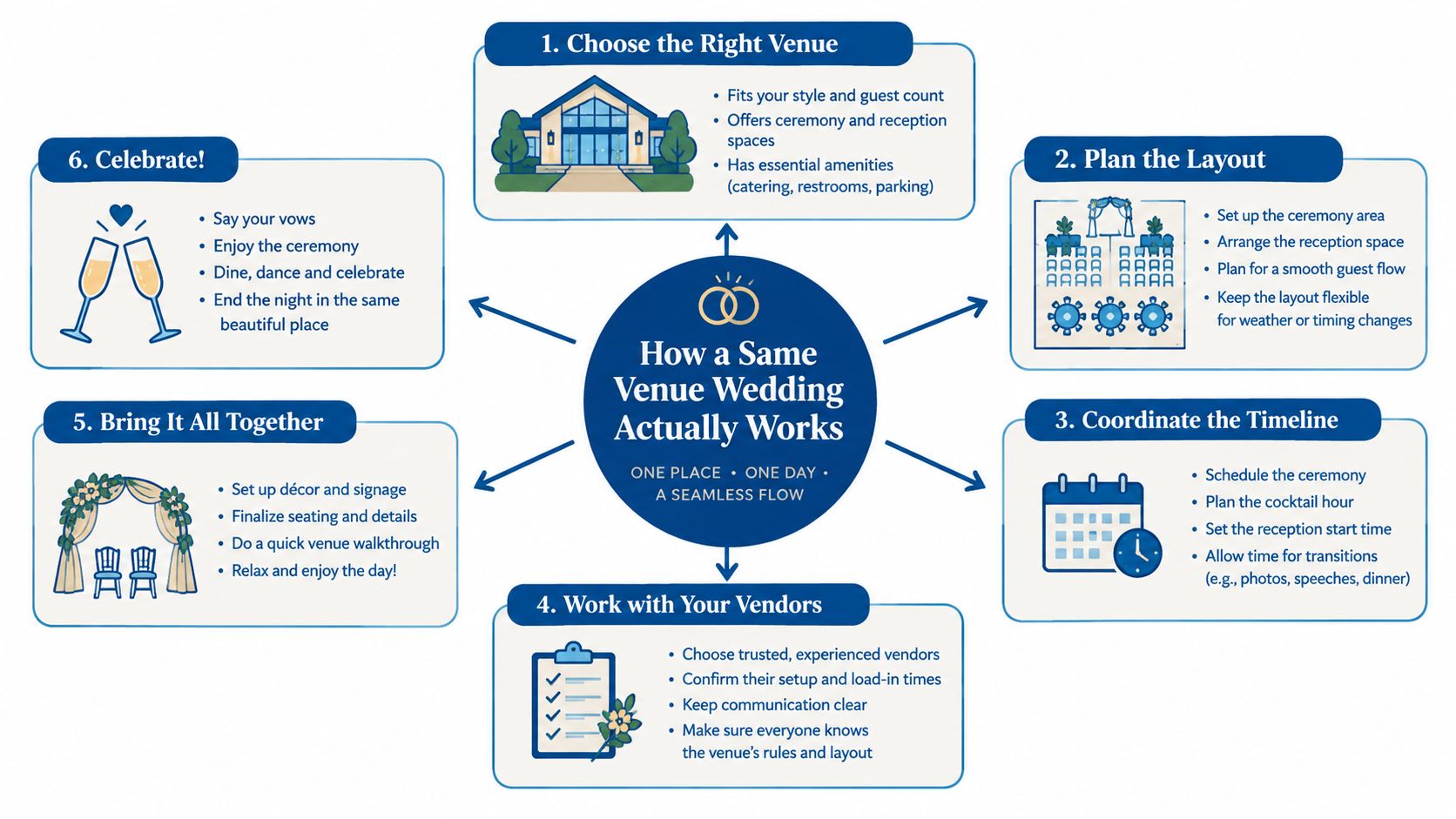
- How a Same Venue Wedding Actually Works
- Benefits and Trade Offs to Weigh Honestly
- Designing Zones That Keep Guests Moving Naturally
- Timeline and Room Flip Without the Stress
- Sound Lighting and Flow Details That Make It Seamless
- Deciding If One Venue Is Right for Your Celebration
Why Couples Are Choosing One Place for Everything
A lot of couples start with the obvious benefit. One address is easier than two. Grandparents don't need a second set of directions. The wedding party isn't piling into cars between events. Vendors aren't racing the clock across town.
That practical appeal isn't a fringe preference anymore. A major UK wedding-industry summary found that up to 77% of ceremonies in 2023 took place at the same venue as the reception, and that share had been rising steadily since 2018, which points to a longer shift toward all-in-one planning rather than a passing trend (UK wedding industry overview).
For couples, that shift makes emotional sense too. Once the ceremony starts, nobody wants the day to feel broken into separate errands. People want the celebration to keep its rhythm.
What couples are really buying
They're not just buying one location. They're buying:
- Less travel stress so guests can settle in once
- Cleaner timing because the day isn't vulnerable to traffic between venues
- More usable celebration time instead of transition time
- A simpler guest experience from arrival through the last dance
A U.S. wedding analysis from The Knot noted that in 2019 nearly one-third of couples hosted their receptions both indoors and outdoors, and it also observed that couples increasingly preferred to hold the ceremony, cocktail hour, dinner, and dancing within the same venue. That same analysis reported the average U.S. wedding size in 2019 was 131 guests, down from 141 in 2010, which helps explain why flexible one-property layouts became more attractive as couples focused on experience and convenience (The Knot wedding changes analysis).
The best same-venue weddings feel like one continuous gathering, not two events stitched together.
Where confusion usually starts
Couples hear “same venue” and picture an easy day. Sometimes that's true. Sometimes it only looks easy because the hard work is hidden behind a strong floor plan, a realistic cocktail hour, and staff who can flip a room without guests seeing the scramble.
That's why the key question isn't just, “Can we do both here?” It's, “What will our guests experience in the 30 to 60 minutes after the ceremony ends?”
How a Same Venue Wedding Actually Works
Hosting a big dinner party at a house is a good analogy. You wouldn't ask guests to stand in the kitchen while you clear plates, set dessert, dim the lights, and rearrange chairs. You'd move them somewhere else for a bit. Maybe the patio for drinks, then back inside for dinner.
A wedding on one property works the same way. The day moves through different phases in different spaces, or through the same space at different times.
Two common ways the format works
The first version is a multi-zone property. You hold the ceremony in one area, guests move to another space for cocktails, and the reception begins in a hall or separate lawn. This is usually the smoother option because staff and vendors can work in parallel.
The second version is a single-room flip. The ceremony and reception both happen in one main room. Guests leave for cocktails while staff reset chairs, tables, decor, lighting, and audio. This can work well, but it puts more pressure on timing.
Guidance from venue operators consistently emphasizes that same-venue weddings work best when the site has distinct zones for ceremony seating, cocktail circulation, dressing rooms, and reception dining or dancing because that layout reduces friction and lets vendors reset one area while guests enjoy another (same-venue layout guidance).
Why exclusive access matters
If your venue gives you full use of the property for the day, the timeline usually feels calmer. Your florist can stage early. Your DJ can sound-check without rushing. Your planner can place signage, rehearse entrances, and solve little issues before guests arrive.
That matters just as much as the pretty backdrop.
Here's a practical way to evaluate a venue tour:
- Ask where guests go after the ceremony. If the answer sounds improvised, the transition may feel improvised too.
- Ask where staff stage tables, linens, and decor. A smooth flip needs a hidden work path.
- Ask what happens in bad weather. Indoor and outdoor options create resilience without forcing a whole new plan.
- Ask whether you have enough time on site. Rushed access creates rushed transitions.
If you're choosing attire and accessories alongside venue decisions, it can help to keep your overall style consistent. A simple wedding band metal and style guide is useful at this stage because venue atmosphere, dress code, and jewelry style often shape the same visual direction.
Practical rule: A one-property wedding works best when guests have a clear next destination and vendors have a clear work zone.
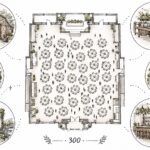
Floor plans make this easier to picture than any sales description ever will. Looking at wedding venue floor plans can help you spot whether a venue separates guest flow from service flow.
Benefits and Trade Offs to Weigh Honestly
Same-venue weddings have real advantages. They also have a few pressure points that couples deserve to see clearly before signing anything.
The biggest benefit is usually ease. One location simplifies arrival, parking, timing, and communication. The biggest trade-off is that the transition has to be designed well. If it isn't, convenience on paper can turn into waiting around in dress shoes with no clear plan.
Where same-venue setups shine
For many couples, the strongest upside is momentum. The ceremony ends, guests move naturally to cocktails, then dinner and dancing follow without a location break. That rhythm often feels more hospitable than sending everyone back to cars.
These setups also help when your priorities look like this:
- You want fewer moving parts. One property usually means fewer handoffs and less chance of someone getting lost or delayed.
- You care about older guests and families. A single location is often easier on grandparents, kids, and anyone navigating mobility concerns.
- You want weather flexibility. A venue with both indoor and outdoor options can keep the day intact even if the forecast changes.
- You value a cohesive look. Decor, florals, signage, and lighting can feel more unified when they stay on one property.
If you're also planning your bar and meal experience, a practical McLaren Vale event wine guide can help you think through quantities, pairings, and service style in a way that fits your venue flow.
Where couples should pause
The most common weakness is assuming “same place” means “no transition planning needed.” It doesn't. In fact, the tighter the property layout, the more important the transition becomes.
A few honest concerns to weigh:
- Room flips can feel visible. If guests can see staff rushing tables around, the magic drops fast.
- Noise can travel. Cocktail chatter, kitchen traffic, and DJ setup can bleed into other areas if the property isn't separated well.
- Decor may need to work harder. In a shared ceremony-reception room, pieces often have to pull double duty.
- The timeline has less slack. When one area needs to become another, delays can stack up quickly.
Same Venue vs Separate Venues at a Glance
| Decision Factor | Ceremony and Reception Same Venue | Separate Venues |
|---|---|---|
| Guest travel | Guests arrive once and usually stay put | Guests must relocate between events |
| Timeline control | Fewer travel variables, but transition timing matters | More travel risk, but each venue may stay set longer |
| Room setup | May require a flip or strong zoning plan | Spaces can stay dedicated to one purpose |
| Weather backup | Strong if venue has indoor and outdoor options | Depends on both locations |
| Energy and flow | Can feel continuous and immersive | Can feel formal and segmented |
| Vendor logistics | One property can simplify load-in and coordination | Vendors may juggle two addresses and two schedules |
| Visual variety | Depends on the property's layout and scenery | Different venues can create sharper contrast |
| Hidden risk | Dead time during a weak transition | Delays between locations |
A same-venue wedding is easiest for guests when the property is doing real logistical work, not just saving driving time.
Designing Zones That Keep Guests Moving Naturally
When couples tour venues, they often focus on whether the ceremony site is pretty and whether the reception hall feels right. Both matter. But the hidden test is whether the property gives people somewhere natural to be at every stage of the day.
That's what zoning does. It turns movement into flow instead of confusion.
The four zones that do the heavy lifting
Most strong same-venue layouts include four functional areas.
First, there's the ceremony zone. This should feel intentional on its own, not like a temporary corner of the reception room. Guests need clear sight lines, comfortable access, and enough breathing room for entrances and exits.
Second comes the cocktail zone. This area carries more weight than people realize. It isn't just a spot for drinks. It gives guests a destination while the next phase gets built or polished.
Third is the dressing and ready space. Private suites keep the wedding party from drifting through guest areas before key moments. They also reduce hallway congestion and last-minute chaos.
Fourth is the reception zone. This area needs room for dinner, toasts, dancing, and service traffic without feeling cramped.
What good flow looks like on the ground
You can often tell within minutes whether a venue has natural circulation.
Look for these signs:
- Guests have one obvious path from parking to ceremony to cocktails
- Vendors have a different path for catering, rentals, and AV support
- The wedding party has privacy without crossing through public spaces
- Service areas stay hidden so guests aren't watching prep happen
- Accessible routes are simple rather than feeling like a workaround
On Hill Country properties, this matters even more because outdoor ceremony sites, indoor halls, gravel paths, and scenic photo areas can all pull traffic in different directions. A beautiful property still needs practical movement.
Questions worth asking on a tour
A couple can save themselves a lot of stress by walking the transition, not just the pretty spots.
Ask things like:
- Where will cocktail tables go?
- How do guests move if someone uses a wheelchair or walker?
- Where does catering enter?
- Can the photographer keep taking family photos while staff reset another area?
- Will guests hear setup noise from the next zone?
One practical example is Texas Old Town, which offers outdoor ceremony sites, indoor reception halls that can also host ceremonies, dressing suites, separate service access, on-site management, and a large parking layout on a single property. That kind of arrangement matters because it gives couples options for movement, weather backup, and hidden vendor work without forcing everyone through the same doorway.
Good zoning feels almost invisible to guests. They simply keep moving, and the day keeps making sense.
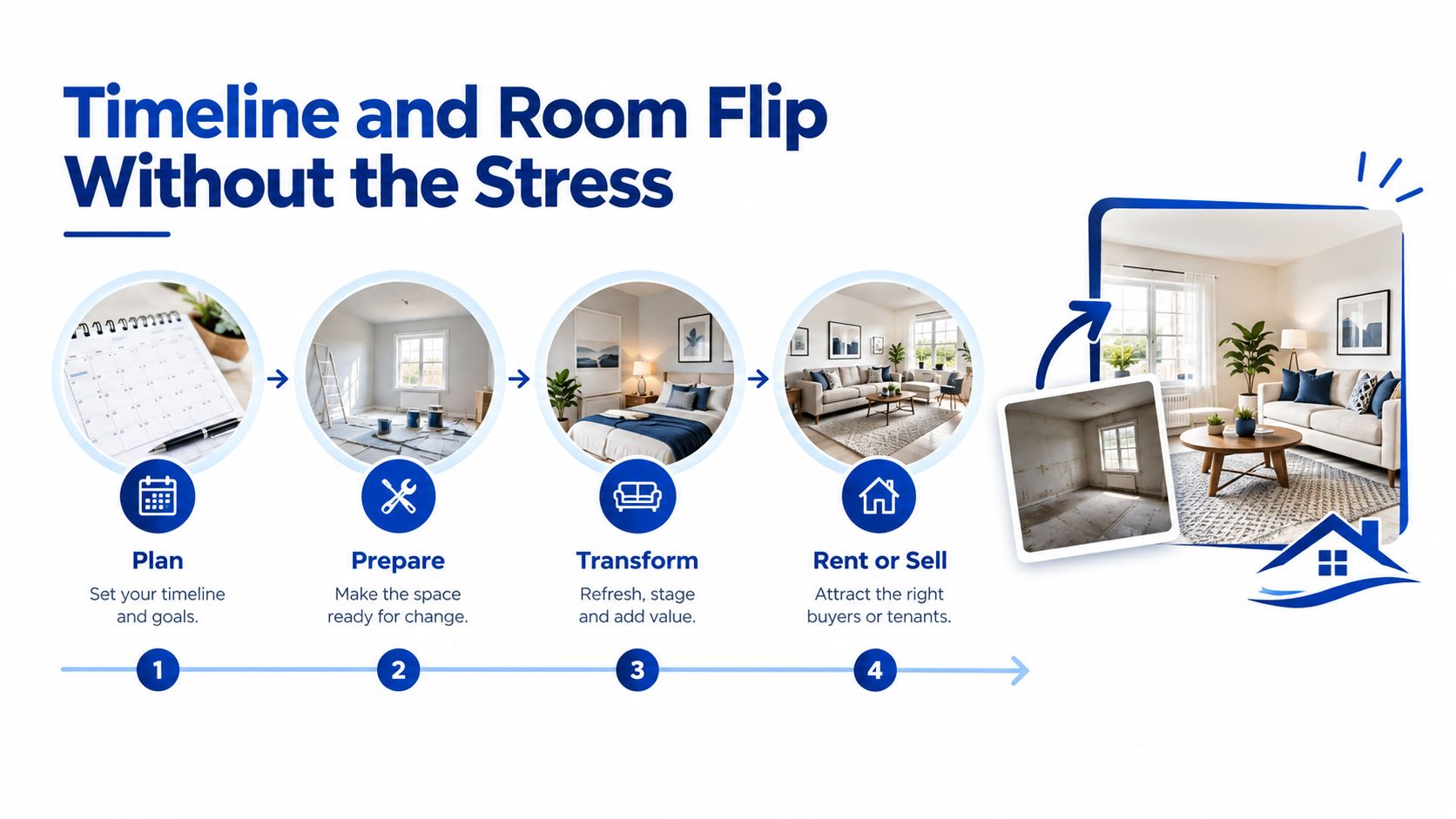
Timeline and Room Flip Without the Stress
This is the hinge point of the whole day. Not the vows. Not the first dance. The handoff between them.
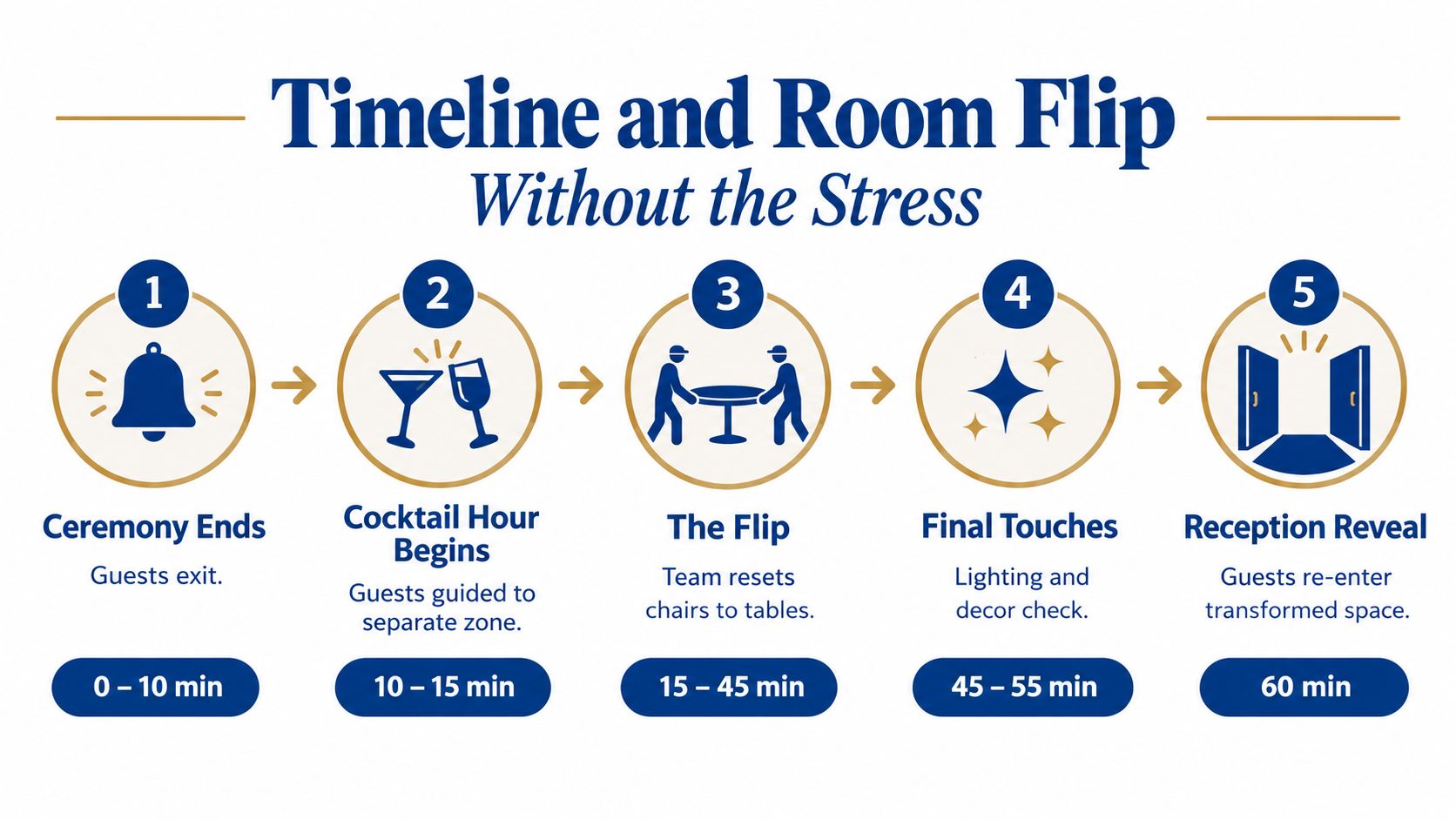
When the ceremony and reception happen at the same venue, industry guidance commonly budgets a 45 to 60 minute cocktail hour so guests can clear the space while a 2 to 4 person crew resets chairs, linens, centerpieces, lighting, and audio before dinner service begins (same-space flip guidance).
That timing works best when the flip is prepared long before the ceremony begins. Staff need tables staged, linens sorted, decor grouped, and a clear route for moving everything fast.
A realistic transition sequence
Here's what a smooth handoff often looks like in practice.
Right after the recessional
Guests shouldn't have to guess. Ushers, signage, or the DJ should direct them immediately to cocktails, refreshments, or a lounge area.
During early cocktail hour
The couple usually takes family photos or a short private break. Meanwhile, the flip crew starts work. Chairs move first. Then tables, linens, centerpieces, and place settings.
Mid-transition
Lighting gets adjusted from ceremony mode to dinner mode. Audio shifts from officiant microphones to reception use. Catering finishes any final dining setup.
Just before re-entry
Someone checks the room as a guest would see it. Are candles lit? Are chairs straight? Is the bar line under control? Is there a clear cue that dinner is about to begin?
Where dead time comes from
Dead time rarely comes from one dramatic mistake. It usually comes from four smaller ones stacked together.
- No destination for guests after the ceremony
- No buffer for little delays
- Visible reset work that makes people feel parked rather than hosted
- Weak communication about when the next event begins
A planning guide focused on same-venue logistics notes that movement delays can expand quickly in major cities and recommends a 15-minute buffer before entrances with more conservative timing in bigger markets (same-venue logistics timing guide). Even if your wedding isn't in a dense urban core, the lesson holds. Buffer time protects the guest experience.
Build your timeline for movement, not just moments. Guests feel the gaps between events more than the timestamps on a planning sheet.
If some guests still need rides to hotels after the reception, or if part of your group is arriving from another location earlier in the day, a concise special event transportation planning guide can help you think through pickups, wait times, and communication.
A good planning tool also helps everyone stay on the same page. Couples comparing ceremony end times, cocktail duration, and dinner start can use a reception schedule template to pressure-test whether the flip window is realistic or too tight.
Sound Lighting and Flow Details That Make It Seamless
Some weddings feel smooth in a way guests can't quite name. Usually that's because the technical pieces are doing their job.
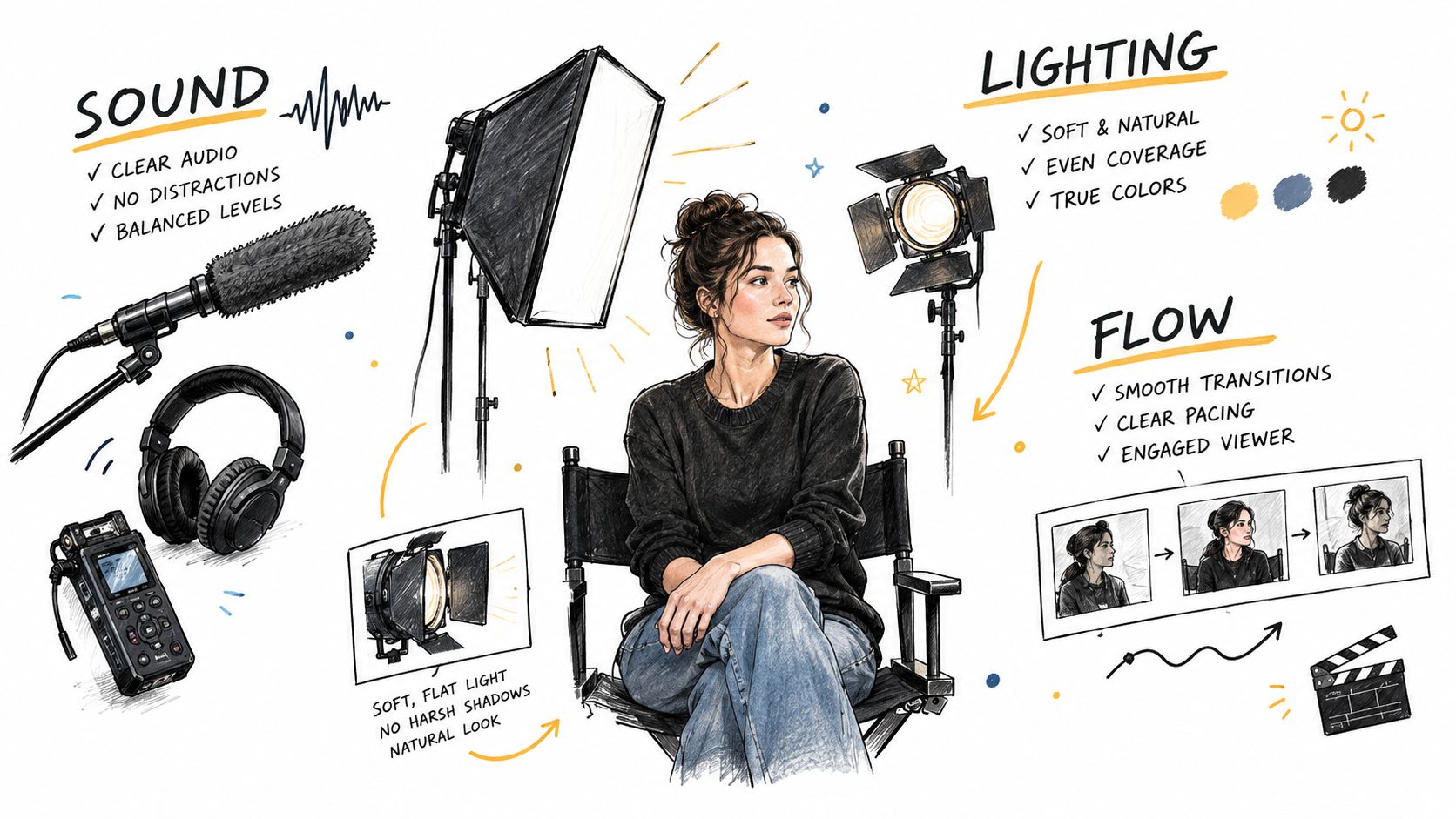
Sound, lighting, and service flow are the hidden trio. When they work together, the day feels polished. When they don't, guests notice every pause, echo, and awkward reset.
Sound should follow the day
A same-venue setup often moves through very different environments. Outdoor vows need clear speech. Cocktail hour needs background music that doesn't overpower conversation. Dinner needs microphone clarity for toasts. Dancing needs a full energy shift.
That's why it helps when a property supports both outdoor and indoor audio rather than forcing vendors to improvise. Wireless microphones matter for ceremonies. Bluetooth-compatible systems can simplify music handoffs. Dedicated reception sound avoids rebuilding the whole setup from scratch later.
For couples comparing setups, seeing how a venue approaches sound systems for events can help you ask sharper questions about microphone coverage, transitions, and toast audibility.
Lighting does more than make photos pretty
Lighting tells guests what part of the day they're in. Brighter ceremony light feels attentive and open. Softer dinner light signals a slower pace. A stronger dance-floor look tells the room it's time to shift again.
If a venue can't change mood cleanly, the whole event can feel stuck in one note. That's especially noticeable in indoor halls that host multiple phases back to back.
Service flow should stay mostly invisible
The most seamless weddings usually have a few practical features behind the scenes:
- A separate service entry so catering staff aren't cutting through guest paths
- Prep kitchen access for final plating and staging
- On-site management to coordinate timing and small corrections
- Enough access time that vendors aren't setting up under pressure
When couples ask why one wedding feels calm and another feels choppy, this is often the answer. It isn't one dramatic design choice. It's a chain of small operational choices that protect the guest experience from the first entrance to the last song.
Guests don't need to notice your logistics. They just need to feel cared for by them.
Deciding If One Venue Is Right for Your Celebration
A same-venue wedding is usually a strong fit when you want the day to feel connected, easy to move through, and less vulnerable to travel problems. It's especially practical if you're hosting guests who value comfort, simple parking, accessible movement, and clear timing.
It may be the right choice if your venue can answer these questions well:
Quick decision checklist
- Is there a clear place for guests to go right after the ceremony?
- Does the property separate guest areas from work areas?
- Can the venue handle weather changes without rewriting the whole day?
- Will your guest count fit comfortably in every phase, not just the reception?
- Do you have enough access time for setup, photos, and reset moments?
- Are dressing spaces, parking, and vendor entry points practical?
- Can sound and lighting shift smoothly from vows to dinner to dancing?
If several of those answers are shaky, two separate venues might feel cleaner. If most of them are strong, one property can make the celebration feel much easier for everyone involved.
The main thing to remember is simple. Choosing one venue doesn't remove the transition. It just puts that transition under your control. When the cocktail hour has a job, the layout has purpose, and the timeline has breathing room, the day feels natural instead of rushed.
Your guests probably won't praise the room flip by name. They'll just remember that the wedding felt easy to be at. That's the win.
Texas Old Town offers four private Hill Country venues with outdoor ceremony sites, indoor reception halls, dressing suites, on-site management, sound systems, and a 16-hour rental window that gives couples more room to handle transitions well. If you want to see how a one-property celebration can work in practice, visit Texas Old Town and explore the venue layouts, logistics, and planning options for your day.