You're choosing ceremony chairs from rental photos, but the decision gets harder when you picture your guests using them. At a late-summer Hill Country ceremony, the sun may still be strong, the lawn may be soft after a shower, and the prettiest aisle may cross uneven ground. A chair that looks perfect beside a floral arch can feel very different when it rocks on gravel or leaves someone struggling to stand.
The best outdoor wedding seating ideas start with the people, then the setting. Your grandmother may need a firm seat with arms, your friends may appreciate shaded conversation areas, and everyone needs a clear route from the ceremony to dinner. Ceremony seating should support a comfortable view of the vows; reception seating needs to work for eating, conversation, and a longer stay.
Think of the whole setting as you would a patio, using coordinated pieces for a welcoming patio rather than buying unrelated furniture because each piece photographs well. You can carry wood tones, cushion colors, or metal finishes through the day without using identical seats everywhere.
Before committing to a rental order, decide what happens if the ground stays wet or a storm approaches. An indoor alternative should preserve guest comfort and access, not squeeze the outdoor furniture through the nearest door.
Table of Contents
- 1. Chiavari Chairs with Cushions
- 2. Rustic Wooden Pew-Style Benches
- 3. Hay Bale Seating
- 4. Lounge-Style Conversation Seating
- 5. Ghost Chairs (Transparent Acrylic Chairs)
- 6. Tolix-Style Industrial Metal Chairs
- 7. Natural Stone or Grass Tiered Amphitheater Seating
- 8. Family-Style Banquet Tables with Bench Seating
- How the 8 outdoor seating options compare on formality, durability, and comfort
- Build a Seating Plan That Survives a Shifting Forecast
1. Chiavari Chairs with Cushions
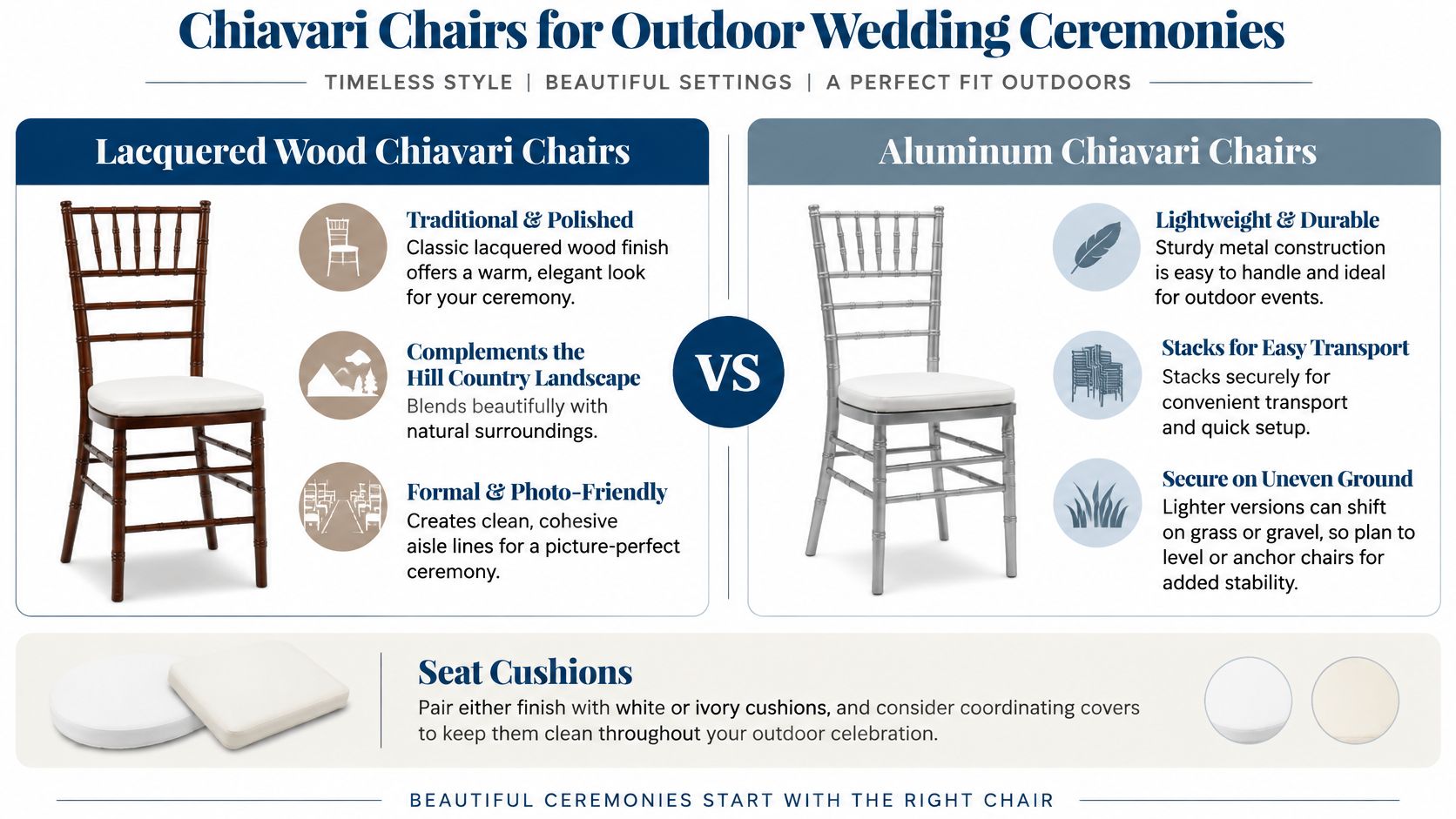
Chiavari chairs suit couples who want formal ceremony seating without a visually heavy backdrop. Their slender frames and open backs leave the scenery visible, while ivory cushions soften the look against limestone, greenery, and wood. Choose the actual rental model carefully: wood, aluminum, and resin versions can differ in weight, finish, and seat comfort.
For a garden ceremony, straight seating blocks make these chairs easy to align and assign. The Perfect Wedding outdoor ceremony seating guide recommends approximately 8 square feet per guest for rows with a center aisle, including chair footprints, legroom, and circulation. Treat that as a starting footprint, not permission to fill every remaining patch with flowers.
Test the Ground Before Styling the Aisle
Have the rental crew test chairs under seated weight, especially where grass hides depressions. If legs sink or a frame rocks, relocate the row or use suitable temporary flooring. Don't wedge loose stones under chair feet or improvise anchors.
- Secure the cushions. Use the supplier's intended ties or fasteners so pads don't slide during seating.
- Protect the route. Skip an aisle runner if it wrinkles, lifts in wind, or conceals unstable ground.
- Plan the move. Confirm who stacks and carries chairs if the ceremony moves indoors.
For guests who need help rising, reserve supportive armchairs alongside the Chiavari rows. Shade matters more than cushion color, and dry cushions should remain protected until the outdoor setup is confirmed.
2. Rustic Wooden Pew-Style Benches
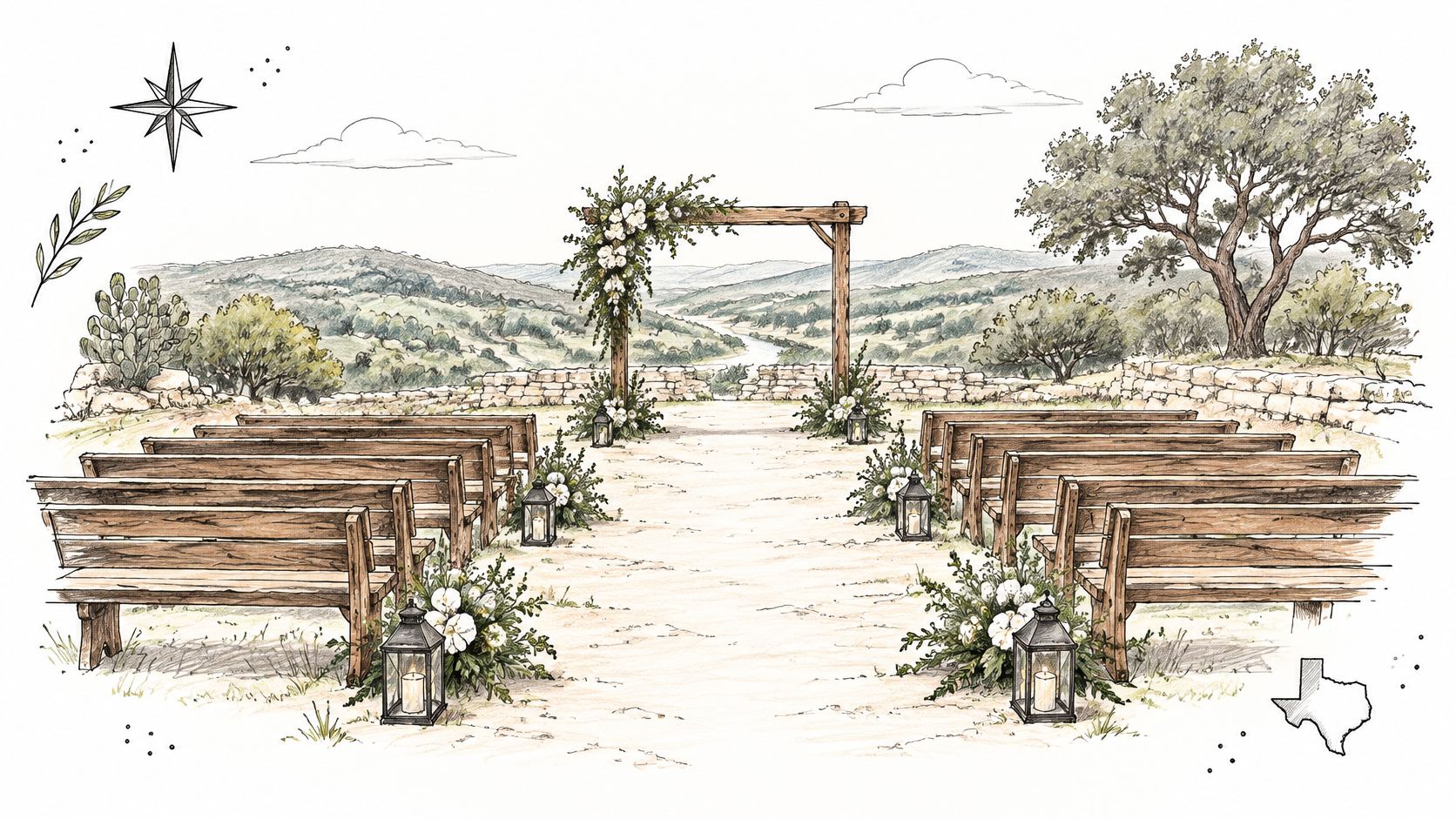
Wooden benches create a strong country-chapel look, especially beside a timber ceremony structure or meadow backdrop. They also change how guests sit: families can gather together, but people in the middle may have to shuffle along when someone arrives late. Fewer furniture pieces don't automatically mean easier access.
A typical use is a rustic ceremony with backed wooden benches in the main rows and individual chairs at accessible row ends. Coordinate the finishes with your flowers and aisle details using our rustic Texas Hill Country wedding planning tips, but let comfort determine the final mix.
Count Comfortable Places, Not Just Bench Length
Use the Lucas Furniture & Mattress bench sizing guide when comparing bench proportions, then physically test the rental model. Formal clothing, handbags, and guests' differing body sizes make a tightly packed mock-up misleading.
A bench isn't an accessible seating solution just because someone can reach it. They also need to sit down, remain comfortable, and get up safely.
Check every support point on the lawn, since a long bench can bridge uneven ground and rock under shifting weight. Choose secured cushions rather than loose folded quilts that slide as guests move.
Wooden seats can feel cool as evening temperatures fall, so keep dry throws nearby without draping fabric into walking routes. For the indoor fallback, assign a crew to carry benches and confirm their storage location; bulky benches shouldn't block exits or delay dinner setup.
3. Hay Bale Seating
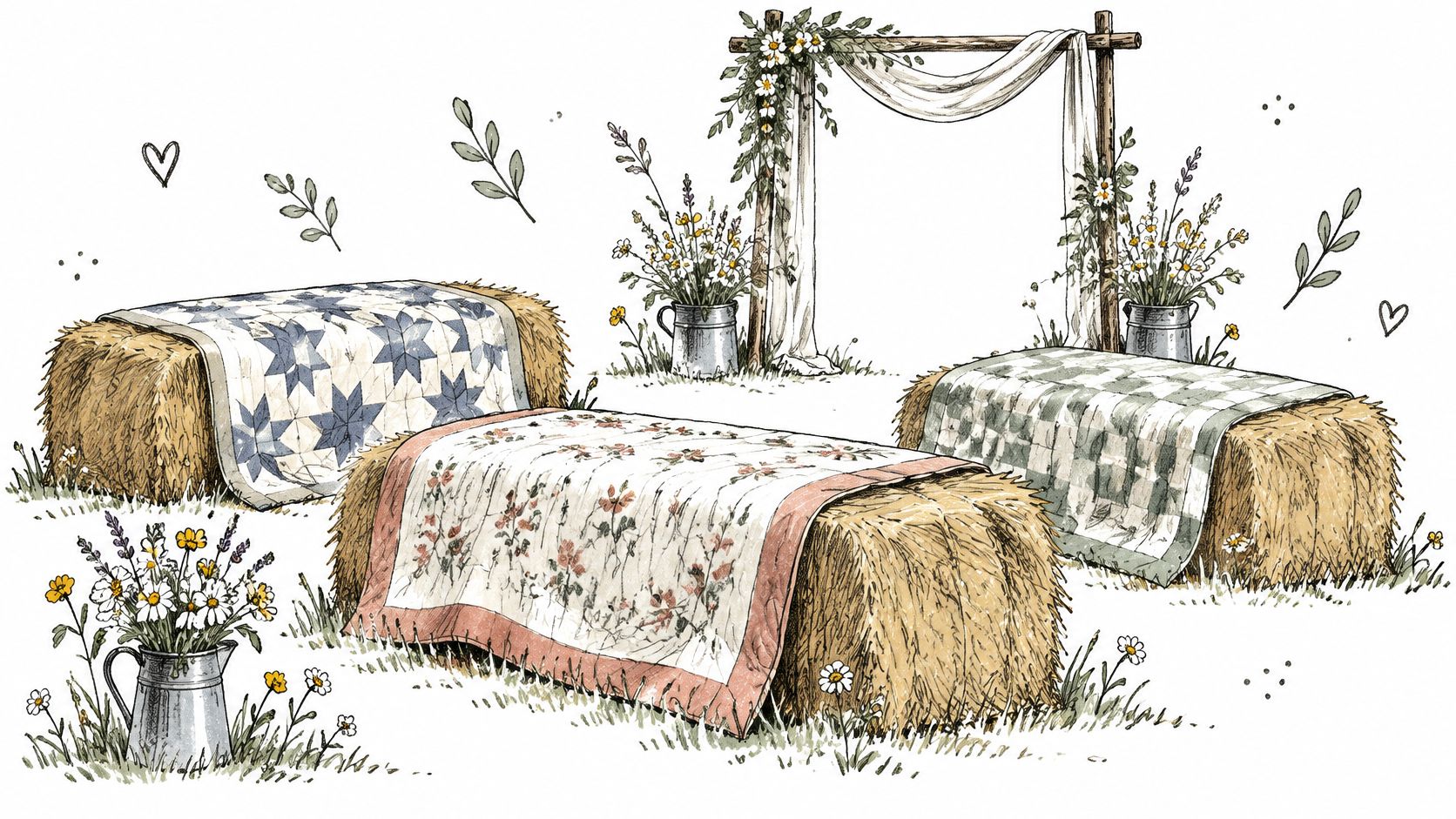
Hay bales work best as an optional rustic accent, not the only place guests can sit. A quilt-covered bale beside a wildflower arrangement can suit a casual cocktail gathering, but it doesn't provide the predictable support of a chair. Loose material can scratch clothing, and guests with allergies may prefer to keep their distance.
For a relaxed ranch-style wedding, place covered bales around an informal photo or conversation area while keeping conventional chairs nearby. Don't assume that every guest who can walk across the lawn can comfortably lower themselves onto a bale.
Keep the Rustic Look Optional
Cover the top and exposed edges with substantial fabric, secured so it won't pull away when someone sits. Don't lean a decorative board behind a bale and call it a backrest; use a properly supported seating structure if back support is needed.
- Confirm permission. Get approval for placement, cleanup, storage, and disposal before ordering.
- Keep ignition sources away. Separate bales from candles, sparklers, heaters, and fire features.
- Reject damp bales. Wet covers won't make damp seating comfortable, and the material can shed onto clothing.
Shade the seating area rather than relying on quilts to make it comfortable in direct sun. Keep spare dry coverings sheltered if guests will return after sunset.
The fallback should be regular indoor seating, not a last-minute attempt to carry wet bales through a reception room. Include delivery and removal labor in the comparison before treating this as the budget choice.
4. Lounge-Style Conversation Seating
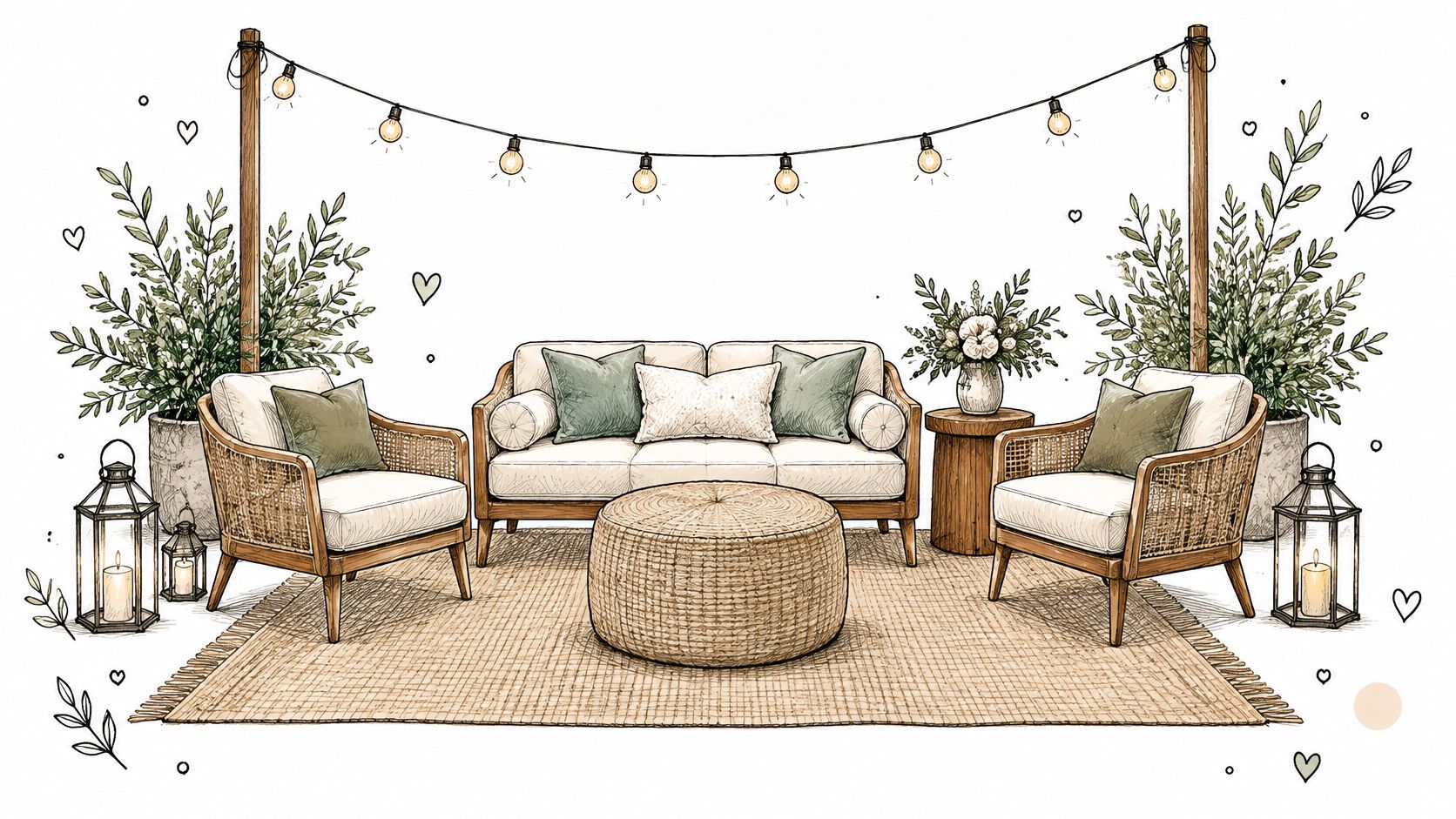
A shaded grouping of sofas and armchairs gives guests somewhere to talk away from the dance floor. It's particularly useful during cocktail hour or after dinner, when not everyone wants to remain at a dining table. For the ceremony itself, low sofas can create awkward sightlines and consume space needed for clear aisles.
Say your reception opens onto a garden. Arrange a sofa facing supportive armchairs, with stable side tables for drinks, and leave an open approach rather than enclosing the group with ottomans.
Choose Seats Guests Can Leave Easily
Deep, low cushions look inviting but can be difficult to rise from. Include firmer chairs with arms and integrate wheelchair positions into the conversation group, not behind it.
The U.S. Access Board's ADA guidance specifies a minimum 36-inch continuous clear accessible route; protect that route from furniture, bags, trailing greenery, and guests pulling chairs outward. Use wider circulation where people will pass with drinks or service trays.
Practical rule: A decorative rug isn't a repair for rough ground. Establish a firm, stable surface first, then decide whether the rug is safe to add.
Choose outdoor-rated furniture and ask the supplier how cushions must be protected from rain. Keep throws available for a cooler evening, but don't let them conceal wet upholstery.
For the fallback, reserve an indoor lounge footprint before ordering. A sofa that fits the garden may obstruct service or an exit once the reception moves inside.
5. Ghost Chairs (Transparent Acrylic Chairs)
Ghost chairs are useful when you want flowers, linens, or the Hill Country view to remain visually prominent. Clear acrylic or polycarbonate frames suit a modern ceremony and can connect neatly to a minimalist reception. They aren't invisible, though: direct light can reveal reflections, scratches, fingerprints, and cleaning streaks.
For example, clear chairs beside pale florals can keep a small ceremony from looking crowded. At dinner, the same chairs can complement patterned linens without introducing another wood finish.
Inspect Them in the Actual Light
Request a sample chair and view it outside during the expected ceremony window. Sit in it, check the back angle, and look at the condition of the surface rather than judging only from a styled rental photograph.
- Check sun exposure. Test the seat temperature and glare in the proposed location.
- Choose compatible pads. Use fitted cushions if the ceremony or meal will be lengthy, without covering the chair's main visual appeal.
- Specify cleaning. Have the supplier use the manufacturer-approved cleaner and a soft cloth; unsuitable products can damage clear surfaces.
Transparent furniture doesn't solve terrain problems. Check each chair for wobble on gravel or lawn, and keep the route easy to distinguish with clear lighting and contrasting surroundings.
For guests with low vision, a visible cushion or nearby contrasting table can help define the seating area. Keep chairs out of unlit circulation paths after sunset.
These chairs can transition indoors cleanly, but the move still needs assigned labor. If ceremony chairs must also serve dinner, account for carrying, cleaning, and resetting them before guests enter the dining space.
6. Tolix-Style Industrial Metal Chairs
Tolix-style metal chairs pair well with farm tables when you want a casual reception that isn't entirely rustic. A restrained finish, such as muted white or charcoal, lets wood tables and greenery carry the design. Mixing many chair colors can make place settings and florals feel disconnected.
They're a practical candidate for an outdoor dinner, but metal deserves a hands-on comfort test. Direct sun can make the seat unpleasantly warm, while an exposed chair can feel cold once the evening cools.
Put Shade Ahead of the Finish
A peer-reviewed study in Weather, Climate, and Society identified shading as the most effective heat-stress reduction measure for the open-air event it examined. For your reception, choose the shaded dining position before choosing a chair color, and have a properly planned weather shelter or indoor alternative.
Use securely attached seat pads, inspect edges for damage, and confirm the rental model is intended for outdoor use. Thin metal legs can settle into soft ground, so test loaded chairs rather than assuming their durability makes them suitable for every surface.
Don't trade a comfortable dining position for a better-looking background. Guests spend the meal facing their table companions, not the rental photograph.
A typical setup pairs metal chairs with wood tables under shade, keeping supportive armchairs available for guests who need them. Maintain a clear path behind seated diners so servers don't have to squeeze between chair backs.
For an indoor move, use carts and floor protection appropriate to the venue. Dry chair feet before placement, and confirm whether the supplier's stacking method requires cushions to be removed.
7. Natural Stone or Grass Tiered Amphitheater Seating
A natural amphitheater can make the ceremony feel closely connected to the surroundings. Rising rows may improve views, but a slope isn't automatically a usable seating area. Guests still need comfortable places to sit, safe approaches, and an accessible route to an equally good viewing position.
This option works best where an established ceremony area already has suitable terraces or stone seating. Don't turn an ordinary hillside into improvised tiers or place loose chairs across a slope.
Walk the Whole Guest Journey
Our outdoor wedding setup guidance treats accessibility as a connected journey from arrival through seating, restrooms, reception, and departure. Apply that approach here by testing the route in event footwear and, where relevant, with the mobility device a guest will use.
- Assess the surface. Check grass for soft spots and stone for slippery areas, loose edges, or pooled water.
- Provide supportive seats. Offer conventional chairs with backs on a level viewing area alongside companion seating.
- Plan for darkness. Light approaches and changes in level without directing glare toward the ceremony.
For a small ceremony, guests might use dry cushions on established stone terraces while others sit in adjacent chairs. Keep those choices socially integrated rather than separating guests according to mobility.
Exposed stone can retain heat from the afternoon or feel cold later, and grass may remain damp after nearby paths have dried. Keep cushions sheltered until placement.
If rain makes the terraces or route unsafe, move the whole ceremony indoors. Don't preserve the hillside arrangement by giving some guests a separate, inferior viewing location.
8. Family-Style Banquet Tables with Bench Seating
Long tables create a shared-meal atmosphere that suits an outdoor reception, rehearsal dinner, or relaxed wedding weekend. Bench seating reinforces that look, but it asks more of guests during a long meal than during a short ceremony. People need room to turn, stand, and leave without climbing over furniture or asking an entire bench to move.
Build the dining arrangement around the caterer's service method. Shared platters require usable tabletop space; a runner covered with candles and greenery can leave nowhere to put the food.
Draw the Service Routes First
Use our wedding venue floor plans to develop the indoor version, then map the outdoor layout with the same attention to entrances and circulation. Mark the bar queue, catering approach, restroom route, and space behind occupied seats before finalizing table placement.
A typical compromise is communal tables with benches along selected sides and individual chairs elsewhere. Guests can share the same table experience without everyone having to use the same seat.
- Coordinate with catering. Confirm where staff will carry platters, clear dishes, and reach guests.
- Preserve accessible positions. Leave usable table approaches and companion seating without bench supports blocking access.
- Test the full setting. Lay out plates, glasses, serving dishes, and décor before approving the centerpiece design.
Place tables on stable, level ground so drinks and shared dishes sit securely. Add fitted bench cushions and keep dry wraps available if dinner extends into a cooler evening.
For the fallback, don't assume the outdoor table runs will fit indoors unchanged. Prepare a separate arrangement that preserves service access, guest seating, and room for the rest of the reception.
How the 8 outdoor seating options compare on formality, durability, and comfort
| Item | Best For | Formality | Outdoor Durability | Comfort Without Cushions |
|---|---|---|---|---|
| Chiavari Chairs with Cushions | Formal outdoor ceremonies | Formal | Fair; lighter chairs may shift on uneven ground | Limited |
| Rustic Wooden Pew-Style Benches | Rustic and country-style ceremonies | Casual | Depends on wood and outdoor conditions | Low for long ceremonies |
| Hay Bale Seating | Informal rustic gatherings | Informal | Suits grass and uneven ground; protect from outdoor elements | Low |
| Lounge-Style Conversation Seating | Cocktail hours and relaxed receptions | Casual to semi-formal | Good with outdoor-rated furniture | Comfortable when upholstered |
| Ghost Chairs (Transparent Acrylic Chairs) | Modern, minimalist ceremonies | Modern and polished | Good; weather-resistant, but can show spots or scratches | Fair for shorter events |
| Tolix-Style Industrial Metal Chairs | Relaxed, industrial-style receptions | Casual | Good; durable and weather-resistant | Low |
| Natural Stone or Grass Tiered Amphitheater Seating | Scenic venues with natural slopes | Informal to semi-formal | Site-dependent; weather affects comfort | Low |
| Family-Style Banquet Tables with Bench Seating | Communal outdoor receptions and dinners | Casual to semi-formal | Depends on table and bench materials | Fair; benches may lack back support |
Build a Seating Plan That Survives a Shifting Forecast
Choose the ceremony seating first, then design the reception around eating, conversation, and time spent seated. The furniture can share a color palette without being identical. Cushioned ceremony chairs might pair with dining chairs and optional lounge seating more comfortably than a single rental style used everywhere.
Measure the usable site rather than the full lawn boundary. Trees, drainage areas, service access, and uneven edges all affect where guests can sit. Stake out the proposed furniture positions with the venue's permission, then walk between them as though chairs were occupied.
Give the Indoor Plan Equal Attention
At Texas Old Town, our outdoor ceremony sites include seating and manicured grounds, while our climate-controlled reception halls can also host the ceremony. Plan both arrangements before the day arrives, including the ceremony focal point, guest entrances, accessible positions, and the transition to dining.
Decide which pieces move, which remain sheltered, and which aren't suitable for the backup room. Heavy benches, damp lounge cushions, and hay bales need different handling from stackable chairs. Don't leave those decisions to whoever happens to be available when rain begins.
The same principles used to plan a comfortable outdoor seating layout apply at wedding scale: furniture should fit its purpose, preserve circulation, and allow people to settle comfortably. A cohesive look matters, but it shouldn't require guests to move around awkward corners or sit in full sun.
Weather-plan priority: Move the event while the routes and furniture are still usable, not after guests are already wet and the lawn has softened.
Assign the Decision and the Work
Name the person who will authorize the weather change and agree on the decision process with your planner, venue team, and rental supplier. Include wind, lightning, heat, and ground conditions, not just whether rain appears in the forecast.
- Document both layouts. Show furniture positions, accessible routes, reserved seats, and service paths.
- Assign moving tasks. Identify who handles furniture, cushions, décor, and guest directions.
- Protect guest comfort. Keep water, shade, dry seating, and evening wraps easy to reach.
The strongest outdoor wedding seating ideas aren't necessarily the most unusual. They're the ones that let guests watch the vows, enjoy dinner, and move through the celebration comfortably, even when the forecast changes.
Texas Old Town offers private outdoor ceremony sites and climate-controlled reception halls that can also accommodate your ceremony. Visit Texas Old Town to arrange a tour and compare outdoor seating plans with an indoor alternative for your celebration.