You can love the venue, the photographer, and the menu, then freeze the moment the contracts arrive. One payment is due now, another in a few months, and the dress shop wants its own schedule, while travel and guest counts are still moving around. That's where payment plans for weddings stop being a nice extra and start becoming a cash-flow tool you need to manage on purpose.
The couples who handle this well don't just ask, “Do you offer installments?” They map every due date against what's in their savings account, then decide what can be paid now, what should wait, and what needs to be negotiated. That matters in a year where the average U.S. wedding cost is $36,000 and venue spending alone averages $8,573 (Zola's 2026 First Look Report). If you're trying to keep the wedding beautiful without creating a post-engagement debt hangover, the plan has to fit the calendar, not just the headline price.
Couples also aren't looking for this by accident. Carats & Cake reported that 65.7% of couples were interested in flexible payment solutions and 78.8% expected to go over budget, which tells you exactly why this topic keeps coming up at venue tours and vendor calls (LendingTree's wedding debt survey summary). If you and your partner are trying to stay organized together, a simple tool that helps you track progress on shared goals can keep the wedding from taking over every money conversation.
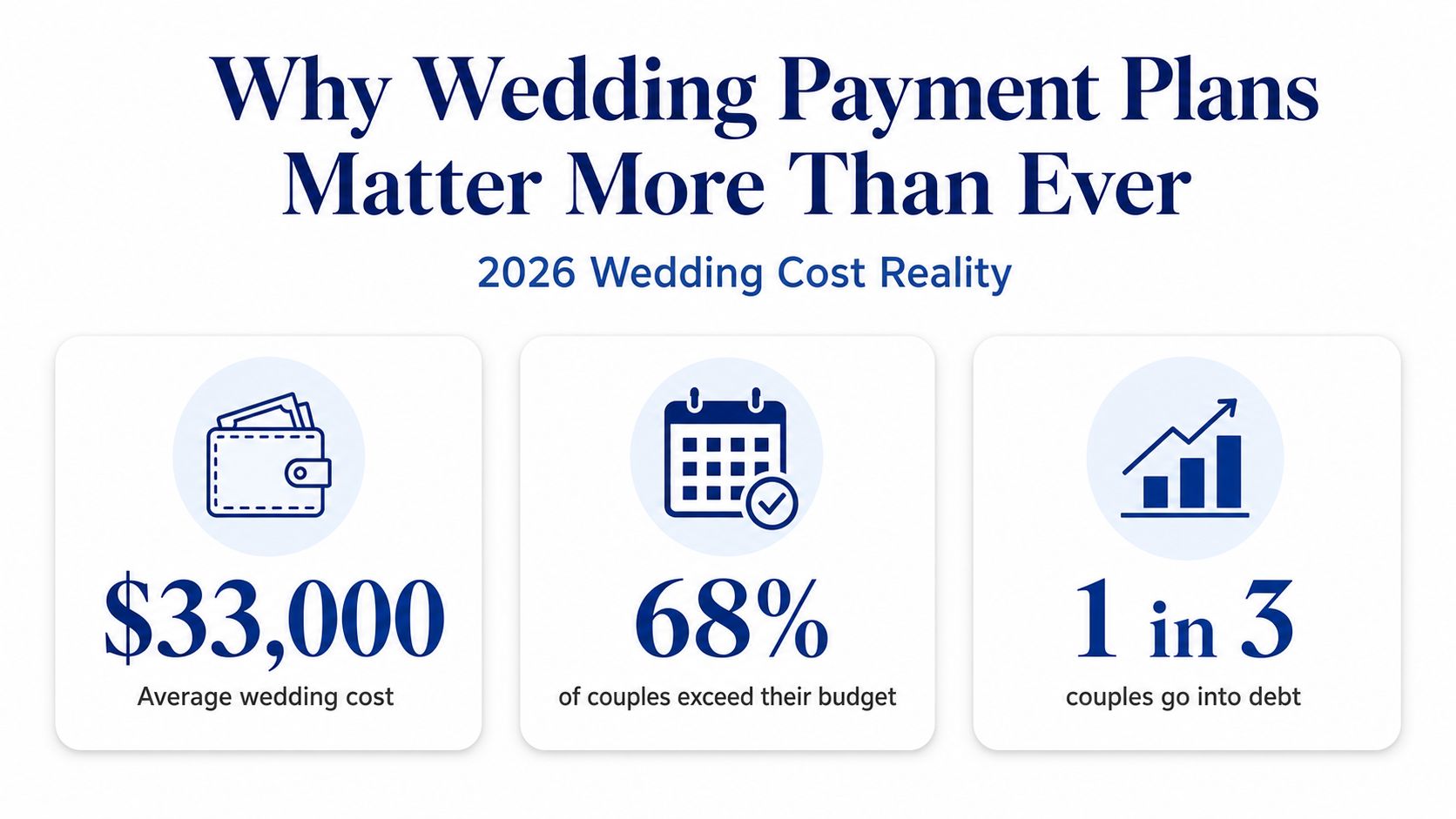
Table of Contents
- Why Wedding Payment Plans Matter More Than Ever
- The Three Main Types of Wedding Payment Plans
- Building a Month-by-Month Wedding Payment Timeline
- Vendor Plans Versus Credit Cards Versus Saving Longer
- How Texas Old Town Structures Its Wedding Payment Plans
- Negotiation Tips and Budgeting Strategies for Any Venue
- Frequently Asked Questions About Wedding Payment Plans
Why Wedding Payment Plans Matter More Than Ever
A wedding budget can look fine on paper and still fall apart in practice. The trouble usually starts months before the final bill arrives, when the venue wants a deposit, the caterer wants a retainer, and the dress shop expects another payment before the bridal shower. Payment plans for weddings matter because they control timing, and timing is where couples get squeezed. That pressure gets worse when venue, catering, and bar services eat a large share of the budget, as shown in Zola's 2026 First Look Report.
Installments help only if they match the rest of the wedding calendar. They spread the cost across the engagement instead of letting several big bills land in the same month. That matters because a low monthly payment can still collide with the florist, the photographer, and the final dress balance. If you do not map those dates first, the payment plan just hides the strain until it shows up again.
Couples also make a bad habit of confusing a manageable installment with actual affordability. A smaller payment does not fix a budget that is already overloaded with venue fees, vendor retainers, attire, and travel. The better order is simple. Build the payment calendar first, then choose the vendors and financing that fit inside it.
There is a reason this problem keeps coming up. LendingTree found that many engaged couples planned to take on debt for wedding expenses, often through credit cards, personal loans, or help from friends and family. That tells you how common wedding financing has become. It also shows why couples need a plan before the first deposit leaves the account.
Practical rule: If a payment plan does not lower the risk of a mid-engagement cash crunch, it is not helping. It is just changing which bill hurts first.
For Texas couples planning around a Hill Country venue or a regional guest list, the timing problem gets even tighter. Travel, attire, and vendor travel fees can stack on top of venue obligations, so the payment schedule has to cover the whole event, not just the reception space. Couples who want to track progress on shared goals should treat wedding payments the same way, as part of a bigger cash-flow plan that protects the rest of life, not a separate pile of bills.
The Three Main Types of Wedding Payment Plans
Wedding payment plans usually fall into three buckets, and you should know the difference before you sign anything. The first is the event-date anchored plan, where a deposit secures the date and the rest is tied to how close you are to the wedding. The second is a monthly amortization plan, which breaks the balance into equal monthly installments across the engagement. The third is a milestone-based plan, where payments land when specific planning steps are reached, like a tasting, final headcount, or design approval.
The event-date anchored model is the one you'll see most often with venues. Industry templates for venues recommend a 30% deposit, a second payment at 90 days out, and final payment at 14 days out (VenueBill). A more advanced venue structure uses three to four installments with a first retainer of 25% to 50%, a mid-project payment of 25% to 30%, and the remainder before the wedding (HBMS). Venues like this because they're protecting a date that they can't sell twice.
The monthly model works differently. It smooths out the pain if your engagement is long enough and your income is predictable. The downside is that it can make people feel more comfortable than they should, because the payment is small enough to ignore while other vendors build up. Milestone plans are useful when the vendor's workload really does move in stages, but they're less useful for couples who need a stable calendar more than a project rhythm.
Wedding Payment Plan Types Compared
| Plan Type | Typical Structure | Payment Timing | Best For |
|---|---|---|---|
| Event-date anchored | Deposit, mid-interval payment, final balance | Tied to the wedding date | Venues and couples who need clear deadlines |
| Monthly amortization | Equal monthly payments | Spread across the engagement | Longer engagements with steady savings |
| Milestone-based | Payments tied to planning checkpoints | Tied to deliverables or approvals | Vendors with phased work and couples who like trigger-based budgeting |
Here's the blunt takeaway. If you're paying a venue, event-date anchored is usually the cleanest choice because it matches how venues manage risk. If you're paying for something with a slower production timeline, milestone-based can be fairer. If your biggest problem is smoothing cash flow, monthly payments may help, but only if they don't crowd out every other wedding bill.
Building a Month-by-Month Wedding Payment Timeline
The mistake couples make isn't choosing the wrong vendor. It's letting all the due dates land wherever they land, then acting surprised when one month feels impossible. A proper payment timeline takes every wedding expense and lines it up against the savings you expect to have on hand.
For a standard engagement, the pressure points are easy to spot. The venue deposit usually comes first, then a caterer deposit, then photography, then attire, then final balances. Those dates often cluster in ways that punish couples who booked vendors one at a time instead of planning the calendar as one system. Texas Old Town's own event planning timeline is a good reminder that venues should fit into the broader engagement schedule, not sit outside it.
A simple way to think about the year is this:
- Month 1 to 2: Lock the venue and pay the first deposit.
- Month 3 to 4: Place early vendor retainers, especially for catering and photography.
- Month 5 to 7: Keep an eye on attire, stationery, and any travel bookings.
- Month 8 to 10: Start watching for overlapping final fittings, tasting fees, and second-round vendor payments.
- Month 11 to 12: Expect the biggest cash squeeze, because final balances often stack up near the finish line.
The danger month is usually the one where two or three large balances overlap. That's when couples realize they don't just need a payment plan, they need a sequenced plan. If you can't push a due date, you need to move money earlier into the months before it, even if that means dialing back the guest count, the floral extras, or the upgraded bar package.
Budget rule: Build the calendar with your lowest expected savings balance, not your best-case number. If the plan works there, it works.
This is also where a shared spreadsheet beats memory. Put vendor names, due dates, contract balances, and actual cash on hand in one place. Then use that worksheet to ask for a date shift if a vendor's deadline collides with another major payment. The couple that asks early usually has more room to negotiate than the couple who waits until the invoice is already late.
Vendor Plans Versus Credit Cards Versus Saving Longer
You have four real ways to fund a wedding. Use a vendor payment plan, put expenses on credit cards, take a personal loan, or delay the date and save longer. Those choices are not interchangeable, because each one changes who carries the risk and how much pressure lands on your monthly cash flow.
Vendor plans usually make the most sense when the terms are clear and the due dates line up with your savings schedule. They help you spread costs without adding interest, and they keep the wedding tied to a specific contract instead of a revolving balance. They still deserve close attention. Miss a vendor payment and you may face late fees, contract trouble, or cancellation.
Credit cards should stay in the backup lane. They can bridge a short gap, especially if you have a promotional offer and a hard payoff date, but they become expensive the moment you carry a balance too long. Personal loans solve the upfront cash problem, but they also turn the wedding into debt that keeps showing up after the last dance.
Saving longer is the slow route, and it is often the smartest one. As noted earlier, couples who put more of the wedding cost on their own savings tend to spend less overall, because they make fewer impulse upgrades and less emotional borrowing. That does not mean every couple should push the date back. It means the more cash you bring in before signing contracts, the less fragile the rest of the plan becomes.
The borrowing habit is the warning sign. LendingTree found that many engaged couples expect to use credit cards or personal loans, and a sizable share also borrow from friends or family. That is common, but common still carries a cost. Once debt enters the wedding budget, every vendor choice starts competing with interest, minimum payments, and household expenses after the wedding.
If you are trying to keep the budget from spilling into the rest of your life, look at every optional expense, including the price of wedding dance lessons. Small extras add up fast, and they are usually the first place couples lose control of the schedule.
The practical way to stay honest is simple. Spend first on the pieces that shape the guest experience, then cut the extras without apology. That is the same advice you will hear in Forever Party Rentals wedding budget tips, and it is the right filter for almost every wedding budget.
Texas Old Town's venue options with payment plans are a good example of how a venue can make installments part of the planning process instead of a last-minute scramble. The key question is not whether a plan exists, it is whether the venue installments, caterer deposits, photographer retainers, and dress payments can all fit together without creating a cash crunch in the middle of your engagement.
How Texas Old Town Structures Its Wedding Payment Plans
Texas Old Town is built around a simple idea, keep the venue side of the budget predictable. The property gives couples personalized payment plans for wedding reservations, which matters because the venue isn't a one-size-fits-all room, it's a 55-acre Hill Country campus with four distinct halls and outdoor ceremony sites in Kyle, Texas. The practical benefit is straightforward, you're paying for a defined date and a defined space, not guessing at hidden add-ons later.
The venue's structure is easy to understand because the quote is built around the event itself. Couples choose from Tejas, Sage, Stone, or Redbud, each with its own capacity and style, and the 16-hour rental window gives real breathing room for setup, ceremony, reception, and cleanup. That longer window matters when you're coordinating with other vendors, because a rushed venue schedule can force every other payment and delivery to compress around it.
The value is in what's included, not just what's promised. Texas Old Town says its pricing includes sales tax, gratuity, tables, chairs, on-site management, clean-up, and both indoor and outdoor ceremony options, which keeps the venue budget from drifting after the contract is signed. The venue also allows flexible vendor choices and a prep kitchen with separate service entry, which gives couples room to coordinate outside caterers without building the whole plan around one preferred list.
The payment setup fits the event-date model discussed earlier. A deposit secures the date, and the remaining balance is organized around the wedding timeline instead of a vague monthly bill. That structure is exactly what couples need when they're trying to line up venue obligations with caterer deposits and attire payments without creating a cash crunch in the middle of the engagement.
If you're comparing Texas Hill Country venues, this is the kind of setup that reduces surprises without pretending weddings are cheap. It doesn't make the event smaller, it makes the money more legible.
Negotiation Tips and Budgeting Strategies for Any Venue
A wedding payment plan works only when the calendar is doing the heavy lifting for you. Set the savings target first, map out what each month can absorb, and then push the venue to fit that schedule instead of letting the venue dictate every due date. If the venue installment lands in the same month as the caterer deposit, the photographer retainer, and dress alterations, you do not have a payment plan, you have a cash-flow problem.
Start with timing, not price. Ask whether the venue will split the final balance, shift a due date, or line up a payment with the month you know more money is coming in. Off-peak dates and mid-week bookings usually give you more room to ask for changes, because venues care about filling the calendar and protecting the date they have already reserved for you.
Use direct tactics, not vague bargaining.
- Ask for a customized schedule. If your caterer and photographer both expect money in the same month, ask the venue whether the final balance can move.
- Press for clear deposit terms. If the deposit is large, make sure the cancellation language is spelled out before you sign.
- Bundle only when it helps. Some vendors are more flexible if you hire them for multiple services, but only do this if the total price still makes sense.
- Use a larger deposit with care. In some cases, paying more up front can reduce the strain on later months.
- Put every promise in writing. If someone says they can be flexible, get it into the contract or an email thread.
That last point is where couples get burned. A friendly conversation is not a binding agreement, and the contract is what matters if the schedule changes. If you want a practical way to compare what you are paying for against what gets added later, Texas Old Town's venue selection guidance is a useful benchmark for reading inclusions, exclusions, and payment terms side by side.
You also need a buffer. Couples regularly expect to overspend, and that is exactly why the budget needs a cushion instead of a wish list, as noted earlier. Keep that cushion separate from everyday spending so it does not disappear into rent, groceries, or random life costs. A simple envelope system can help, but only if the wedding fund stays fenced off from the rest of your money. For a practical budgeting framework, see Forever Party Rentals wedding budget tips.
A clean budget tells you what happens if the wedding costs more than planned, not just what happens if everything goes right.
Frequently Asked Questions About Wedding Payment Plans
What happens if you postpone or cancel? That depends on the contract, not the vibe of the conversation you had during the tour. Deposits are often the hardest money to recover, and many venues treat them as the price of holding the date. Read the cancellation language before you pay, not after.
Do venue payment plans affect your credit score? Usually, not directly, because many vendor plans are handled inside the contract rather than reported like consumer credit. The bigger risk is contractual, not bureau-based. Missed payments can trigger fees, loss of the date, or collections, so treat the schedule seriously even if it never shows up on a credit report.
What if your engagement is short, six months or less? Then you need fewer moving parts and more discipline. A short timeline leaves less room for spreading out the cost, which means the venue plan has to work alongside a tighter savings schedule or a smaller guest count. Don't add financing just because it's available.
Can you combine a venue plan with a personal loan or credit card? Yes, but that's exactly where couples get overextended. If you need outside financing just to keep up with the installment schedule, the wedding is already too expensive for the cash you have. Use the venue plan to smooth the timing, not to justify a budget that no longer fits your income.
The cleanest rule is still the hardest one to follow, every payment should have a job and an end date. If it doesn't, you're borrowing comfort now and paying for it later.
If you want a venue that understands how payment timing, vendor coordination, and event-day logistics affect the wedding budget, visit Texas Old Town. Their personalized payment plans, included amenities, and 16-hour Hill Country rental window give couples a clearer way to schedule the money and the celebration together.