How to Plan Engagement Party: A 2026 Roadmap
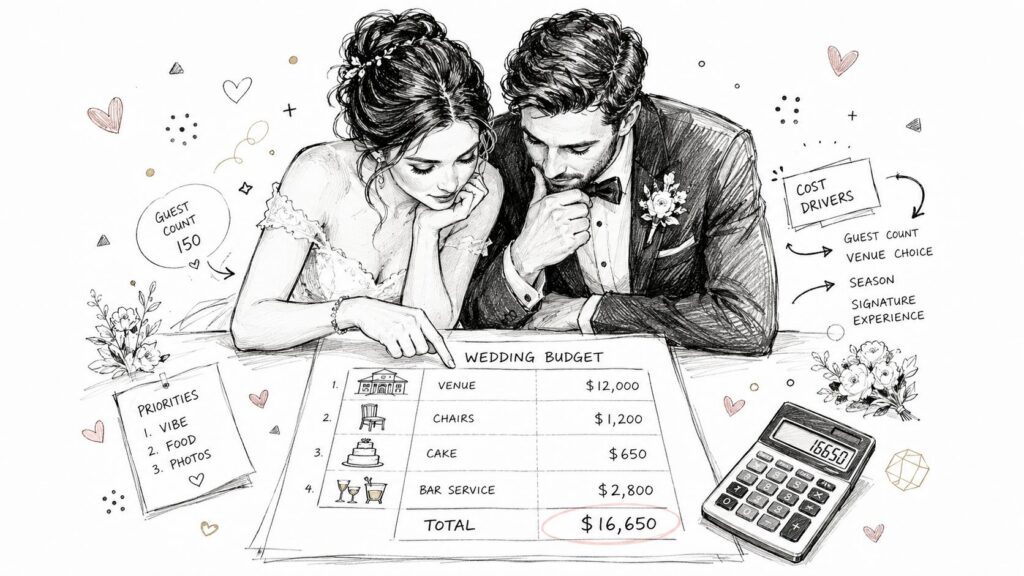
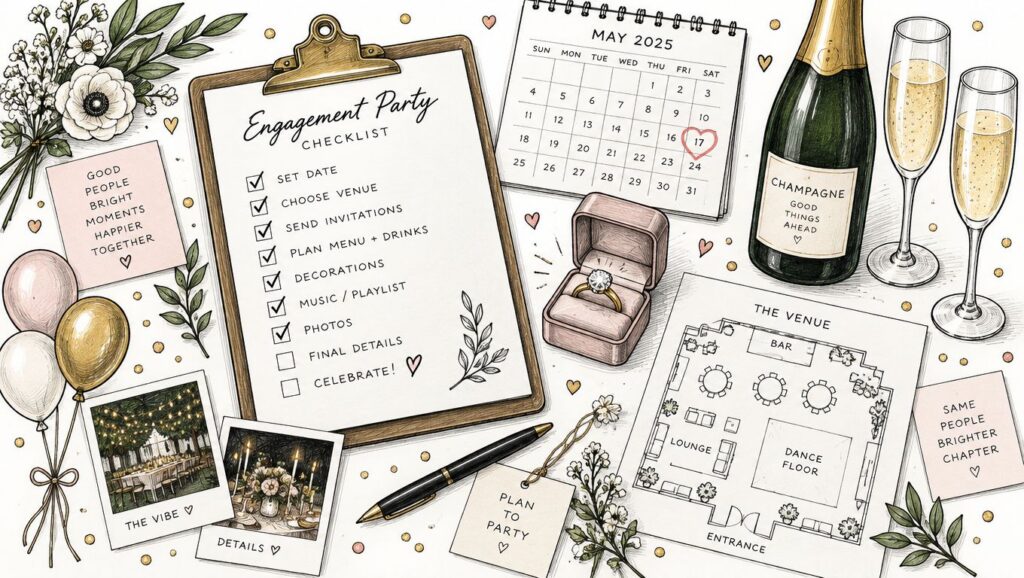
The proposal just happened, and both families are already texting about a party. One parent wants an elegant dinner, the other is picturing a backyard gathering, and you're trying to find a date before wedding planning takes over your calendar. That's a normal starting point, but it's also where engagement parties begin to drift off course. A good engagement party doesn't need wedding-level production. It does need a clear host, a firm spending limit, a venue that matches the guest count, and a schedule that accounts for Central Texas logistics. If you're figuring out how to plan an engagement party in a six-to-eight-week window, make the decisions below in order. Table of Contents Starting Your Engagement Party on the Right Foot Decide who owns the decisions Lock the scope before the date Setting a Realistic Budget You Can Stick To Use the budget as a guest-count filter Engagement Party Budget Allocation by Tier Choosing the Right Date and Venue Match the venue to the party format Building the Guest List and Sending Invitations Build the list in layers Send fewer messages through one system Sorting Out Catering, Bar, and Décor Choose food that fits the clock Let one design choice lead Sample Budget Split for a 75-Cater Party Planning the Timeline From Six Weeks Out to Day Of The six-to-eight-week planning track The day-of run-of-show Central Texas Venue Features That Make Planning Easier Why indoor-and-outdoor flow matters Test the venue with a real schedule Starting Your Engagement Party on the Right Foot Before anyone tours a venue or orders invitations, decide what this party is supposed to do. An engagement party can be a relaxed stand-alone celebration, an early introduction between two families, or a more formal announcement that begins the wedding conversation. Those are different events. A backyard cocktail gathering may suit the first purpose, while a hosted dinner or venue party may fit the third. Start with a short conversation between the couple and the people who may contribute money or planning help. Agree on the expected formality, approximate guest group, whether there will be speeches, and what the budget is meant to cover. Don't let one parent assume the party includes every wedding guest while the other assumes it's limited to immediate family. Practical rule: Nobody gets to expand the guest list, promise a date, or add a major vendor until the host and budget are clear. Decide who owns the decisions Choose one primary host, even if several people are contributing. The host doesn't have to pay for everything personally, but one person should maintain the budget, communicate with vendors, collect decisions from both families, and approve changes. Shared ownership without a decision-maker creates delays and duplicated spending. Write down three answers: Who hosts: Identify the person or people responsible for the event. Who pays: Separate engagement-party funds from the wedding budget before anyone signs a contract. Who speaks: Decide whether the host, a parent, or the couple will welcome guests and give toasts. The money conversation deserves special attention. A parent who offers to help may have a different idea of what “help” includes. Clarify whether the contribution covers venue rental, food, drinks, décor, rentals, invitations, and unexpected costs. If a relative wants to contribute only to florals or catering, record that limitation rather than treating it as a general fund. Central Texas couples can also use an experienced planning resource to compare event formats and clarify what kind of celebration fits their wider wedding plans. The Wedding Studio planning resource can be useful when the engagement party needs to feel connected to the wedding without becoming a miniature version of it. Lock the scope before the date Don't announce a date because it works for one family. Build a short list of possible weekends, check the most important guests, and confirm venue availability before sending anything public. A date that sounds perfect in a family group chat means nothing if the property, caterer, or approved bartender can't support it. The rest of the plan becomes much easier once these three decisions are settled: what the party is for, who controls the decisions, and what the budget covers. Without them, every later choice becomes a negotiation. Setting a Realistic Budget You Can Stick To A Central Texas engagement party can look affordable until the venue adds bartender requirements, rental delivery, setup time, and weather backup costs. Set the spending ceiling before choosing the guest count. Then select a party format that fits the ceiling, rather than inviting everyone first and cutting important services later. Published engagement-party guidance places small at-home events for 10 to 25 guests around $200 to $800, restaurant private dining for 20 to 50 guests around $800 to $4,000, catered backyard or venue events for 50 to 100 guests around $2,000 to $8,000, and formal events for 100 or more guests around $5,000 to $15,000 or more. These benchmarks appear in this engagement-party planning guide. Use them to compare formats, not to predict a Central Texas invoice. Date, venue rules, service level, guest count, and bar arrangements can change the total quickly. A venue-based party needs room for costs that do not appear in a headline rental price. One allocation model assigns 25% to 35% to venue rental, 25% to 30% to food, 15% to 25% to drinks, 8% to 12% to décor and florals, 5% to 10% to entertainment, 2% to 5% to invitations, and 5% to 10% to contingency spending, as detailed in EventCortex's engagement-party budget guide. On a $5,000 budget, that model puts roughly $1,250 to $1,750 toward the venue, $1,250 to $1,500 toward food, and $750 to $1,250 toward drinks. Use the budget as a guest-count filter Work backward from the format you want: Set the maximum amount the host will spend. Reserve contingency money before planning décor. Request a venue estimate showing every mandatory fee. Price food, drinks, rentals, and staffing against the likely headcount. Cut the guest list or simplify the format if the numbers