Uncategorized

What Vendors Do You Need for a Wedding

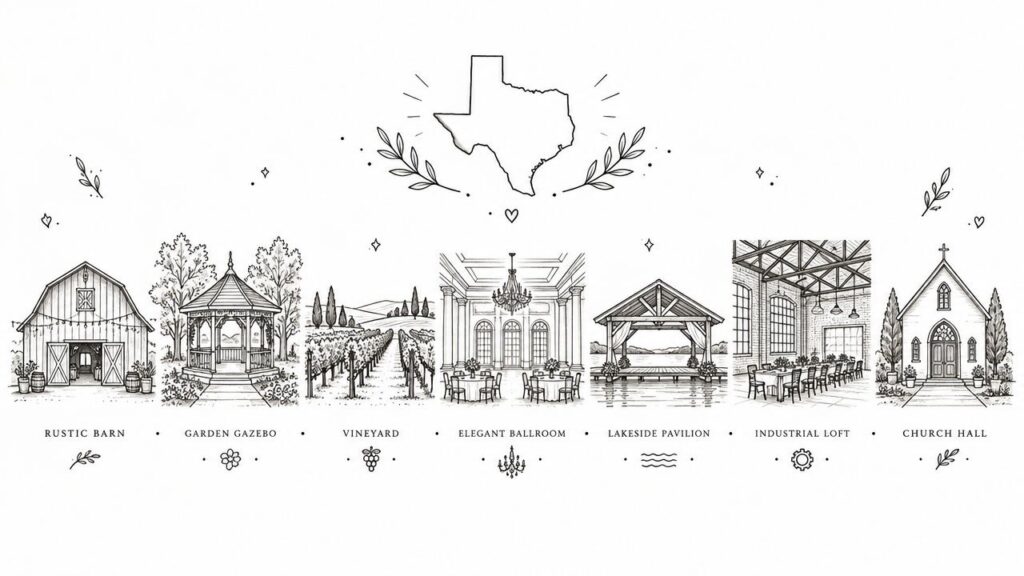
You've opened a wedding checklist and found a wall of vendor names: venue, caterer, photographer, florist, rentals, transportation, beauty, cake, entertainment, coordinator, and more. The list makes every hire look equally urgent, but they aren't. The right question isn't what vendors do you need for a wedding. It's which professionals your venue, guest count, format, and priorities require. A typical couple works with an average of 14 vendors, according to The Knot's wedding vendor resources. That number sounds intimidating until you separate the team into layers. A venue and a few high-impact specialists establish the structure, while other vendors add comfort, style, convenience, and personality. Table of Contents Building Your Core Wedding Vendor Ecosystem Think in layers, not obligations Essential Vendors You Must Book First Start with the venue Add the people who control the day Secure ceremony and reception leadership Secondary and Optional Vendors to Elevate the Day Compare necessity with enhancement Spend on the experience guests notice How Your Venue Choice Changes Your Vendor List Ask what the contract eliminates Budgeting and Contract Tips for Your Vendor Team Protect the money before you sign Timeline for Hiring Your Wedding Vendors Begin with the fixed conditions Work backward from the wedding day Finalizing Your Vendor Roster and Next Steps Build one operational plan Building Your Core Wedding Vendor Ecosystem Your vendor list should function as a system, not a shopping spree. Each provider either creates a hard logistical condition, fulfills a legal or operational requirement, or improves the atmosphere and guest experience. Once you classify vendors that way, the planning process becomes much easier to control. Start with the venue, because it determines the shape of everything else. Guest capacity, ceremony and reception locations, catering rules, furniture, sound equipment, parking, access hours, cleanup, and preferred-vendor policies all influence who you'll need to hire independently. A venue that includes tables and chairs removes one decision. A venue with in-house catering changes another. A venue without day-of management may make coordination a priority. The core ecosystem usually includes: Venue: Provides the physical setting and establishes the event's operational boundaries. Planner or coordinator: Manages decisions before the wedding or directs the day itself. Photographer: Preserves the visual record and affects portrait timing, family-photo organization, and lighting needs. Caterer and bar team: Handles food, beverage service, staffing, equipment, and service flow. DJ or band: Provides music, announcements, sound reinforcement, and reception pacing. Officiant: Leads the ceremony and handles the required formalities for your wedding format. Florist and décor team: Shapes the visual environment, though these services may be scaled or replaced with venue décor. Attire and beauty professionals: Prepare the couple and wedding party for the ceremony and photographs. The most recent vendor data from The Knot says couples hire the dress-purchase category at 91%, venues at 90%, and photographers at 87%, with an average vendor team of 14 providers. Those figures show a useful pattern: the venue, attire, and photography sit near the center of the planning workflow, while the rest of the team depends more heavily on the wedding's design and format. Preferred-vendor lists such as this one from Texas Old Town can also reduce research time by giving couples a starting point for local providers. Think in layers, not obligations The first layer keeps the event possible. The second makes it run smoothly. The third makes it feel like your wedding. That distinction protects your budget. You may need a caterer if the venue doesn't provide food, but you might not need a separate rental company if the venue supplies furniture. You may need a DJ for announcements and sound, but you might skip a separate emcee. You may want a florist, but a ceremony in a naturally green setting may require less décor than a blank ballroom. Practical rule: Don't add a vendor until you can name the specific problem they'll solve or the experience they'll improve. Write your first draft in three columns: required by the venue or law, needed for smooth operations, and chosen for style or convenience. That simple filter prevents a generic checklist from dictating your wedding. Essential Vendors You Must Book First Some vendors control the conditions under which every other provider works. Book those first, because a late decision can force changes to guest count, menus, load-in plans, power requirements, photography timing, or the ceremony schedule. Start with the venue The venue is your first serious contract. Confirm the date, capacity, ceremony options, access window, rain plan, catering rules, beverage policy, furniture, sound equipment, dressing rooms, parking, cleanup, and required insurance before you compare other vendors. Venue policies create downstream decisions. A caterer needs to know whether there's a prep kitchen and service entrance. A band needs to know about electrical access, sound limits, stage dimensions, and load-in routes. Your photographer needs to understand where portraits can happen and how much time the venue allows before guests arrive. Industry planning guidance places the venue and planner first, followed by photography or videography, catering, and entertainment, because sought-after providers may be reserved 9 to 18 months ahead in major markets. The booking sequence and lead-time guidance are summarized in The Knot's wedding vendor checklist. Add the people who control the day A planner or coordinator is the next decision if you don't have strong venue management or family members who can handle logistics without becoming guests responsible for the event. A full-service planner helps with design, sourcing, contracts, and scheduling. A day-of coordinator takes over the operational load closer to the wedding. Your photographer deserves early attention because the photographer's availability and working style influence the timeline. Ask how they handle family portraits, dark interiors, difficult weather, large wedding parties, and coordination with videography. Don't choose on portfolio style alone. You'll spend much of the day near this person, so communication matters. Catering is a major operational hire, not just a menu choice. Review staffing, service format, rentals, dietary accommodations, kitchen requirements, bar responsibilities, setup, cleanup, and overtime. Use this practical guide to
What Sound Equipment Do I Need for a Band: Live Setup Guide

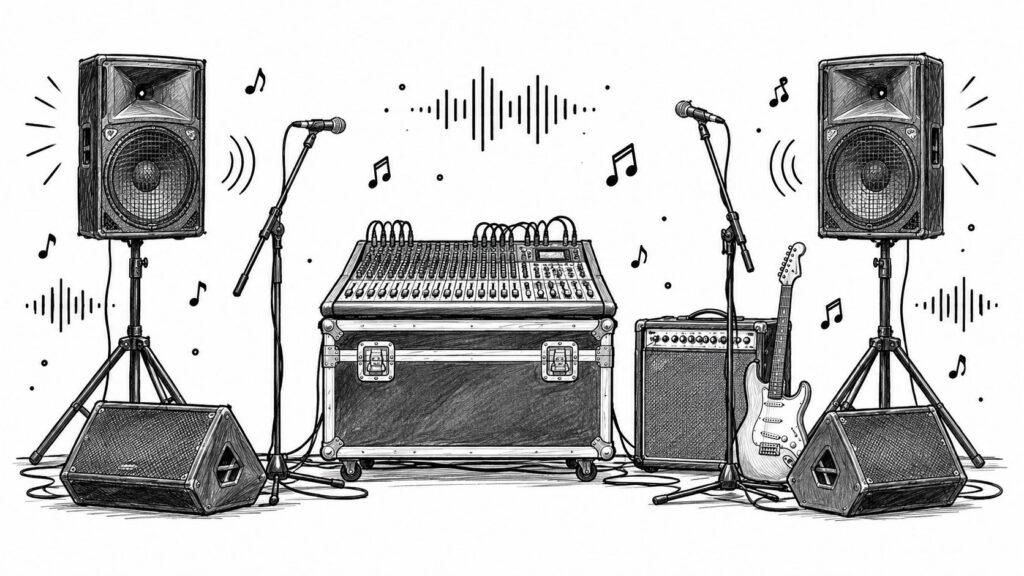
For a 100-person indoor room, plan on roughly 500 to 1,000 watts RMS, using about 5 to 10 watts per person; outdoors, you may need double or triple that power. A band normally needs microphones, a mixer, powered speakers or amplifiers, audience mains, and performer monitors, with the exact package determined by the room and the loudest instrument. The usual problem isn't finding a list of equipment. It's arriving at a wedding venue with a Bluetooth speaker, one vocal microphone, and no workable way for the drummer or guitarist to hear the singer. The room may already have a PA, but its inputs, monitor coverage, speaker placement, and wireless frequencies may not suit a live band. A dependable setup starts with the signal chain, then matches the system to the venue, stage plot, channel count, and monitoring plan. That approach prevents the familiar gig-night failures: feedback during the first dance, vocals buried under guitar amps, and a band that can't hear the count-in. Table of Contents Understanding the Core Parts of a Live Band Sound System Start with sources and inputs Separate the audience mix from the stage mix Choosing the Right Gear by Band Size and Venue Type Indoor and outdoor rooms behave differently Avoid the monitor compensation trap Sizing Your Mix Around the Room and the Performance Build the input list before buying equipment Use the loudest source as the design test Building a Reliable Band Stage Plot and Mic Plan Draw the stage from the audience perspective Match microphones to sources Build monitor mixes deliberately Handling Venue Sound Options and Wireless Mic Planning Treat wireless microphones as a coordination task Final Setup Checklist and Common Band Sound Mistakes Understanding the Core Parts of a Live Band Sound System Every live band PA follows four practical pillars: input transducers, signal processing, amplification, and loudspeakers. In working terms, microphones and direct boxes capture sound, the mixer and processing shape and route it, amplifiers increase the signal, and speakers turn it back into sound for people in the room. This chain is easier to troubleshoot than a pile of disconnected boxes because each failure has a place. Start with sources and inputs The input stage includes vocal microphones, drum microphones, instrument microphones, and DI boxes. A DI box sends a clean, balanced signal from a keyboard, acoustic guitar, bass, or playback device to the console. That matters on a long stage run, where a balanced connection is less vulnerable to noise than an improvised unbalanced cable. The mixing console gives the operator control over channel level, EQ, routing, and monitor sends. You don't need the most elaborate console available, but you do need enough inputs for the actual band, spare capacity for announcements, and enough AUX outputs for the monitor plan. Processing may be built into the console or supplied by separate devices. It can include EQ, compression, reverb, monitor routing, and feedback management. Processing should improve clarity, not disguise a badly placed speaker or an overpowered guitar amplifier. Practical rule: Fix placement and stage volume before reaching for more processing. A mixer can't rescue a microphone aimed at a monitor. Separate the audience mix from the stage mix The main speakers face the audience. Monitors face the performers. These are different jobs, and major live-sound guidance treats them as separate PA roles because musicians need a controlled reference mix while the audience needs coverage and balance. That means a small band usually needs at least two output paths, not one speaker pointed vaguely toward the room. A left and right main arrangement can cover the audience, while wedge monitors or in-ear systems provide the stage feed. If the band uses substantial bass or kick drum, subwoofers may be added below the mains to handle low-frequency reinforcement. Historical live-sound development reflects the same practical progression. Harman's history of live sound describes early-1960s PA systems that were often used mainly for vocals, a 1,000-watt touring PA described by 1967, and larger multi-way systems appearing by the 1970s. Modern equipment grew more complex because full-band sound requires clarity, headroom, coverage, and monitoring. If the band is also producing promotional material, a clean live feed can support rehearsal clips and visual content. Tools such as AI video tools for song releases can help turn those assets into release-ready videos, but they don't replace a properly balanced room mix. For event-specific planning, compare the practical requirements in this band and event sound system guide. Choosing the Right Gear by Band Size and Venue Type The right PA depends on the band, room, and arrangement, not the number of people standing on stage. A quiet acoustic trio may send vocals and a few instruments through a compact powered system. A full rock band with acoustic drums, loud guitar amplifiers, and bass needs more headroom, low-end support, and monitor control. The following ranges provide a starting point from live-sound buying guidance. They aren't a substitute for checking the venue, but they prevent the most common mistake, buying a system that reaches its limit before the band reaches performance volume. Band size and genre Indoor wattage range Outdoor wattage range Typical speaker class Small acoustic act 300 to 800 watts Higher capacity required as sound disperses Powered two-way tops, commonly 8 to 12 inches Medium full rock band 1,000 to 2,000 watts Substantially more power and coverage Larger powered tops with subwoofer support Large band or large room 5,000+ watts System design and coverage become critical High-output mains, subwoofers, or line-array approach These ranges come from the American Musical live-sound buying guide, which also recommends sizing from the loudest unamplified source, then adding vocal and drum requirements before checking clean SPL and distortion. A compact powered PA can work well for an acoustic act, especially when the guitar or keyboard is DI'd and the room is controlled. Indoor and outdoor rooms behave differently For indoor events, a practical planning rule is 5 to 10 watts per person, or approximately 500 to 1,000 watts RMS for 100

10 Wedding and Reception Checklist Essentials

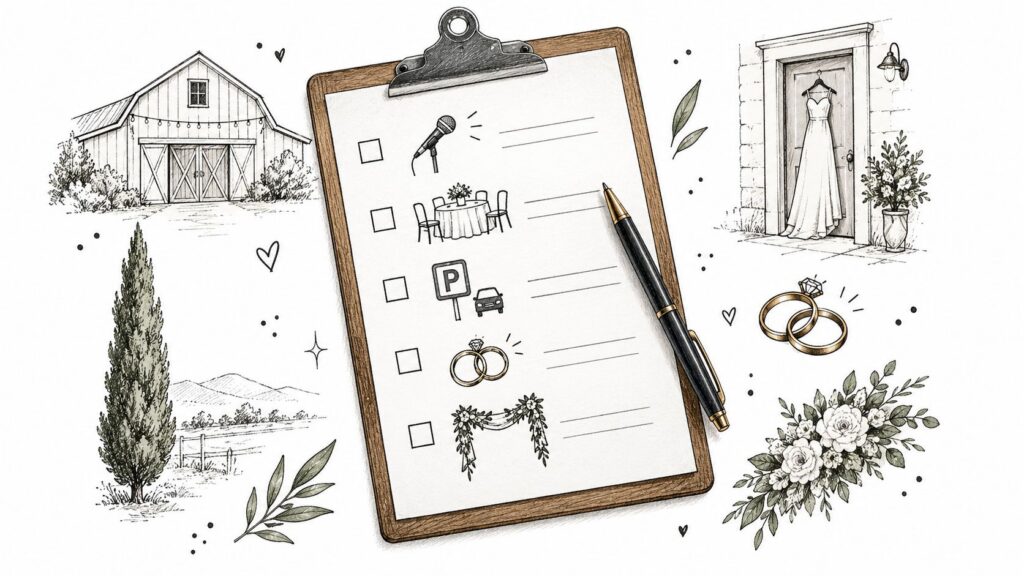
A couple can arrive at a Hill Country venue with every major decision made and still lose time before the ceremony begins. The microphone hasn't been tested, the furniture count doesn't match the floor plan, and guests are receiving conflicting parking directions. None of those problems looks dramatic during planning, but each one can interrupt an otherwise beautiful wedding and reception. A reliable wedding and reception checklist should follow the handoffs that make the day work. That means connecting the booking decision to the room layout, the caterer to the prep kitchen, the officiant to the audio system, and the photographer to the venue access plan. It also means assigning one person to own each task and recording vendor confirmations in writing. The checklist below is designed for venues such as Texas Old Town, where couples may use indoor and outdoor spaces, an 8:00 a.m. to midnight, 16-hour rental window, built-in PA systems, dressing suites, published furniture counts, private parking, and on-site management. Mark every deadline, name the responsible person, and confirm each handoff before event week. Table of Contents 1. Secure Your Venue and Confirm the 16-Hour Rental Window 2. Select and Contract With Your Caterer and Bar Service Put dietary and beverage decisions in writing 3. Plan Ceremony Layout and Audio-Visual Setup 4. Finalize Guest Count, Seating Chart, and Reception Layout Resolve sensitive seating before the final version 5. Coordinate Photography and Videography Services 6. Organize Florals, Décor, and Venue Styling Separate structure from decoration 7. Plan Music, Entertainment, and DJ or Band Coordination 8. Manage Parking, Accessibility, and Guest Logistics Make arrival a managed handoff 9. Establish Payment Terms, Contracts, and Budget Tracking Use a contract handoff system 10. Confirm Final Event Details, Rehearsal, Day-Of Timeline, and Post-Event Logistics Final confirmation checklist 10-Point Wedding & Reception Checklist Comparison Print the Checklist and Assign Every Deadline 1. Secure Your Venue and Confirm the 16-Hour Rental Window Your venue controls the schedule, layout, access rules, included equipment, and many of the decisions every other vendor must follow. Before paying a deposit, walk through the ceremony route, reception room, vendor entrance, dressing areas, parking, and weather backup space with the actual guest count in mind. A venue that looks spacious during a tour may feel very different once dining tables, a bar, a dance floor, a DJ setup, and accessible pathways are added. Texas Old Town offers exclusive access from 8:00 a.m. through midnight, which gives couples room for setup, ceremony, reception, and breakdown without compressing every vendor into a short arrival period. That matters when florals, catering, entertainment, photography, and ceremony furniture all need access to the property. Use the venue tour to verify the details that are easy to assume and hard to fix later. A useful starting point is this guide to choosing a wedding venue. Match capacity to the actual plan: Compare your expected guest count with the selected hall, dining format, dance floor, buffet, bar, and vendor areas. Record included furniture: Ask for tables, chairs, bars, and other included items in writing, including quantities and sizes. Confirm access and rehearsal options: Establish when the wedding party, florist, caterer, DJ, and photographer may enter. Review accessibility: Check parking, routes, restrooms, ceremony seating, and reception pathways for guests with mobility needs. Name the venue contact: Put the on-site manager's name and preferred event-day contact method on the master document. Practical rule: Treat the rental window as an operating schedule, not just a booking benefit. Every vendor should receive an arrival, setup, service, and departure time that fits inside it. 2. Select and Contract With Your Caterer and Bar Service Food and beverage decisions affect the guest experience and the room's working layout. Choose the meal format only after the caterer has reviewed the venue's prep kitchen, service entry, dining area, buffet location, bar position, and cleanup expectations. A plated meal, buffet, family-style service, and stations each create different lines, staffing needs, and timing pressure. Texas Old Town allows couples to choose their caterer and provides a prep kitchen with a separate service entry. Its bring-your-own-beverage model still requires an approved bartending company, so the beverage plan should identify who supplies alcohol, who serves it, where it's stored, how nonalcoholic drinks are presented, and who manages cleanup. Start with the guide to choosing a caterer and then place every responsibility in the contract. A caterer should know the final service style, setup window, plating or buffet sequence, dietary requirements, labeling process, and breakdown duties. Put dietary and beverage decisions in writing Ask the caterer to document allergy procedures and ingredient transparency. Guests shouldn't have to guess whether a dish is safe, and servers need a clear answer when someone asks about ingredients. For the bar, verify liability insurance and the bartender's required Texas credentials before signing. Keep the beverage plan practical rather than decorative. A signature drink can be useful, but it shouldn't replace water, clearly marked nonalcoholic options, and a service layout that prevents avoidable lines. The handoff is complete only when the venue, caterer, bartender, and point person agree on access, service timing, storage, and cleanup. 3. Plan Ceremony Layout and Audio-Visual Setup A ceremony can look ready while remaining technically unprepared. Chairs may be aligned, the aisle may be styled, and the processional music may be selected, but guests still need to hear the officiant, vows, readings, and music clearly from every seat. Texas Old Town provides indoor and outdoor PA systems with Bluetooth connectivity and a wireless microphone. Those features reduce the equipment couples need to bring, but they don't remove the need for a full test. The officiant should speak at a normal volume during rehearsal while the venue manager checks microphone placement, volume, music playback, and handoffs. Build the ceremony plan around people and cues: Officiant: Owns the speaking sequence, readings, vows, and microphone handoff. Music operator: Starts the processional and recessional cues and keeps a backup device available. Ceremony coordinator: Signals the wedding party and confirms everyone is in position.

Who Plans the Rehearsal Dinner: Roles and Etiquette

Traditionally, the groom's family plans and hosts the rehearsal dinner. Today, the couple, both families, or a shared hosting group may plan it instead, while one or more people contribute to the cost. You're probably dealing with this question because the wedding is close enough for relatives to start asking who's inviting whom, a parent has offered to pay without choosing a venue, or everyone assumes someone else is handling the details. That confusion is normal, but it's also preventable. The person paying and the person planning don't have to be the same person. After coordinating rehearsal dinners around Central Texas, I've found that tradition matters less than a clean assignment of authority. Decide who owns the guest list, who books the venue, who approves the menu, and who runs the timeline. Once those decisions are written down, family contributions feel generous instead of controlling. Table of Contents Who Plans the Rehearsal Dinner The Traditional Role of the Groom's Family What the traditional host controls Does the custom still apply? Modern Hosting Models and How to Choose Four workable models Make the decision before vendor calls Planning Authority Versus Who Pays the Bill Assign decisions by category Use clean lines when families co-host Coordinating the Rehearsal Dinner at Your Venue Build the evening around the rehearsal Confirm food, beverage, and vendor rules Prepare for the weather, not the forecast When a Welcome Party Works Better Choose the larger format when A Short Checklist for the Week Of Assign the final checks Who Plans the Rehearsal Dinner The classic answer is the groom's family, particularly the groom's parents. Historically, they hosted the event before the wedding, and that custom remains the default in English-language wedding etiquette across the United States and other major markets. The Los Angeles Times' rehearsal-dinner guidance also reflects the modern alternative, where the couple, the bride's family, or both families may plan and host. The practical answer is different: whoever accepts planning responsibility should receive decision-making authority. A parent who says, “We'll pay,” hasn't necessarily agreed to build the guest list, compare venues, track RSVPs, coordinate vendors, and manage the evening. Likewise, a couple that wants complete control shouldn't hand planning decisions to relatives simply because those relatives are contributing money. Four arrangements work reliably: The groom's family fully hosts, including payment and planning. Two parties split the scope, with each owning a defined piece. The couple hosts, often because they're local, independent, or already managing the wedding. A shared group contributes, with each person assigned a specific responsibility. Choose the model before speaking with venues. If you're considering a property such as Texas Old Town, the person handling venue questions should understand the event space, access window, catering policy, beverage arrangements, and day-of management. The venue's event manager responsibilities can help clarify which tasks belong to the venue team and which still require a family point person. Practical rule: One person can receive money from several contributors, but one person must own the master plan. A rehearsal dinner isn't difficult because the menu is complicated. It becomes difficult when three people approve the guest list, two people contact the caterer, and nobody knows who can make the final call. Assign that authority early, then let the tradition serve the family rather than dictate the workflow. The Traditional Role of the Groom's Family The groom's family traditionally hosts the rehearsal dinner as a gesture of welcome to the bride's family and the people closest to the couple. The custom developed alongside an older wedding-cost structure in which the bride's family handled the wedding reception, leaving the groom's family with a defined role before the ceremony. That traditional role was broad. The groom's parents typically selected the location, created the guest list, sent invitations on behalf of the couple, and paid for the meal, drinks, and related extras. They might also organize toasts or present gifts to the couple and members of the wedding party. The arrangement still appeals to families because it gives the groom's parents a visible way to participate. It can also prevent the bride's family from absorbing every pre-wedding expense, especially when that family is already carrying major wedding responsibilities. A rehearsal dinner hosted thoughtfully by the groom's family can feel like a genuine welcome rather than an obligation. What the traditional host controls If the groom's family is fully hosting, I recommend assigning them these decisions: Format: Decide whether the evening is seated, family-style, buffet, or relaxed cocktail service. Guest list: Approve the people included beyond the wedding party and immediate family. Venue: Select a location that fits the family's preferred atmosphere and practical needs. Budget: Set the spending ceiling before anyone signs a contract. Program: Approve speeches, gifts, entertainment, and the order of events. The couple should still provide essential information. They know the wedding-party roster, dietary requirements, family sensitivities, and wedding-weekend schedule. They should also have veto power over anything that would make the evening uncomfortable or conflict with the ceremony rehearsal. Does the custom still apply? Yes, if the groom's family wants the role and can carry it comfortably. No, if everyone is using tradition as an excuse to avoid making a decision. Modern etiquette is more flexible. The couple may host, the bride's family may host, or both families may share the work. The old default remains useful as a starting point, but it shouldn't override a family's finances, geography, relationships, or preferred level of involvement. Modern Hosting Models and How to Choose Pick the hosting model that matches your family dynamics, not the one that sounds most traditional. The important question is not only who pays. It's who has enough availability, confidence, and authority to keep the event moving. Four workable models The groom's family fully hosts. The groom's parents pay and plan, while the couple supplies the wedding details they need. This fits families who are eager to entertain, live near the wedding location, and want a clear pre-wedding role. The planning authority sits with the

8 Quinceañera Grand Entrance Ideas for 2026

Guests are seated, the lights soften, and the DJ waits for the signal. Then the first notes begin, the doors open, and every person in the room sees the quinceañera for the first time in her gown. That entrance immediately tells guests whether the celebration will feel elegant, energetic, intimate, dramatic, or completely personal. The strongest quinceañera grand entrance ideas balance spectacle with practical details. The route must be comfortable, photographers need clear sightlines, the music cue has to be reliable, and the venue must support the staging, lighting, movement, and weather plan. At Texas Old Town, that may mean using an indoor hall, an outdoor garden path, or a transition between the two. The eight concepts below organize the decision around what the entrance is designed to accomplish, from an architectural reveal and coordinated court choreography to family emotion, technology, and themed self-expression. Table of Contents 1. Classic Staircase or Ramp Entrance With Spotlight Make the route comfortable 2. Choreographed Dance Entrance With Court Build choreography around reliability 3. Outdoor Garden or Scenic Path Entrance Scout the route before decorating 4. Surprise or Reveal Entrance Behind a Curtain or Doors Rehearse every moving part 5. Processional Entrance With Escorted Court Presentations Protect the ceremony from confusion 6. Modern Interactive or Tech-Enhanced Entrance Treat technology as a cue stack 7. Father-Daughter Entrance as a Special Escort Moment Let the music carry real meaning 8. Themed or Costume Entrance for Self-Expression Keep the concept wearable and respectful 8-Point Comparison: Quinceañera Grand Entrance Ideas Choose the Entrance That Fits Her Story 1. Classic Staircase or Ramp Entrance With Spotlight A staircase entrance gives the quinceañera time to be seen. She descends slowly while a spotlight follows her gown, or she walks up a ramp toward a raised focal point as the music builds. Unlike a quick doorway reveal, this format gives guests an extended view of her dress, posture, expression, and accessories. The architectural setting does much of the visual work. Texas Old Town's Sage, Stone, and Tejas halls can support a formal concept built around a defined approach, dramatic lighting, and a clear background. Families comparing layouts can use the Texas Old Town venue floor plans to discuss the route, guest seating, photographer positions, and any space required for the court. Make the route comfortable A beautiful staircase can become a liability if the gown catches, the shoes slip, or the quinceañera can't see the steps. Rehearse the walk several times during Texas Old Town's 16-hour rental window, first in comfortable clothing and later in the actual shoes and gown or a similar rehearsal skirt. A ramp may be the better choice for mobility, balance, or a full skirt with a long train. Coordinate the DJ or music coordinator with the lighting technician. Texas Old Town's Bluetooth-compatible PA system can handle the music connection, but the team still needs a clear cue sequence for the opening track, spotlight, pause, applause, and final position. Practical rule: The entrance should be paced for her comfort, not for the effect. A steady, confident walk photographs better than a rushed descent. Place one photographer at the top and another at the bottom when possible. The dressing suites, with private restrooms and vanity areas, also give the quinceañera a controlled place for final hair, makeup, and gown adjustments before the reveal. Choose a meaningful family-selected song, especially if the entrance will flow directly into a father-daughter dance or another formal moment. 2. Choreographed Dance Entrance With Court A court entrance turns the first appearance into a shared performance. Damas and chambelanes may enter in pairs, create moving formations, and then bring the quinceañera into the center for a final flourish. The result feels more energetic than a solo walk and gives friends an active role in the celebration. The traditional court of honor can be adapted to the family's preferred size and style. A modern Austin-area celebration might combine a formal waltz with cumbia, salsa, reggaeton, or contemporary choreography. A court can also begin with a polished processional before shifting into a surprise dance, but the transition must be simple enough for every participant to remember. Build choreography around reliability Hire a professional choreographer early enough for participants to learn the sequence without turning the preparation into a source of stress. The music should have a steady beat and clearly marked transitions. Complicated footwork often looks impressive in rehearsal but breaks down when the floor is crowded, dresses restrict movement, or one participant misses a cue. Create a formation map and written notes. Mark where the quinceañera enters, where each pair stops, and where the final formation faces. Rehearse at a dance studio or during an available venue session, then use Texas Old Town's 16-hour access period for a full dress rehearsal with sound and lighting. The Texas Old Town reception schedule template can help place the entrance alongside introductions, the waltz, dinner, and later formalities. A backup music track should be ready on a second device. Test the wireless microphone and Bluetooth audio connection during setup, not only during the final minutes before guests arrive. The best court routine makes the quinceañera the focal point. If every dancer receives equal visual emphasis, the audience may lose track of who the celebration honors. 3. Outdoor Garden or Scenic Path Entrance A scenic entrance uses the property itself as part of the presentation. The quinceañera may walk through a landscaped garden, follow a decorated path, or approach the ceremony or reception area through the Hill Country setting. This format feels intimate and cinematic because guests see her arrival unfold through a real background instead of a controlled stage. Texas Old Town's property covers 55 acres and includes water features, streams, and maintained gardens, creating several possible outdoor approaches. Families should treat the route as a production path, not a pretty place to walk. A trail that looks attractive during a daytime tour may have uneven ground, changing shadows, or limited visibility at the preferred event time.

How to Choose a Caterer for a Wedding That Wows

Most couples start shopping for a caterer the same way. They ask who has good food, who fits the date, and who can work within budget. That's a sensible start, but it's rarely enough. At a flexible-vendor Hill Country venue, the caterer affects far more than dinner. They shape when guests eat, how long lines get, whether cocktail hour feels relaxed, whether grandparents get served smoothly, whether allergy concerns are handled carefully, and whether the room turns over cleanly for dancing instead of stalling out in the middle of the night. A beautiful menu on paper doesn't fix weak staffing, vague contracts, or a team that can't handle your guest count and layout. I've seen weddings where the food was simple but the service was so steady that the whole night felt polished. I've also seen the opposite. A menu can sound impressive, then struggle once real timing, real guests, and real venue logistics enter the picture. That's usually where couples realize they weren't just hiring someone to cook. They were hiring a production team. Table of Contents Introduction to Choosing a Wedding Caterer With Confidence What actually separates strong caterers from risky ones Setting Your Budget and Matching Service Style to Your Wedding Start with a realistic range Wedding Catering Service Styles Compared Match the format to the room, not just the menu Ask for itemized proposals every time Vetting Caterers Through Tastings Staffing and Safety Checks Run a tasting like an operations review Staffing reveals whether the service plan will hold up Safety checks should be plain, specific, and easy to explain Decoding the Catering Contract and Uncovering the True Total Cost Read the quote as an operations document Expect the first number to rise Review the legal language with the same care Aligning Your Caterer With Venue Logistics and Guest Experience Logistics shape guest experience more than couples expect Bar timing, floor plan, and cleanup affect the meal Final Checklist for Booking the Right Caterer With Confidence The pre-booking test that actually works What I'd trust and what I wouldn't Introduction to Choosing a Wedding Caterer With Confidence A couple sits down after touring venues, opens three catering PDFs, and immediately gets stuck. One quote looks affordable but says very little about staffing. Another has a polished menu but rolls bar, rentals, labor, and service fees into one total. A third has food they loved at a tasting, but they're not sure that team can serve a large guest list on time in a Hill Country setting with indoor and outdoor movement. That's a normal place to be. Catering decisions feel personal because food is personal. Guests remember whether they were fed on time, whether the meal felt generous, and whether the service matched the tone of the wedding. But from the venue side, catering is also a logistics decision. It touches load-in, prep space, power use, trash flow, timeline management, bar support, rental coordination, and cleanup. Practical rule: Choose your caterer the way you'd choose both a chef and an operations manager. You need both. At flexible-vendor properties, that matters even more. Having options is a real advantage. You're not locked into one kitchen or one package. But freedom creates work. Couples have to compare vendors who may use very different pricing structures, service models, and staffing assumptions. Two proposals can look similar at first glance and lead to very different wedding-day experiences. A good caterer does more than serve tasty food. They arrive with a plan. They know how many staff they need for your service style. They understand how to serve efficiently without turning the reception into a waiting game. They can explain how they'll handle special meals, where they'll stage service, how they'll reset after dinner, and what their team is responsible for before they leave. That's the standard to use when deciding how to choose a caterer for a wedding. What actually separates strong caterers from risky ones Some differences show up early if you know where to look: Clear proposals: Good caterers break out food, labor, rentals, bar, and service charges so you can compare real totals. Operational confidence: They can describe setup, service timing, and cleanup without sounding vague. Staffing transparency: They tell you who is serving, supervising, bartending, and supporting the kitchen. Dietary seriousness: They treat allergies and mixed-diet service as execution issues, not side notes. If a caterer can only talk about the menu, you still don't know how your wedding will run. That's why the smartest process starts before you sign anything. Budget first. Then service style. Then tasting, staffing, safety checks, and contract review. That order saves money and avoids the most common surprises. Setting Your Budget and Matching Service Style to Your Wedding Catering gets expensive fast because it scales in two directions at once. Guest count pushes the total up, and service style changes the labor behind it. Recent U.S. wedding market data puts the average wedding catering spend at about $6,927, with a national average of roughly $80 per person, while regional averages can range from $62 to $123 per guest depending on location, according to The Knot's wedding catering cost guide. The same source notes that a 200-guest wedding at $80 per person lands near $16,000 before add-ons, and domestic destination weddings average about $104 per person, which is useful context if travel and logistics are part of your event. That doesn't mean your wedding should hit those exact numbers. It means you need a working baseline before you start collecting quotes. Start with a realistic range Another pricing guide shows buffet service commonly falls around $40 to $70 per person, while plated dinners often run $80 to $150 per person. That same guide says wedding catering and bar can account for about 20% to 30% of the total wedding budget. A couple spending $30,000 overall might reasonably expect $6,000 to $9,000 to go toward catering and beverages before upgrades, according to Paperlust's wedding catering pricing overview. Those numbers are useful

Last Minute Wedding Venue Availability Guide

You're probably in one of two situations right now. Your original venue fell through, or life moved faster than your wedding timeline and now you need a real place, on a real date, without downgrading the whole event into a courthouse-plus-dinner situation. Good. Ignore the advice telling you to cut the guest list in half and call it a day. Last minute wedding venue availability is tough, but the problem usually isn't the calendar by itself. The problem is choosing the wrong type of venue, asking the wrong questions, and moving too slowly once an opening appears. If you want to keep a full-size wedding intact, you need a venue with enough rental time, enough operational flexibility, and enough administrative speed to absorb a compressed planning window. Table of Contents Why Last Minute Bookings Are Harder Than They Look What couples are actually competing against The friction nobody warns you about Building a Compressed Planning Timeline At 90 days out At 60 days out At 30 days out Where Open Dates Actually Hide The date categories worth chasing Prime Saturdays are not the place to start Speed Wins the Booking The same-day inquiry playbook What your first message should say Negotiating the Contract Without Losing the Experience What venues can often move on What you should trade, and what you shouldn't Keep the negotiation grounded A Real Short Timeline Booking in Central Texas The decisions that matter What changed, and what didn't Your Final Weeks Before the Wedding T minus 6 to 4 weeks T minus 3 to 1 week Day before and day of Why Last Minute Bookings Are Harder Than They Look Most couples assume a short timeline automatically means a smaller wedding. That's lazy advice. A short timeline means you need a venue built for logistics, not just pretty photos. The market tells you how early dates usually disappear. In a 2026 wedding-weekend dataset, couples who booked a venue did so a median of 267 days before the wedding, and the first inquiry happened a median of 361 days out. The same report says the typical U.S. booking range was 200 to 344 days, based on 3,353 inquiries in the sample, which is why true late inventory is limited in major markets (wedding-weekend booking lead time benchmarks). That doesn't mean nothing is left. It means the easy inventory is gone and the remaining inventory is uneven. What couples are actually competing against You're not competing against the length of your engagement. You're competing against three things: Fast-moving reopened dates caused by cancellations, expired holds, and couples who don't complete paperwork Vendor availability for catering, photo, entertainment, transportation, and staffing Venue policies that either help a short timeline or kill it A venue can have your date open and still be a bad fit. If it only gives you a short rental window, requires rigid vendor rules, or takes too long to turn contracts, your planning window gets crushed even further. Practical rule: Don't ask only, “Is my date available?” Ask, “How fast can we contract, how long do we have on site, and how flexible are your vendor rules?” The friction nobody warns you about The hardest part of late booking usually isn't ceremony space. It's everything attached to it. A caterer may still be available but unwilling to bend on timing. A photographer may be open but already committed to a travel-heavy weekend. Insurance paperwork, family decision-making, and final guest count wrangling can eat days you don't have. Meanwhile, venues that quote long planning lead times are often describing their normal booking cycle, not the only way they operate. That's a marketing default, not a universal operational truth. If you want context on standard timing versus your actual options, read Texas Old Town's guide on how far in advance to book a wedding venue. Then stop treating the default planning calendar like a law of physics. Building a Compressed Planning Timeline A short timeline only works when you stop planning in a neat sequence and start planning in parallel. Venue, guest list, catering, attire, and photography can't wait for one another. They all move together. This is the mindset shift: don't think in months. Think in decision windows. At 90 days out This phase is about locking the framework. If the venue isn't set, almost nothing downstream stays stable. Handle these first: Venue shortlist and tours. Pick a small list and move fast. You need spaces that can host your guest count, your ceremony plan, and your backup weather plan without requiring a total redesign. Guest list ceiling. Stop saying “around 150” if the number might be much higher. Capacity drives venue choice, catering style, table layout, parking, and staffing. Parallel vendor outreach. Contact catering, photography, officiant, DJ or band, and planner or coordinator immediately. Don't wait until the venue contract is fully signed to start those conversations. Date flexibility. Give yourself alternates. Friday evening, Sunday, and off-peak dates often save the event. A venue with a long rental window matters most here. If setup, ceremony, cocktail hour, reception, and teardown all have to fit into a narrow access period, every vendor becomes harder to schedule. At 60 days out Now you're converting ideas into operating decisions. Priorities at this stage: Sign venue and major vendor contracts Book attire fittings and alterations Send invitations or digital invitations immediately Confirm menu direction and service style Walk the property or floor plan with layout decisions in mind This is also when venue flexibility starts showing its value. If the venue allows outside caterers, you have more paths to solve availability. If it offers indoor and outdoor ceremony options, you don't need a separate weather panic plan. If it gives you room to rehearse on site, your timeline tightens in a manageable way instead of becoming chaotic. For couples trying to map this out fast, Texas Old Town's event planning timeline is useful because it forces you to assign real tasks to real windows instead of leaving everything

Ceremony and Reception Same Venue Made Simple

You're probably somewhere between excitement and spreadsheet fatigue right now. You've found a venue you like, or maybe three, and the big question is whether keeping the ceremony and reception in one place will make the day feel smooth or make everyone stand around while the room gets turned over. That's the part couples often miss at first. A ceremony and reception same venue setup isn't only about convenience. It's about what happens in the in-between. The vows end, guests clap, and then one of two things happens. People either flow naturally into the next part of the celebration, or the energy drops while everyone wonders where to go, what to do, and why dinner still isn't starting. The good news is that same-venue weddings can work beautifully when the property, timeline, and transition are planned on purpose. The cocktail hour isn't just a pleasant extra. In many weddings, it's the working bridge that gives staff time to reset the space and gives guests a clear next step. Table of Contents Why Couples Are Choosing One Place for Everything What couples are really buying Where confusion usually starts How a Same Venue Wedding Actually Works Two common ways the format works Why exclusive access matters Benefits and Trade Offs to Weigh Honestly Where same-venue setups shine Where couples should pause Same Venue vs Separate Venues at a Glance Designing Zones That Keep Guests Moving Naturally The four zones that do the heavy lifting What good flow looks like on the ground Questions worth asking on a tour Timeline and Room Flip Without the Stress A realistic transition sequence Where dead time comes from Sound Lighting and Flow Details That Make It Seamless Sound should follow the day Lighting does more than make photos pretty Service flow should stay mostly invisible Deciding If One Venue Is Right for Your Celebration Quick decision checklist Why Couples Are Choosing One Place for Everything A lot of couples start with the obvious benefit. One address is easier than two. Grandparents don't need a second set of directions. The wedding party isn't piling into cars between events. Vendors aren't racing the clock across town. That practical appeal isn't a fringe preference anymore. A major UK wedding-industry summary found that up to 77% of ceremonies in 2023 took place at the same venue as the reception, and that share had been rising steadily since 2018, which points to a longer shift toward all-in-one planning rather than a passing trend (UK wedding industry overview). For couples, that shift makes emotional sense too. Once the ceremony starts, nobody wants the day to feel broken into separate errands. People want the celebration to keep its rhythm. What couples are really buying They're not just buying one location. They're buying: Less travel stress so guests can settle in once Cleaner timing because the day isn't vulnerable to traffic between venues More usable celebration time instead of transition time A simpler guest experience from arrival through the last dance A U.S. wedding analysis from The Knot noted that in 2019 nearly one-third of couples hosted their receptions both indoors and outdoors, and it also observed that couples increasingly preferred to hold the ceremony, cocktail hour, dinner, and dancing within the same venue. That same analysis reported the average U.S. wedding size in 2019 was 131 guests, down from 141 in 2010, which helps explain why flexible one-property layouts became more attractive as couples focused on experience and convenience (The Knot wedding changes analysis). The best same-venue weddings feel like one continuous gathering, not two events stitched together. Where confusion usually starts Couples hear “same venue” and picture an easy day. Sometimes that's true. Sometimes it only looks easy because the hard work is hidden behind a strong floor plan, a realistic cocktail hour, and staff who can flip a room without guests seeing the scramble. That's why the key question isn't just, “Can we do both here?” It's, “What will our guests experience in the 30 to 60 minutes after the ceremony ends?” How a Same Venue Wedding Actually Works Hosting a big dinner party at a house is a good analogy. You wouldn't ask guests to stand in the kitchen while you clear plates, set dessert, dim the lights, and rearrange chairs. You'd move them somewhere else for a bit. Maybe the patio for drinks, then back inside for dinner. A wedding on one property works the same way. The day moves through different phases in different spaces, or through the same space at different times. Two common ways the format works The first version is a multi-zone property. You hold the ceremony in one area, guests move to another space for cocktails, and the reception begins in a hall or separate lawn. This is usually the smoother option because staff and vendors can work in parallel. The second version is a single-room flip. The ceremony and reception both happen in one main room. Guests leave for cocktails while staff reset chairs, tables, decor, lighting, and audio. This can work well, but it puts more pressure on timing. Guidance from venue operators consistently emphasizes that same-venue weddings work best when the site has distinct zones for ceremony seating, cocktail circulation, dressing rooms, and reception dining or dancing because that layout reduces friction and lets vendors reset one area while guests enjoy another (same-venue layout guidance). Why exclusive access matters If your venue gives you full use of the property for the day, the timeline usually feels calmer. Your florist can stage early. Your DJ can sound-check without rushing. Your planner can place signage, rehearse entrances, and solve little issues before guests arrive. That matters just as much as the pretty backdrop. Here's a practical way to evaluate a venue tour: Ask where guests go after the ceremony. If the answer sounds improvised, the transition may feel improvised too. Ask where staff stage tables, linens, and decor. A smooth flip needs a hidden work path. Ask what happens in bad

How to Use Wireless Microphone for Weddings and Events

The officiant is halfway through the vows when guests in the back rows start leaning forward. The receiver is powered on, the transmitter is clipped neatly to a lapel, and the DJ booth appears ready, but the sound cuts in and out as the ceremony moves from the garden toward the reception hall. Later, a toast-giver holds the microphone too far away, a guest brushes the antenna, and the final story disappears into room noise. That's the practical reality behind how to use a wireless microphone at a wedding. The job involves legal frequency selection, RF coordination, receiver placement, microphone technique, battery management, gain staging, and clear handoffs between the officiant, DJ, venue manager, and speakers. On a Hill Country property with indoor halls, outdoor ceremony sites, guest phones, Wi-Fi, Bluetooth devices, and several event areas, pairing the microphone is only the beginning. Table of Contents Why Wireless Microphones Make or Break Your Ceremony Sound One event can contain several sound environments Before You Power On What to Check About Frequencies and Gear Start with the legal operating window Inventory the complete signal path Scan at every operating position How to Set Up and Pair Your Wireless Microphone Without Guesswork Establish the receiver position first Scan, select, and sync in order Walk the actual coverage area Positioning the Microphone for Clear Speech in Every Moment Match placement to the ceremony Make the handheld handoff boring Battery Gain and Feedback Control During the Event Run levels from the operating position Keep monitors and microphones apart Troubleshooting Dropouts Interference and Last Minute Fixes Diagnose by symptom Why Wireless Microphones Make or Break Your Ceremony Sound At a multi-venue Hill Country property, the microphone may begin at an outdoor garden altar, move through an indoor hall, and end up in a toast line with several different speakers. Each change affects signal path, room acoustics, microphone technique, and who is responsible for the handoff. Pairing the transmitter and receiver is only the starting point. A well-managed wireless system lets the officiant move without cables across the aisle, keeps vows intelligible for guests at the back, and gives the DJ a practical handheld for announcements and toasts. The result should feel ordinary to the audience: a steady voice, controlled volume, and no attention drawn to the equipment. One event can contain several sound environments At the garden altar, distance, wind, foliage, guests, and changes in body position can affect the radio path and speech clarity. In a stone hall, reflective walls and hard surfaces can make the same microphone sound louder, harsher, or more prone to feedback when a speaker faces a loudspeaker. The fix is not identical in both spaces. Outdoor coverage depends heavily on receiver placement and a clear path, while indoor control also requires careful speaker placement and gain. The handoff creates another risk. An officiant may use a lavalier or headset, the DJ may take a handheld for announcements, and toasters may pass that microphone between people who hold it at different distances. Before the ceremony, identify who will mute, unmute, collect, and redistribute each transmitter. A quick instruction to keep a handheld near the mouth and away from its grille or antenna can prevent an otherwise avoidable change in level. Practical rule: Assign one person to own the microphone from setup through the last toast. Guest phones, Wi-Fi equipment, Bluetooth devices, and other event systems can add RF congestion, especially when several areas share the property. The operator should know which receiver serves which space, keep the receiver where its signal path remains practical, and avoid treating a successful soundcheck at one location as proof that every handoff will work. For couples and planners, a sound plan should state which system is supplied, where it will be tested, who monitors it, and who manages each transition. The venue's broader sound system information can clarify available equipment and connections. Couples can also explore ceremony release while assigning ceremony responsibilities. Good preparation keeps the garden ceremony, Stone hall, DJ booth, and reception speakers working as one coordinated event. Before You Power On What to Check About Frequencies and Gear At a Hill Country property, the ceremony may begin in a garden, move into the Stone hall, and finish with toasts near the reception speakers. A microphone that passes a quick test outdoors can fail after the receiver moves indoors, especially when guest phones, Wi-Fi equipment, Bluetooth devices, and production systems add RF congestion. Check the operating plan before anyone powers up. Start with the legal operating window Read the transmitter and receiver labels, confirm their tuning range, and review the manufacturer's documentation and local requirements. The 617–652 MHz and 663–698 MHz ranges are no longer available for wireless microphone operation, and the 700 MHz range, 698–806 MHz, is prohibited. Depending on the equipment and authorization, permitted choices can include 614–616 MHz, the 657–663 MHz unlicensed 600 MHz duplex gap, VHF and UHF TV channels 2–36, 902–928 MHz, 1920–1930 MHz, 2.4 GHz, and 5 GHz. Check the FCC frequency and operation requirements before buying or deploying a system. The post-auction rules make exact frequency blocks more important than a broad label such as “UHF.” Licensed users can operate in the 653–657 MHz duplex gap, while unlicensed users may use 614–616 MHz and 657–663 MHz, subject to the applicable rules. The FCC's post-incentive-auction wireless microphone guidance explains the available operating choices. Inventory the complete signal path Put every component on the table before the ceremony setup: Receiver: Match it to the transmitter and inspect the power connection. Transmitter: Check the bodypack or handheld, capsule, mute control, display, and battery compartment. Antennas: Confirm that detachable antennas are present, firmly connected, and undamaged. Audio cable: Identify whether the receiver feeds the mixer, powered speaker, PA, camera, or another device. Power and backup: Prepare charged batteries or the manufacturer-approved power solution, plus a wired microphone if available. A receiver light only confirms that the unit has power. Confirm that it sends a clean signal to the

7 Wedding Venues for 100 Guests in Central Texas

You've narrowed the guest list to about 100 people, but the venue search still feels surprisingly difficult. A room can be technically large enough and still leave guests crowded around dinner tables, force the dance floor into a traffic lane, or make a weather backup feel like an afterthought. A much larger venue can create the opposite problem, with a reception that feels underused and costs that reflect space you don't need. This roundup compares wedding venues for 100 guests in Central Texas by the details that shape the actual wedding day: capacity fit, indoor and outdoor flow, rental access, included services, catering and bar policies, weather planning, parking, lodging, and day-of support. The goal is to help you choose a venue that works operationally, not just one that looks good in photographs. For additional visual planning inspiration, browse this wedding portfolio for metro Atlanta couples. Capacities, pricing, availability, and policies can change, so confirm every detail directly with the venue before signing. Table of Contents 1. Texas Old Town What makes the logistics easier 2. The Allan House Where this Austin option stands out 3. The Addison Grove A package-led planning model 4. Pecan Springs Ranch Plan for movement across the property 5. Prospect House Efficient services with fewer outside decisions 6. The Grand Lady A private estate with practical reach 7. Camp Lucy The Vineyard Best for a wedding weekend Comparison of 7 Wedding Venues for 100 Guests Match Your Guest Count to Your Best-Fit Venue 1. Texas Old Town For a 100-guest wedding, Texas Old Town gives couples several ways to keep the layout proportional to the guest list. The Kyle property covers 55 acres and includes streams, water features, maintained gardens, indoor halls, and outdoor ceremony settings. That range lets you select a reception room based on dining, dancing, weather, and guest flow instead of filling a single oversized ballroom. The campus has four private halls. Redbud accommodates up to 150 guests, while Tejas, Sage, and Stone accommodate up to 320, 300, and 300 guests. The venue's published information identifies those capacities. Redbud is the most practical first tour for 100 guests because its smaller limit can keep tables, aisles, the bar, and the dance floor connected without leaving the reception visually underused. Rental access also supports a full wedding schedule. Couples receive 16 hours of exclusive access, from 8 a.m. to midnight, allowing time for setup, décor, the ceremony, reception, and breakdown. Climate-controlled halls provide indoor ceremony options, while indoor and outdoor PA systems include Bluetooth connectivity and a wireless microphone. What makes the logistics easier Texas Old Town documents furniture counts and provides dressing suites with private restrooms, a prep kitchen with a separate service entrance, a built-in beverage bar, private parking, and an on-site venue manager. Cleanup and furniture breakdown are included. Couples may bring their own caterer, but the bar requires host-provided beverages and an approved bartending company. Confirm that process, including vendor arrival and service rules, before signing. Ask the venue to draw a sample 100-guest floor plan for every realistic hall. It should show the dance floor, buffet or catering stations, bar, aisles, and DJ or band footprint. No flat rental price is posted online, so request a written quote that separates included services from extra costs. Review the venue's wedding venue floor plans before touring, then compare catering, rentals, bar service, taxes, gratuity, and staffing with competing venues. Best for: Couples who want multiple room choices, a long access window, outside-caterer flexibility, substantial parking, and on-site day-of oversight. Trade-off: The quote is customized, and the approved bartending requirement adds coordination. 2. The Allan House The Allan House works best when the setting itself is a priority. This restored 1883 Victorian home in downtown Austin combines parlors, verandas, and a tree-canopied courtyard, creating a natural indoor-outdoor progression for a garden-style wedding. A 100-guest celebration can use the courtyard for the ceremony or reception while guests move through the historic interiors for cocktails, dinner, or climate relief. The venue lists courtyard capacity up to 200 guests and furniture for up to 150, according to the official Allan House site. That gives a 100-person event useful room for a seated layout and dancing, but the interior backup requires closer scrutiny. The listed indoor ceremony capacity is 65, which means a rain plan for all 100 guests may require tenting, a significant room reconfiguration, or a ceremony and reception layout that uses the courtyard differently. Where this Austin option stands out The Allan House includes a documented furniture inventory, lighting, a prep kitchen, and two private changing suites. An outdoor stage and built-in lighting support live entertainment or a DJ without relying on an entirely external production setup. Downtown access also makes nearby hotels and post-reception transportation easier for guests who aren't staying on the property. Parking is the main constraint. The venue lists approximately 50 on-site spaces, so a 100-guest wedding should plan for rideshare, hotel transportation, carpooling, or nearby parking instructions rather than assuming every guest will park on-site. For this venue, ask three direct questions: What happens if the ceremony must move indoors, where will the dance floor go, and how will the venue communicate parking and transportation to guests? The Allan House is a strong choice for a polished downtown garden wedding, but its weather backup and parking plan need to be settled before you commit. Best for: Couples who want historic Austin character, a courtyard reception, and convenient access to downtown hotels. Trade-off: The indoor ceremony capacity and limited parking make contingency planning essential. 3. The Addison Grove The Addison Grove gives a 100-guest wedding room to breathe while preserving a modern-rustic atmosphere. Located near the Austin and Dripping Springs line, the venue lists capacity up to 300 guests on its official experience page. That upper limit is much larger than your guest count, so the important question isn't whether the property can hold everyone. It's how the team will scale the reception area so the tables,

Scroll to Top