Uncategorized

Venue Dress Code Guide for Weddings and Events

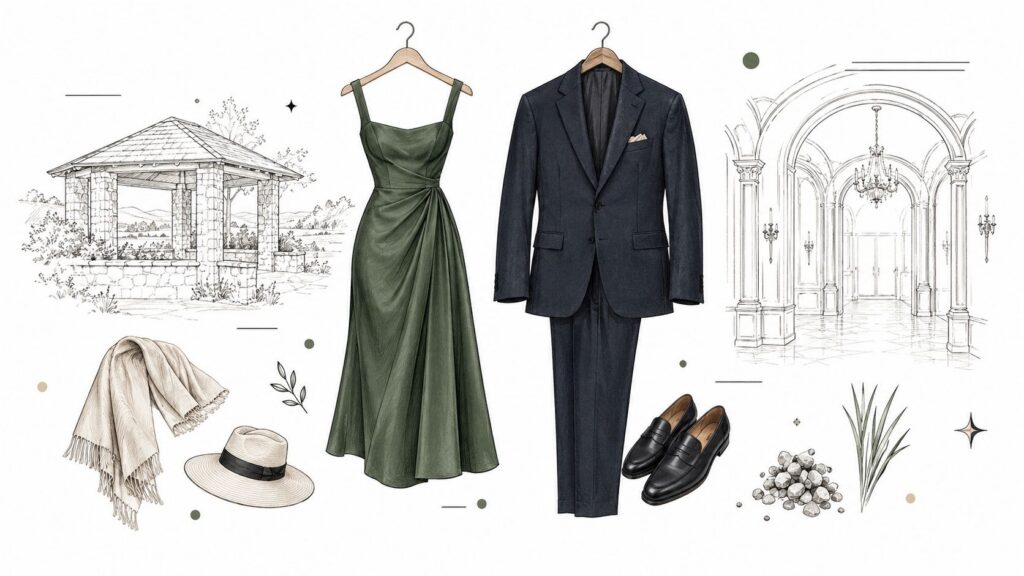
A guest is standing in front of a closet, holding a cocktail midi against a tea-length dress and trying to picture your limestone pavilion, vineyard lawn, or barn reception. The invitation says “formal,” but that still leaves practical questions. Will the ceremony sit on grass or crushed granite? Will guests move from full sun to an air-conditioned hall? Are dress shoes suitable for the paths? That hesitation is exactly why a venue dress code deserves more attention than a single line at the bottom of an invitation. The right guidance helps guests choose clothing that respects the event, works with the property, and stays comfortable from ceremony through dancing. It also gives hosts and coordinators fewer avoidable problems to solve on event day. Table of Contents Why a Venue Dress Code Matters Before You Even Pick an Outfit Start with the property What a Venue Dress Code Actually Does Three jobs a venue dress code performs Put the instruction where guests will see it Common Dress Code Categories Explained Casual and smart casual Cocktail, semi-formal, and formal Black tie and themed events How Venue Features Change What Guests Should Wear Read the ground before choosing shoes Plan for changing thermal conditions How Hosts Should Write the Dress Code Use examples guests can see Make constraints about the venue Repeat the exact wording How Guests Can Comply With Confidence Respect the code without ignoring your needs Bringing It All Together on Event Day Why a Venue Dress Code Matters Before You Even Pick an Outfit A venue sets conditions before anyone chooses a color, hemline, or jacket. Gravel paths change footwear decisions. An open-air chapel changes layering. Barnwood floors, lawns, patios, and climate-controlled halls all create different demands, even when the invitation uses the same word, such as “cocktail.” A guest shouldn't have to search through venue photos, call three relatives, and guess whether a dressy flat looks underdressed. The property should inform the instruction. If the ceremony takes place outdoors and the reception moves inside, the dress code needs to account for both spaces rather than describing only the desired level of polish. Practical rule: Choose the outfit around the least forgiving part of the property, then make it as formal as the invitation requires. That means a guest attending a garden ceremony may choose a formal midi with a block heel instead of a floor-length gown with a narrow stiletto. Someone attending a chilly indoor reception may bring a blazer or wrap even if the outdoor weather feels warm. A corporate host planning a banquet should consider whether attendees will walk across manicured grounds before entering the hall. Start with the property Hosts should identify the event's physical sequence before writing attire guidance: Ceremony setting: Grass, gravel, stone, pavement, or an indoor floor. Guest movement: Whether attendees will walk between ceremony, cocktail hour, dinner, and dancing. Climate changes: Sun exposure, wind, evening cooling, or a cold reception room. Surface rules: Whether heels, cleats, hard soles, or shoes that damage finished floors create a problem. Guests who want a broader starting point can also review this wedding guest attire guide 2026, then adjust the outfit to the actual venue rather than treating a general style guide as a final answer. A useful dress code protects three things at once: the host's vision, the guest's comfort, and the venue's operation. It should tell people how to look appropriate without forcing them to sacrifice mobility, cultural expression, religious attire, adaptive clothing, or weather-appropriate layers. What a Venue Dress Code Actually Does A venue dress code is a written operating instruction. It aligns the formality of the clothing, the character of the event, and the physical demands of the property. It performs three jobs. First, it helps guests place themselves on the casual-to-formal scale. Second, it prevents visible mismatches, such as athletic shoes and denim at a formal banquet or fragile footwear on a lawn. Third, it gives coordinators a consistent reference when guests ask about coats, shoes, layers, or accommodations. Consider a Texas Hill Country event that begins on crushed granite, continues to a covered terrace, and ends on a sealed dance floor. “Cocktail attire” establishes the general formality, but it doesn't answer whether a guest should wear a thin heel, bring a jacket, or choose a dress that allows comfortable walking. A strong policy adds those details. Three jobs a venue dress code performs Audience What the dress code solves Example outcome Guests Uncertainty about formality and practical clothing A guest chooses a polished midi, dress shoes, and a light layer for an outdoor ceremony followed by an indoor reception Hosts Inconsistent attire that can distract from the event's intended atmosphere A wedding party communicates one clear standard across invitations, reminders, and the event website Venue staff Repeated questions about surfaces, jackets, footwear, and exceptions Coordinators can answer consistently and direct private accommodation requests to the right person The guidance also reflects guest behavior. A 2023 YouGov survey of 1,000 U.S. adult citizens found that 59% considered wearing white to a wedding inappropriate, 77% considered an outfit more extravagant than the couple's inappropriate, and 79% considered casual clothing inappropriate when the stated dress code was formal. Those results show why a dress code functions as behavioral guidance, not decorative wording. Put the instruction where guests will see it Place the attire block beside the date, time, and location on the invitation or details card. Repeat the same wording on the event webpage, registration page, or guest FAQ. Don't hide the only explanation behind a vague “see website” note. The policy should answer four questions quickly: How formal should the outfit be? What garments meet that standard? What property conditions affect shoes or layers? Whom should guests contact about accessibility, religious, medical, or cultural needs? Clear wording reduces guesswork without turning the host into an enforcer. Guests need a usable standard, not a lecture on etiquette. Common Dress Code Categories Explained A dress-code label must tell guests what to put on

10 Wedding Reception Hall Decoration Ideas

The same reception decoration can feel rustic in Tejas, intimate in Redbud, refined in Stone, or strategically placed near Sage's grand entrance. That's why the best wedding reception hall decoration ideas start with the hall, the grounds, the guest count, the ceremony location, and the time available to install, move, and remove every detail. Texas Old Town's four halls sit across a 55-acre Hill Country property, so the outdoor setting and indoor architecture should work together rather than compete. (Explore the Texas Old Town venue options) You're probably balancing a saved inspiration board with practical questions. Will guests see across the tables? Can the arch move after the ceremony? What happens if Hill Country wind affects the welcome sign or outdoor candles? How much can your family realistically assemble during the venue's 16-hour rental window, from morning access through cleanup? (Review Texas Old Town's venue amenities) The framework below keeps those questions visible. Choose one visual anchor, layer tables and lighting around it, and assign every ceremony-to-reception movement to a person and a time. For wall artwork and other large visual elements, Aroma Warehouse's wall art advice is also useful when you're deciding how much empty wall space to leave around a focal display. Table of Contents 1. Rustic Texas Hill Country Centerpieces Keep the centerpieces social 2. String Lights and Bistro Lighting Make the glow functional 3. Texas Flag and Patriotic Accents Protect the visual balance 4. Elegant Table Linens and Runner Arrangements Build the tablescape in layers 5. Entrance and Aisle Décor With Floral Arches or Ceremony Backdrops Frame the landscape, don't block it 6. Vintage or Rustic Signage and Wayfinding Design for distance and weather 7. Uplighting and Ambient Color Wash Effects Coordinate the lighting sequence 8. Candles and Luminarias for Ambient Warmth Cluster light with restraint 9. Photo Display and Memory Wall Installations Keep the display in the guest path 10. Bar and Beverage Station Styling With Custom Glassware and Signage Make the bar easy to use Wedding Reception Décor, 10-Item Comparison Turn Inspiration Into a Cutover-Ready Plan 1. Rustic Texas Hill Country Centerpieces Rustic centerpieces work especially well when they look collected from the surroundings rather than copied from a generic barn wedding. Combine native Texas botanicals, seasonal wildflowers, limestone pieces, and reclaimed wood to create warmth without hiding the room's architecture. In Tejas, the handcrafted pine tables already provide texture, so the flowers can stay relaxed and low rather than competing with the furniture. Ask a Texas-based florist from the venue's preferred vendor list to build arrangements around the property's natural colors. Sage, dusty green, warm ivory, rust, and muted yellow can echo the grounds while keeping the tables visually connected to the Hill Country setting. The native floral design options at Texas Old Town can help you compare a locally grounded look with a more formal floral direction. Keep the centerpieces social Low arrangements protect conversation and sightlines across the dance floor. Use a reclaimed wood base, a few limestone accents, and a loose arrangement of wildflowers, but avoid placing tall stems directly in front of guests. A florist can vary the vessels while keeping the palette consistent, which makes long banquet tables feel designed without making every place setting identical. Reuse matters here. Ask the florist to design ceremony aisle flowers that can be moved to the sweetheart table, bar, or entrance after the ceremony. Label those pieces before setup so a helper knows exactly where they belong during the cutover. Practical rule: Spend on flower quality and placement before adding extra objects. A thoughtful low arrangement with one strong material usually looks better than a crowded collection of rustic props. For a DIY version, collect sealed wood boxes, neutral ceramic vessels, and flameless candles, then let the florist supply only the fresh botanicals. That split preserves the handmade character while reducing the amount of delicate work your wedding party must complete on the event morning. 2. String Lights and Bistro Lighting Warm string lights can connect an outdoor ceremony, cocktail area, and indoor reception without forcing every space into the same style. In Tejas, Edison-style bulbs reinforce the country dance hall character. In Stone, a restrained canopy or carefully placed strands can soften upscale finishes without making the room feel themed. In Sage, lighting near the grand entrance can draw guests naturally toward the reception, while Redbud benefits from a smaller, intimate glow. Choose lighting locations based on guest movement, not just photographs. A strand over the dance floor creates a focal ceiling, while illumination along an exterior path helps guests move between spaces safely. Work with the venue manager and lighting vendor to identify approved power sources, attachment points, cable routes, and weather protections before signing a rental order. Make the glow functional Warm white bulbs generally feel more inviting than cool white fixtures for dinner and dancing. Test the setup during daylight, then check it again as the sun drops. A light level that looks subtle at noon may feel too dim once guests begin walking between the bar, dining tables, restrooms, and outdoor grounds. For outdoor areas, use commercial-grade weather-resistant equipment and secure every run against Hill Country wind. The outdoor wedding lighting guidance from Texas Old Town is a useful starting point for discussing placement with the venue team. Do not let decorative lighting obstruct sightlines or hang where guests can catch clothing. Keep the installation above head level, route cords away from walking paths, and assign one person to confirm that lights are operating before the doors open. Lighting earns its place in the budget because it affects the mood of the entire room, not just one table. 3. Texas Flag and Patriotic Accents Texas flags and Lone Star details can feel elegant when they're used as punctuation rather than wallpaper. Tejas is the natural home for a prominent flag near the entrance or dance floor, especially when paired with pine furniture, neutral linens, and loose wildflowers. In Stone, use the reference more through a

How to Plan Engagement Party: A 2026 Roadmap

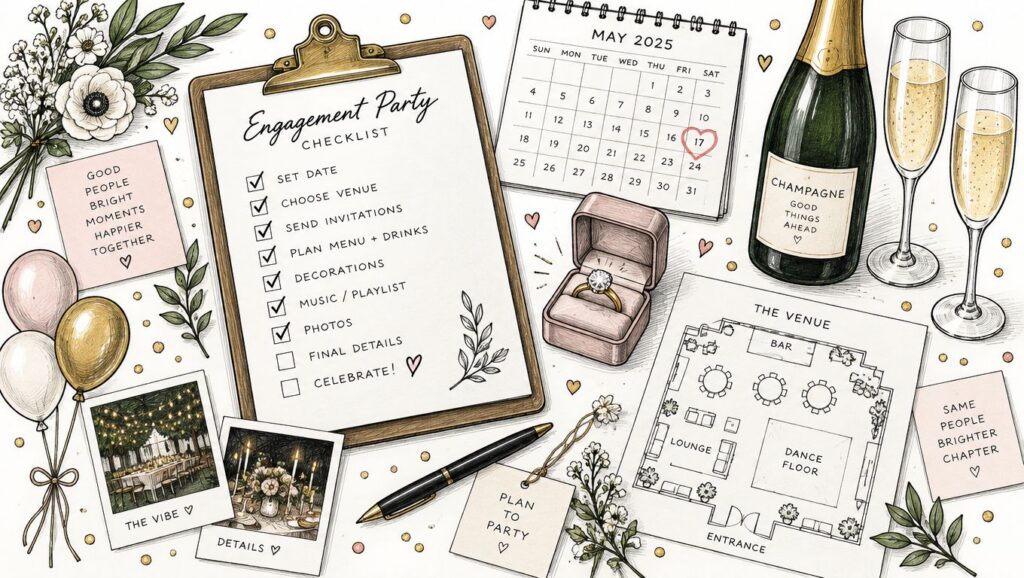
The proposal just happened, and both families are already texting about a party. One parent wants an elegant dinner, the other is picturing a backyard gathering, and you're trying to find a date before wedding planning takes over your calendar. That's a normal starting point, but it's also where engagement parties begin to drift off course. A good engagement party doesn't need wedding-level production. It does need a clear host, a firm spending limit, a venue that matches the guest count, and a schedule that accounts for Central Texas logistics. If you're figuring out how to plan an engagement party in a six-to-eight-week window, make the decisions below in order. Table of Contents Starting Your Engagement Party on the Right Foot Decide who owns the decisions Lock the scope before the date Setting a Realistic Budget You Can Stick To Use the budget as a guest-count filter Engagement Party Budget Allocation by Tier Choosing the Right Date and Venue Match the venue to the party format Building the Guest List and Sending Invitations Build the list in layers Send fewer messages through one system Sorting Out Catering, Bar, and Décor Choose food that fits the clock Let one design choice lead Sample Budget Split for a 75-Cater Party Planning the Timeline From Six Weeks Out to Day Of The six-to-eight-week planning track The day-of run-of-show Central Texas Venue Features That Make Planning Easier Why indoor-and-outdoor flow matters Test the venue with a real schedule Starting Your Engagement Party on the Right Foot Before anyone tours a venue or orders invitations, decide what this party is supposed to do. An engagement party can be a relaxed stand-alone celebration, an early introduction between two families, or a more formal announcement that begins the wedding conversation. Those are different events. A backyard cocktail gathering may suit the first purpose, while a hosted dinner or venue party may fit the third. Start with a short conversation between the couple and the people who may contribute money or planning help. Agree on the expected formality, approximate guest group, whether there will be speeches, and what the budget is meant to cover. Don't let one parent assume the party includes every wedding guest while the other assumes it's limited to immediate family. Practical rule: Nobody gets to expand the guest list, promise a date, or add a major vendor until the host and budget are clear. Decide who owns the decisions Choose one primary host, even if several people are contributing. The host doesn't have to pay for everything personally, but one person should maintain the budget, communicate with vendors, collect decisions from both families, and approve changes. Shared ownership without a decision-maker creates delays and duplicated spending. Write down three answers: Who hosts: Identify the person or people responsible for the event. Who pays: Separate engagement-party funds from the wedding budget before anyone signs a contract. Who speaks: Decide whether the host, a parent, or the couple will welcome guests and give toasts. The money conversation deserves special attention. A parent who offers to help may have a different idea of what “help” includes. Clarify whether the contribution covers venue rental, food, drinks, décor, rentals, invitations, and unexpected costs. If a relative wants to contribute only to florals or catering, record that limitation rather than treating it as a general fund. Central Texas couples can also use an experienced planning resource to compare event formats and clarify what kind of celebration fits their wider wedding plans. The Wedding Studio planning resource can be useful when the engagement party needs to feel connected to the wedding without becoming a miniature version of it. Lock the scope before the date Don't announce a date because it works for one family. Build a short list of possible weekends, check the most important guests, and confirm venue availability before sending anything public. A date that sounds perfect in a family group chat means nothing if the property, caterer, or approved bartender can't support it. The rest of the plan becomes much easier once these three decisions are settled: what the party is for, who controls the decisions, and what the budget covers. Without them, every later choice becomes a negotiation. Setting a Realistic Budget You Can Stick To A Central Texas engagement party can look affordable until the venue adds bartender requirements, rental delivery, setup time, and weather backup costs. Set the spending ceiling before choosing the guest count. Then select a party format that fits the ceiling, rather than inviting everyone first and cutting important services later. Published engagement-party guidance places small at-home events for 10 to 25 guests around $200 to $800, restaurant private dining for 20 to 50 guests around $800 to $4,000, catered backyard or venue events for 50 to 100 guests around $2,000 to $8,000, and formal events for 100 or more guests around $5,000 to $15,000 or more. These benchmarks appear in this engagement-party planning guide. Use them to compare formats, not to predict a Central Texas invoice. Date, venue rules, service level, guest count, and bar arrangements can change the total quickly. A venue-based party needs room for costs that do not appear in a headline rental price. One allocation model assigns 25% to 35% to venue rental, 25% to 30% to food, 15% to 25% to drinks, 8% to 12% to décor and florals, 5% to 10% to entertainment, 2% to 5% to invitations, and 5% to 10% to contingency spending, as detailed in EventCortex's engagement-party budget guide. On a $5,000 budget, that model puts roughly $1,250 to $1,750 toward the venue, $1,250 to $1,500 toward food, and $750 to $1,250 toward drinks. Use the budget as a guest-count filter Work backward from the format you want: Set the maximum amount the host will spend. Reserve contingency money before planning décor. Request a venue estimate showing every mandatory fee. Price food, drinks, rentals, and staffing against the likely headcount. Cut the guest list or simplify the format if the numbers

10 Event Logistics Examples at Texas Old Town

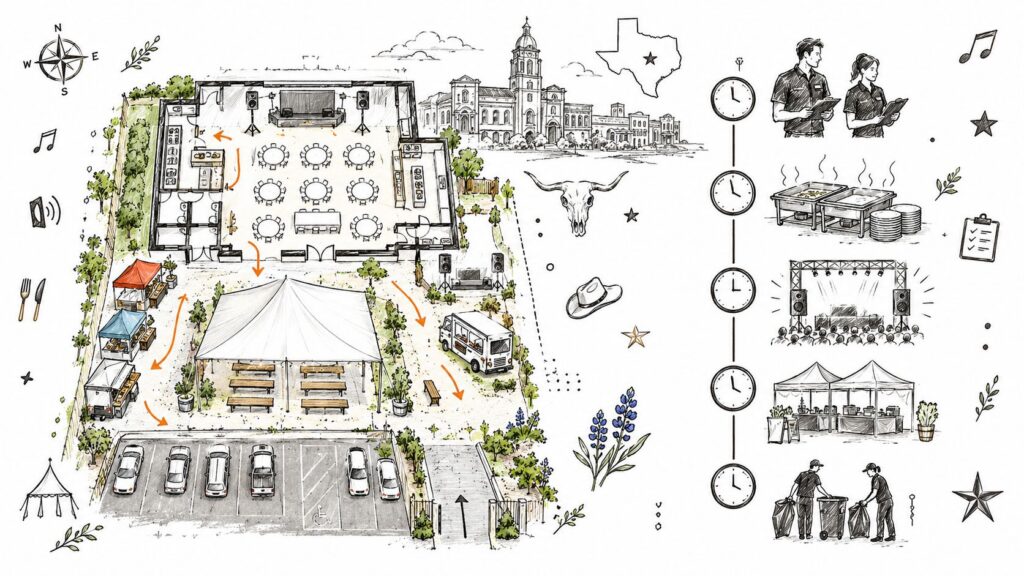
A venue can look finished and still fail the moment guests arrive. The florist may be blocking the caterer's service entry, the ceremony may run late because the microphone wasn't tested outdoors, or guests may circle the property because parking instructions were never assigned to anyone. These problems rarely come from the event concept. They come from unclear ownership, compressed setup windows, and movement paths that only exist on paper. The following event logistics examples use Texas Old Town's documented halls, 16-hour access from 8:00 a.m. to midnight, indoor and outdoor options, parking, PA systems, a prep kitchen, flexible vendor policies, and on-site management to turn common pressure points into working plans. That matters in a fragmented but expanding U.S. party and event planning sector, which had 3,379 businesses in 2026 and reached $2.9 billion in revenue after growing at an annualized rate of 6.6% over the preceding five years, according to IBISWorld's party and event planners industry data. Each example includes a compact timeline, a floorplan or movement description, staffing ownership, equipment placement, a practical insight, and tactics you can adapt. The aim is simple: build the day before guests arrive. A useful overview of the broader planning process is available in this guide to how events work. Table of Contents 1. Venue Capacity Planning and Multi-Hall Configuration Build the room around movement Adaptable tactics 2. Extended Rental Window and Timeline Management Use staggered access A workable sequence 3. Flexible Vendor Policy and Preferred Vendor List Management Separate selection from compliance Vendor controls that prevent collisions 4. Dual Ceremony Options for Indoor and Outdoor Site Selection Plan both routes before the rehearsal 5. Transparent Pricing and All-Inclusive Quotation Model Turn the quote into an operating document 6. On-Site Venue Management and Day-of Oversight Give the manager decision rights Build the manager briefing 7. Parking and Traffic Flow for Multi-Guest Events Separate people from production 8. Prep Kitchen and Catering Logistics Infrastructure Build the service sequence before setup 9. Sound System and Audio-Visual Infrastructure Build the setup around the program 10. Furniture Management and Layout Configuration Build the room around guest movement 10-Point Event Logistics Comparison Turn Venue Features Into a Working Playbook 1. Venue Capacity Planning and Multi-Hall Configuration A 120-person quinceañera shouldn't feel lost in a hall designed for a much larger celebration. Conversely, a corporate gala with 300 guests needs enough room for dining, presentations, circulation, and social time without forcing every function into the same tight footprint. Texas Old Town offers four distinct halls, Tejas, Sage, Stone, and Redbud, with published capacities ranging from 150 to 320 guests. Use the guest count and event behavior to choose the room, not just the room's visual style. Redbud can support an intimate family-style quinceañera, Stone can suit a formal corporate gala, and Tejas can give a country-themed wedding enough room for a prominent dance floor. Build the room around movement Start with a scaled floorplan showing guest tables, the dance floor, bar, buffet or service area, DJ position, gift table, cake table, and accessible routes. A 280-person wedding in Tejas may need a large dance area, while a corporate dinner in Stone may need stronger sightlines to a screen and speaker position. Assign one person to verify the final guest count, one to coordinate catering and bar assumptions, and the venue manager to confirm that the layout fits the selected hall. Request capacity verification from Texas Old Town before finalizing invitations or vendor orders. Practical rule: Capacity is not just a maximum occupancy figure. It determines how comfortably people can enter, eat, dance, socialize, and leave. Adaptable tactics Use the hall as the anchor: Let the selected room determine furniture quantities, service routes, and entertainment placement. Protect open space: Keep the guest entrance, restrooms, and key circulation paths clear of décor and vendor equipment. Walk the room at event time: Visit during the same part of day as the celebration so you can assess light, heat, parking conditions, and outdoor movement. 2. Extended Rental Window and Timeline Management The most useful venue feature is often the one guests never notice. A rental window running from 8:00 a.m. to midnight gives planners time to separate vendor access, setup, guest arrival, programming, and breakdown instead of forcing every task into a compressed period. For a wedding, the morning can be reserved for furniture placement, décor, sound checks, and catering preparation. The ceremony can happen later, followed by the reception, with vendors still having time to remove equipment before the facility closes. A corporate event can use the early window for registration and presentation testing, while a quinceañera can allow the family, DJ, caterer, and court of honor to prepare without competing for the same doorway. Use staggered access Build the timeline backward from the first guest-facing moment. Give each vendor a defined arrival period and access route. The AV team may need the room before the florist, while the caterer needs protected access to the prep kitchen and service entry. Décor installation should not block either route. The venue manager owns building access and room readiness. The event planner owns the master schedule. Each vendor should have one named contact responsible for reporting arrival, setup completion, and departure. A workable sequence Early access: Gain access to the hall, inspect the room, confirm utilities, and establish the staff base. Technical setup: Place speakers, microphones, screens, DJ equipment, and presentation devices before guest-facing décor is completed. Catering preparation: Move food, serviceware, and warming equipment through the service entry rather than guest areas. Show-ready check: Leave a clear buffer before guests arrive for a room inspection and staff briefing. Strike: Confirm vendor departures before the midnight closing requirement, with cleanup and furniture breakdown responsibilities documented. A long rental window only helps when the planner protects it. Unscheduled early arrivals can create the same congestion as a short rental. 3. Flexible Vendor Policy and Preferred Vendor List Management Bringing your own vendor can improve creative control, menu flexibility, and local fit. It can

Venues for Business Events: How to Choose the Right One

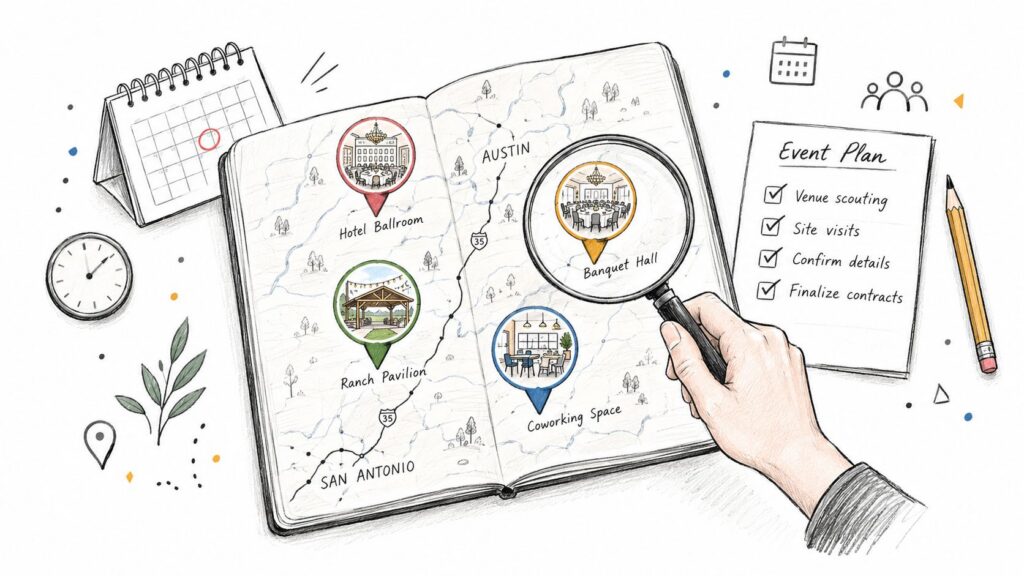
You're comparing venues for business events because the event itself has already outgrown the easy options. The CFO wants a premium setting, the CEO doesn't want another hotel ballroom, and your AV partner needs access long before attendees arrive. Meanwhile, the agenda keeps changing, the guest count is moving, and every venue proposal seems to hide one more restriction in the contract. That's the actual decision. A venue isn't successful because it photographs well in a sales deck. It succeeds because vendors can load in, speakers can be heard, guests can park, rooms can transition, and the schedule survives ordinary corporate-event disruption. Use four lenses throughout the search: operational access, vendor flexibility, capacity fit, and schedule risk. Table of Contents What Makes a Business Event Venue Work Four questions to ask before the tour The Four Main Types of Business Event Venues Hotels and conference centers Dedicated halls and banquet facilities Outdoor and ranch-style properties Coworking and hybrid spaces Nine Decision Criteria That Matter Most to Planners 1. Load-in and load-out window 2. Vendor policy 3. Parking and arrival 4. Ceiling height and AV clearance 5. Climate control 6. On-site coordinator support 7. Catering flexibility 8. Airport and hotel distance 9. Force majeure and weather backup Why Rental Windows Are the Hidden Dealbreaker Read the clock before you read the décor Matching Venue Style to Event Type in the Hill Country Smaller rooms for leadership work Mid-size rooms for training and sales programs The largest room for public-facing moments A Realistic 90-Day Booking Timeline Days 90 to 75 Days 75 to 60 Days 60 to 45 Days 45 to 30 Days 30 to 7 Days 7 to 0 The Case for Operational Fit Over Visual Polish Three failures that look attractive in the proposal Your Next Step and Final Checklist What Makes a Business Event Venue Work The AV team arrives to an unfinished room, the keynote slides have not been tested, and guests are already lining up at registration. That failure starts with venue selection, not with the run sheet. A business event venue must remove operational risks before they reach event day. Start with access. If the AV vendor cannot enter until shortly before doors open, the team must test microphones, stage lighting, presentation playback, and room transitions under pressure. The keynote, executive remarks, and attendee arrival then compete for the same limited time. Vendor flexibility creates another pressure point. An exclusive catering or AV list may simplify coordination, but it can also eliminate suppliers your company trusts. An open policy gives you more control if the venue sets clear requirements for insurance, arrival times, power, food service, alcohol, and cleanup. Get those rules in writing before you commit. Four questions to ask before the tour Use these questions to screen every candidate: Can suppliers get in early? Ask for the exact load-in start time, not “full-day access.” Can the room support the program? Confirm seating layouts, staging, breakout privacy, registration, catering, and speaker movement. Can the venue absorb change? Ask what happens if the headcount shifts, the agenda runs long, or the weather changes. Who owns the day-of decisions? Identify the person authorized to approve room changes, vendor access, and timing adjustments. The meetings and conventions sector generated $1.6 trillion in global economic output in 2022 and supported 35 million full-time jobs worldwide, according to meetings and conventions industry data from ZipDo. That scale helps explain why venues now function as specialized operating environments, not simple rooms for rent. Practical rule: If a venue manager answers a logistics question with “we'll figure it out later,” treat the issue as unresolved. Capacity fit matters as much as total capacity. A room may hold your group on paper and still fail once you add a registration desk, sponsor displays, stage sightlines, buffet service, and comfortable circulation. A multi-hall Hill Country property can reduce that pressure by giving planners separate spaces for presentations, meals, breakouts, and transitions within one booking. That arrangement also gives the team a practical response when attendance or the agenda changes. Calculate schedule risk before signing. Rentals arrive before staging, staging supports AV, AV testing precedes rehearsal, and rehearsal precedes doors. Choose the property that protects that chain, even when another venue has more dramatic finishes. The Four Main Types of Business Event Venues Business-event planners usually choose among four formats, and each solves a different operating problem. The global event venues market was valued at $80.2 billion in 2023 and is projected to grow at a 5.3% CAGR from 2023 to 2030, according to World Metrics' event venues industry statistics. More demand means more choice, but it also means more opportunities to select a venue that looks right while functioning badly. Venue Format Best Suited For Operational Strength Common Limitation Hotel or conference center ballroom Multi-day conventions, room-block events, large meetings Sleeping rooms, built-in food service, breakout infrastructure Vendor and catering restrictions can be rigid Dedicated event hall or banquet facility Single-day meetings, award dinners, receptions Controlled setup, clear event footprint, efficient transitions May lack guest accommodations or extensive breakout rooms Outdoor or ranch-style property Offsites, retreats, team-building, experiential events Strong atmosphere, flexible indoor-outdoor programming Weather, heat, lighting, and sound require contingency planning Coworking or hybrid meeting space Small working sessions, workshops, remote-friendly gatherings Strong connectivity and easy access for focused groups Limited banquet capacity and production flexibility Hotels and conference centers Choose this format when attendees need sleeping rooms, several breakout rooms, and centralized food service. Hotels can reduce vendor coordination because accommodation, meeting rooms, catering, and basic event support sit under one operating structure. The limitation is control. Exclusive AV, in-house catering, food-and-beverage minimums, room-block terms, and strict access rules can make a hotel less attractive when you need specialty suppliers or a highly customized layout. Dedicated halls and banquet facilities These spaces work well for a single program with a defined footprint. Awards dinners, sales meetings, receptions, and company celebrations benefit from a room that can be staged, dressed, and cleared

7 Wedding Venues with Parking in Central Texas

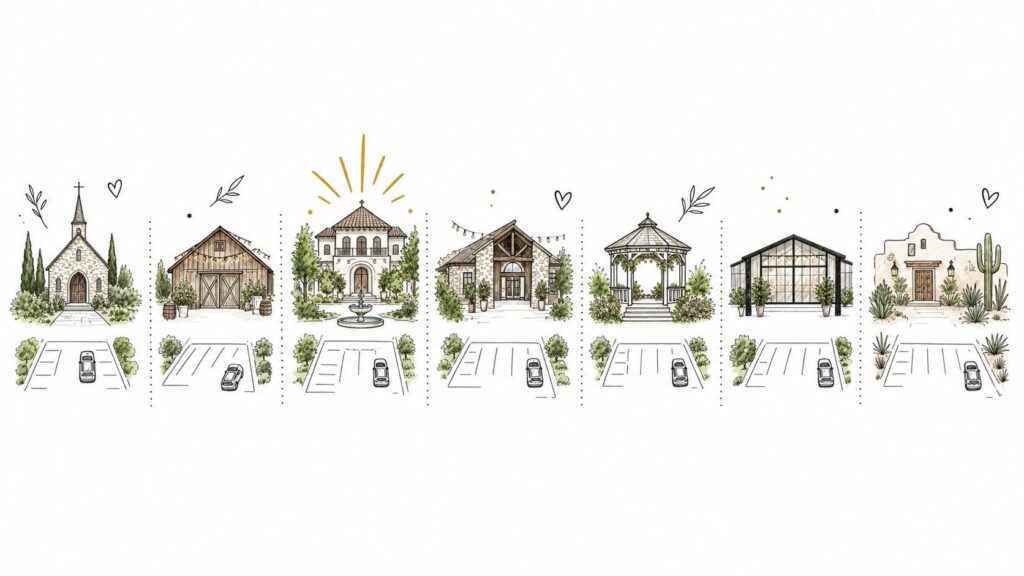
Scenery shouldn't be the first filter for a wedding venue. Guests experience the property through the arrival sequence: where they park, how far they walk, whether a covered drop-off exists, and whether an older or mobility-limited guest can reach the ceremony without assistance. The couple experiences it through rental hours, setup and breakdown rules, weather backups, pricing clarity, vendor restrictions, and the quality of event-day oversight. That's why Texas Old Town in Kyle deserves a close look among wedding venues with parking in Central Texas. The 55-acre Hill Country property offers four private venue choices, indoor and outdoor settings, a large private parking layout, an accessible design, transparent pricing, on-site management, and exclusive 16-hour rentals. Its position between Austin and San Antonio also makes arrival planning relevant for guests traveling from both cities. Couples should still confirm current policies, capacity details, and availability directly with every venue, including through commercial gate access control resources when evaluating arrival security and property access. The comparison below treats parking as one part of a larger operating system. Each venue is assessed for arrival flow, accessible movement, ceremony backup, rental time, pricing visibility, beverage rules, vendor flexibility, and event-day support. Table of Contents 1. Stone at Texas Old Town Why Stone reduces timeline pressure The trade-off to verify 2. The Addison Grove What couples should investigate 3. Canyonwood Ridge A documented timeline helps Beverage policy matters 4. Camp Lucy Service convenience versus vendor flexibility 5. Vista West Ranch A distinctive setting with details to verify 6. The Chandelier of Gruene Scale can solve one problem and create another 7. Legacy Hall at The Milestone Turnkey service has boundaries Parking Comparison: Top 7 Wedding Venues Use This Parking Checklist Before You Sign Confirm the physical arrival experience Compare the whole operating model 1. Stone at Texas Old Town Stone is a strong fit for couples who want a reception hall with a refined feel without accepting the arrival problems that often accompany larger Hill Country properties. The hall accommodates up to 300 guests, with a private entrance, two private parking lots, and a covered drop-off area. Those features matter because guests tend to arrive in a concentrated pre-ceremony window rather than evenly throughout the day. A venue can look spacious in photographs and still create congestion if cars, rideshares, vendors, and wedding-party vehicles all meet at one unprotected entrance. The parking arrangement also gives Stone a practical advantage for formalwear and uncertain weather. A covered drop-off lets guests move from vehicle to entrance with less exposure, while private lots keep the event's arrival pattern separate from ordinary public street parking. Couples should ask for the current usable-stall count by event layout, including accessible spaces, vendor vehicles, service access, and any areas reserved for staging. Why Stone reduces timeline pressure Stone's indoor, climate-controlled room includes dressing suites, a prep kitchen with a separate service entry, a built-in beverage bar, indoor and outdoor PA systems, a wireless microphone, Bluetooth connectivity, and documented furniture counts. These inclusions help couples plan the room from the beginning instead of discovering late that a kitchen door, speaker position, or furniture requirement changes the floor plan. The property provides exclusive 16-hour access, on-site management, and clean-up and furniture breakdown. That longer window gives vendors more room to load in and lets the couple avoid treating the ceremony, reception, and breakdown as a race. It also supports a weather backup because the indoor hall can serve as the reception space and, when planned appropriately, the ceremony setting. Practical rule: Ask Stone to identify guest parking, accessible parking, vendor staging, service entry access, and drop-off space on the same written site plan. The trade-off to verify Stone's beverage policy requires host-provided beverages and an approved bartending company. That offers flexibility compared with a fully in-house bar, but it creates another vendor coordination step. Couples should confirm the approved bartender list, service requirements, beverage storage, insurance documentation, and cleanup responsibilities before signing. Stone's maximum capacity is also 300 guests, so couples planning the largest celebration on the Texas Old Town campus should compare it with Tejas. For many mid-to-large weddings, though, Stone's combination of upscale finishes, dedicated arrival infrastructure, flexible catering, exclusive access, and on-site oversight makes it a particularly complete logistics package. Review the current Stone venue details and request a written quote that spells out inclusions and any event-specific restrictions. 2. The Addison Grove The Addison Grove takes a simpler approach to arrival logistics. This modern-rustic barn venue sits on a 26-acre property about 20 minutes west of downtown Austin, offering ample on-site parking, handicap spaces, and direct drop-off at the entrance. The layout is particularly useful for couples whose guests are driving from Austin but want a more secluded setting than a city property can provide. Parking also supports the venue's overnight-vehicle policy. Guests can leave cars overnight and collect them the next day, which can reduce pressure on guests who don't want to drive after drinking. Couples should confirm how overnight vehicles are identified, where they remain, when the lot closes, and whether pickup access changes after the event. The climate-controlled indoor hall gives the reception a reliable weather setting, while multiple outdoor ceremony areas preserve the appeal of a Hill Country ceremony. That combination is more useful than an outdoor-only plan because it gives the couple a defined alternative if heat, rain, or wind makes the original ceremony site uncomfortable. What couples should investigate The Addison Grove typically provides a 14-hour access window, which supports a full-day timeline but leaves less room than Texas Old Town's exclusive 16-hour rental. The difference may affect vendor load-in, hair and makeup, photography, ceremony setup, and breakdown. Ask for a timeline showing when the couple, planner, caterer, florist, rental company, and entertainment team may enter. A venue's parking plan is only as reliable as its arrival instructions. Ask who directs vehicles, where rideshares stop, and how guests find the correct entrance after dark. The main practical concern is seasonal availability. Peak-season weekends book

Birthday Party Planning Checklist: 10 Steps

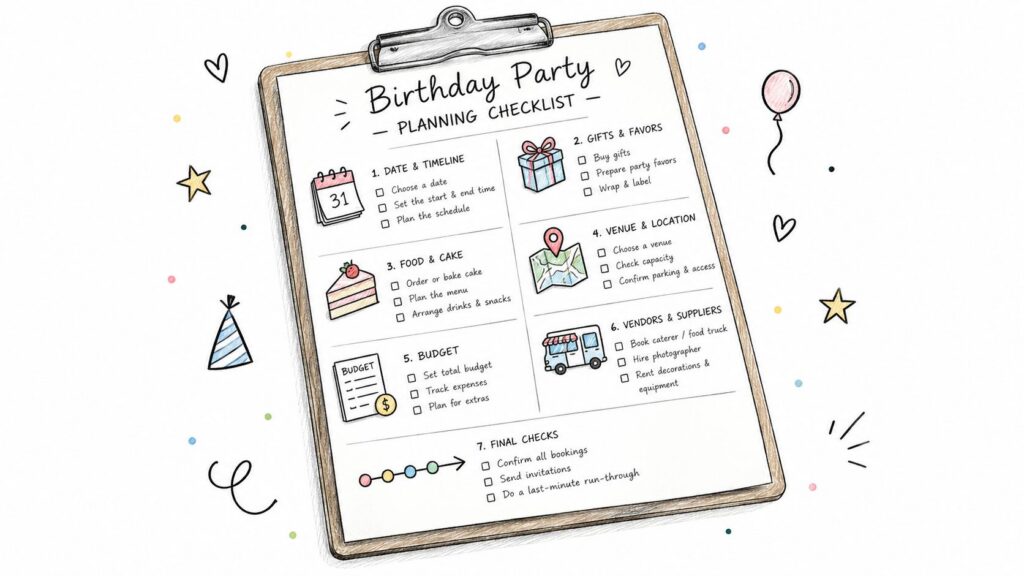
A birthday party can look simple on the invitation and still create a complicated production schedule behind the scenes. The host must coordinate the guest list, venue access, food, beverages, entertainment, weather plans, parking, special moments, and cleanup, often while family members and vendors work from different assumptions. A reliable birthday party planning checklist should function as a timeline system, not a loose collection of reminders. Start with the decisions that affect every later task, then move toward confirmations, packing, setup, and follow-up. This guide runs from 12 or more weeks before the event through the week after it, with practical checkboxes, budget controls, vendor coordination prompts, a packing list, an email template, and a run-of-show format. For Texas Old Town, confirm the selected hall, guest capacity, exclusive 8:00 a.m. to midnight rental window, indoor and outdoor options, PA systems, dressing suites, parking, prep kitchen, beverage rules, furniture, cleanup, and on-site management. Those details affect how guests arrive, where vendors load in, how activities flow, and who handles problems on the day. Table of Contents 1. Select Venue and Confirm Capacity Venue checks before signing 2. Establish Budget and Secure Financing Turn the plan into a payment tracker 3. Book Caterer and Confirm Menu Details Build the menu around service 4. Arrange Beverages and Hire Bartending Service Build the bar plan 5. Plan Entertainment and Activities Design the energy curve 6. Coordinate Décor and Setup Requirements Turn the décor plan into a setup timeline Check the room at event lighting levels 7. Create and Distribute Invitations and Guest List Build the invitation around decisions guests must make Turn replies into an event-day handoff 8. Arrange Photography and Videography Give the photographer a useful brief 9. Confirm Logistics, Create the Event Day Timeline, and Plan Special Moments Assemble the schedule from fixed points 10. Complete Post-Event Follow-Up and Gratitude Close the administrative loop 10-Point Birthday Party Planning Comparison Print the Checklist and Hand Off the Details Printable packing prompts Vendor email template Run-of-show format 1. Select Venue and Confirm Capacity A 75-person birthday party can feel cramped if the room must also hold a buffet, cake table, DJ, gifts, and activity stations. Start with the venue because its capacity, layout, access rules, and included equipment shape every later vendor decision. Texas Old Town offers four private halls with different capacities and styles. Tejas accommodates up to 320 guests and suits a large Texas-themed celebration with dancing. Sage and Stone each accommodate up to 300 guests. The rustic Redbud hall accommodates up to 150 guests and may suit a smaller, more intimate gathering. Review the Texas Old Town venues for up to 150 guests before choosing a room for a smaller celebration. Match the hall to the event you are producing: Choose Redbud when a smaller guest list needs comfortable spacing without making the room feel sparse. Consider Tejas for a larger milestone celebration that needs a dance floor, entertainment setup, and clear guest movement. Compare Sage and Stone against the expected layout, not capacity alone. Venue checks before signing Walk through the event as a guest, vendor, and host. Record the answers in the master planning file, then use the approved floor plan for the catering order, décor brief, packing checklist, and run-of-show. Trace the guest route: Walk from parking to the entrance, restrooms, dining area, bar, activity stations, and outdoor spaces. Note congestion points and accessibility concerns. Request the floor plan: Confirm furniture counts and test whether the table arrangement leaves room for servers, activities, gifts, dancing, and comfortable movement. Confirm weather locations: Decide where guests will go if heat, rain, wind, or another weather issue affects outdoor plans. List included amenities: Get tables, chairs, PA access, dressing suites, prep-kitchen details, parking, and cleanup responsibilities in writing. Check service placement: Mark the buffet, bar, cake table, DJ or band, gift area, and activity stations before finalizing vendor plans. Save the approved version: Keep the hall name, capacity, layout, access instructions, venue contact, and open questions together with the printable packing prompts. Capacity is a comfort decision as well as a legal limit. A room may hold the guest count and still feel crowded once furniture, food service, entertainment, and special moments are added. Practical rule: Do not finalize catering, entertainment, or décor until you know where each service will physically go. Planning lead time should match the booking risk. One planning guide recommends starting three to four weeks ahead for a kids' party at home, six to eight weeks for a booked venue, and 12 weeks for a milestone party with 50 or more guests. It also recommends adding two weeks for a surprise party and two to three extra weeks during the holiday season. Treat those timelines as minimum planning signals. Review the birthday party planning timeline before committing to a date. 2. Establish Budget and Secure Financing Set the spending limit before comparing menus, entertainment packages, décor, or rentals. The number should cover the party without creating financial stress afterward. Divide it into committed costs, flexible costs, and a visible contingency reserve. Start with five decisions that shape the rest of the plan: guest count, venue, catering format, beverage service, and entertainment. Décor can add personality, but it should not reduce the money available for food, staffing, venue access, or weather protection. A 2026 industry summary reports average spending of over $1,185 for an adult birthday celebration and about $314 for a kids' party. It also reports that food and drinks account for 35% to 40% of the average party budget, while 33% of parents have gone into debt to fund birthday festivities. Use those figures as a warning to set a firm ceiling before expanding the guest list or approving upgrades. Read the birthday party budget guidance for the underlying context. Turn the plan into a payment tracker Use one shared spreadsheet for the family, planner, and vendors. A single record makes overdue deposits and scope changes visible. Track Record Budget category Venue, food, beverages, entertainment,

7 Birthday Party Venues Adults Will Love

You're choosing between very different birthday experiences. A relaxed milestone dinner needs comfortable seating and easy conversation, while a dance-heavy cocktail party needs bars, sound, and a layout that keeps guests moving. A large outdoor gathering may depend more on parking, weather backup, food-truck access, and enough time for setup than on décor. The best birthday party venues for adults match the format of the celebration, not just the guest of honor's age. Compare guest count, indoor and outdoor needs, food and beverage control, entertainment, transportation, rental duration, and the gap between a quoted venue fee and the complete event budget. This roundup covers Austin, Kyle, and nearby Hill Country options, including the halls and outdoor settings at Texas Old Town. For guest attire inspiration, use this practical event style guide from Dirt Cheap Headwear. Table of Contents 1. Events at Texas Old Town for Flexible Hill Country Celebrations What's included 2. The Eleanor for Cocktail-Forward Downtown Birthdays Where it works best 3. The Sunset Room for Production-Ready Cocktail Parties Control the production budget 4. Fair Market for Large, High-Energy Celebrations Plan the arrival and build 5. Springdale Station for Historic Indoor-Outdoor Flexibility Confirm the details the website doesn't publish 6. Jester King Brewery for Craft-Beer Socializing Treat transportation as part of the venue choice 7. Hotel Van Zandt for Turnkey Downtown Milestones Price the convenience accurately Top 7 Adult Birthday Venues Comparison Turn the Shortlist Into a Confident Booking 1. Events at Texas Old Town for Flexible Hill Country Celebrations Texas Old Town in Kyle is the strongest all-around choice when you want a birthday venue that can handle a polished dinner, outdoor gathering, dancing, or a combination of all three. The Hill Country campus spans 55 sculpted acres with water features, gardens, and an outdoor ceremony lawn, giving hosts room to create distinct arrival, dining, and entertainment zones. Its location between Austin and San Antonio also works well for guest lists spread across Central Texas. The venue offers four private halls with different personalities and capacities. Tejas accommodates up to 320 guests and has a Texas country dance-hall feel with handcrafted pine tables. Sage and Stone each accommodate up to 300, while Redbud accommodates up to 150 and suits a smaller rustic celebration. That range makes it easier to choose the right atmosphere without forcing a mid-sized birthday into an oversized room. What's included Every rental includes an exclusive 16-hour window from 8:00 a.m. to midnight, which gives you practical time for vendor access, setup, the celebration, and breakdown. On-site management, clean-up, furniture breakdown, dressing suites, indoor and outdoor PA systems, a prep kitchen with a separate service entrance, published furniture counts, and private parking are included. Texas Old Town also offers a flexible vendor policy and lets you choose your caterer. The bring-your-own-beverage policy can help you shape the bar program, but you'll need to use a required licensed or approved bartending company and follow the venue's alcohol rules. Pricing is presented without hidden fees, with sales tax and gratuity included, and personalized payment plans are available. Best booking question: Ask the events team to map your intended guest count, meal format, dance floor, bar, and weather backup into the selected hall before you sign. The main trade-off is scale. The largest hall tops out at 320 guests, and Redbud is limited to 150, so exceptionally large celebrations need another venue. For most milestone birthdays, retirement parties, and family gatherings, Texas Old Town offers the best balance of scenery, flexibility, access time, and operational support. Read more about why Texas Old Town works for unforgettable birthday parties, then review the official Texas Old Town event venue options. 2. The Eleanor for Cocktail-Forward Downtown Birthdays Choose The Eleanor when the birthday revolves around cocktails, music, and a downtown Austin night out. Its layout separates the experience into a front lounge, a main room with a dance floor, and a mezzanine, with bars positioned across multiple levels. That arrangement supports a party that starts with conversation and gradually shifts toward dancing without requiring a complete room change. The venue publishes a 3,750-square-foot floor plan, with capacity for 275 standing guests or 175 seated guests, making it easier to test your intended format before booking. On-site furnishings, including sofas, tables, and stools, can reduce the amount of furniture you need to rent and simplify load-in. The built-in PA, projector and screen, DJ booth, and removable stage also support speeches, slideshows, DJs, and compact live performances. Where it works best The Eleanor is a good fit for a small-to-mid-sized evening party where the bar and atmosphere matter as much as the meal. It's less suitable for a quiet seated dinner with substantial table service or a sprawling outdoor celebration. The cocktail program is a major draw, but hosts should confirm the beverage package, staffing, minimums, and whether outside alcohol or specialty drinks are permitted. Parking is the primary logistical issue. Guests will rely on nearby garages, rideshare, or curbside loading, so the invitation should include clear arrival instructions. Ask about garage recommendations, accessible drop-off, vendor load-in timing, security, music limits, and the exact cost of using the stage or A/V equipment. The Eleanor's published capacities and built-in inventory make planning more straightforward than at a blank-canvas venue. Book it for an urban, cocktail-led birthday where guests want to continue into downtown nightlife after the party. Don't choose it if private parking, generous outdoor space, or complete catering flexibility is essential. Review the venue's private event information for The Eleanor before requesting a proposal. 3. The Sunset Room for Production-Ready Cocktail Parties The Sunset Room is the practical pick for an Austin birthday with a gallery-style setting, cocktail circulation, and a short but polished program. Located in the Convention Center district, it offers 3,709 square feet of indoor space and an optional adjacent 3,900-square-foot west lot that can be tented. The indoor and outdoor connection gives you more layout options, but the lot is an add-on rather than an automatic part

10 Wedding Anniversary Party Ideas in Texas

You've got an anniversary coming up, and the guest list is growing faster than the plan. One partner wants an elegant dinner with dancing, the family is asking about a vow renewal, and someone has suggested an outdoor gathering with lawn games. The same milestone can become a formal reception, a sentimental ceremony, a relaxed Hill Country afternoon, or an immersive party built around the decade when the couple married. The right format depends on guest count, atmosphere, weather exposure, entertainment, and planning time. Texas Old Town gives you a practical framework, with four halls, indoor and outdoor ceremony options, and a 55-acre Hill Country property in Kyle. Its exclusive 16-hour access window also leaves room for setup, guest arrival, the celebration itself, and breakdown, rather than forcing every decision into a compressed schedule. The ideas below focus on distinct guest experiences. Each one includes a venue fit, realistic guest range, event flow, menu and décor direction, AV or music considerations, vendor and budget cautions, and a booking checkpoint. For family-friendly planning details beyond the venue, these family outing supplies can help with guest comfort and activities. Table of Contents 1. Elegant Dinner and Dance Celebration Build the evening around three clear moments 2. Renewal of Vows Ceremony with Reception Protect the emotional focus 3. Themed Decade Party Make the theme recognizable, not cluttered 4. Outdoor Garden Party with Lawn Games Plan for comfort before styling 5. Live Music and Entertainment Showcase Give the music a deliberate arc 6. Memory Lane Photo and Video Timeline Experience Design the display for real guest movement 7. Wine or Craft Beverage Tasting with Paired Small Bites Treat beverage service as a logistics function 8. Family Reunion and Multi-Day Celebration Give guests two clear RSVP choices 9. Milestone Achievement Gala Separate recognition from reception energy 10. Experiential Travel-Inspired Celebration Choose one destination and edit firmly Comparison of 10 Wedding Anniversary Party Ideas Turn the Best Idea Into a Bookable Plan 1. Elegant Dinner and Dance Celebration A formal dinner and dance remains one of the most dependable wedding anniversary party ideas for a 25th, 40th, or 50th anniversary. Guests know how to participate, the couple receives a clear moment of recognition, and the evening can move naturally from conversation to dinner, speeches, and dancing. At Texas Old Town, the four halls support celebrations ranging from 50 to 320 guests, depending on the selected space and layout. For an upscale atmosphere, Stone or Sage provides a stronger visual foundation than a casual outdoor setup. Use a seated dinner with restrained florals, printed menus, and table details tied to the anniversary milestone. Flexible catering makes it possible to choose a plated meal, buffet, or family-style service, but the menu should match the program. A plated dinner suits a formal gala, while a buffet gives a large, mixed-age guest list more control over timing and portions. Build the evening around three clear moments Use the 16-hour rental window to separate two to three hours of setup, a four-to-six-hour celebration, and breakdown. Open with cocktails and a welcome display, serve dinner before the longest speeches, then transition to the couple's first dance or a favorite song before inviting everyone onto the floor. Reserve the DJ or band early, and confirm the AV plan for personalized toasts and slideshow displays. Texas Old Town provides indoor and outdoor PA systems, Bluetooth hookup, and a wireless microphone, but the entertainment provider still needs to confirm compatibility and sound requirements. Beverage service also needs early attention, since host-provided beverages must be handled by an approved bartending company. Practical rule: Keep the formal program short enough that dinner and dancing still feel like the main event. As a final venue check, compare the selected hall's published capacity and furniture counts with the guest list before ordering décor or rentals. Couples seeking another upscale setting can also review a Sonoma Valley wedding venue for inspiration on wine-country styling, even if the celebration takes place in Texas. 2. Renewal of Vows Ceremony with Reception A vow renewal gives the anniversary a ceremonial center without requiring guests to recreate the original wedding. The couple can write new vows, invite children or grandchildren to participate, and then move into a reception that feels more personal than a standard dinner party. Redbud suits an intimate gathering, while Tejas can accommodate a much larger family celebration, subject to the chosen layout and published capacity. A strong flow starts with guest arrival and light refreshments, followed by an outdoor ceremony if conditions are comfortable. The couple can then take portraits while guests move inside for cocktails, with dinner, toasts, and dancing completing the reception. Texas Old Town offers indoor and outdoor ceremony options, so the reception hall can serve as the ceremony backup if weather or guest mobility makes an outdoor setting unsuitable. Protect the emotional focus Plan the ceremony with the officiant well ahead of the event and provide exact site details, access information, and the desired tone. Dressing suites with private restrooms and vanity areas allow the couple to prepare privately, which preserves some of the anticipation associated with the original wedding day. Spring and fall are sensible seasons for an outdoor ceremony in the Texas Hill Country, but no outdoor plan should rely on perfect weather. Build a 30-minute transition buffer between the ceremony and reception, and decide in advance where the couple will sign any keepsake documents, take family portraits, and greet older guests. Photography matters more here than elaborate décor. Ask the photographer to capture the ceremony, family reactions, new vows, and comparison portraits that echo the original wedding. Texas Old Town also permits engagement photo sessions by appointment, which indicates the importance of confirming photography access and timing directly with the venue. For a 50th anniversary, adult children might host the event while the couple chooses the ceremony wording. That arrangement keeps the celebration meaningful without making the guests of honor manage every logistical detail. 3. Themed Decade Party The year a couple

7 Outdoor Wedding Lights Ideas for Hill Country Venues

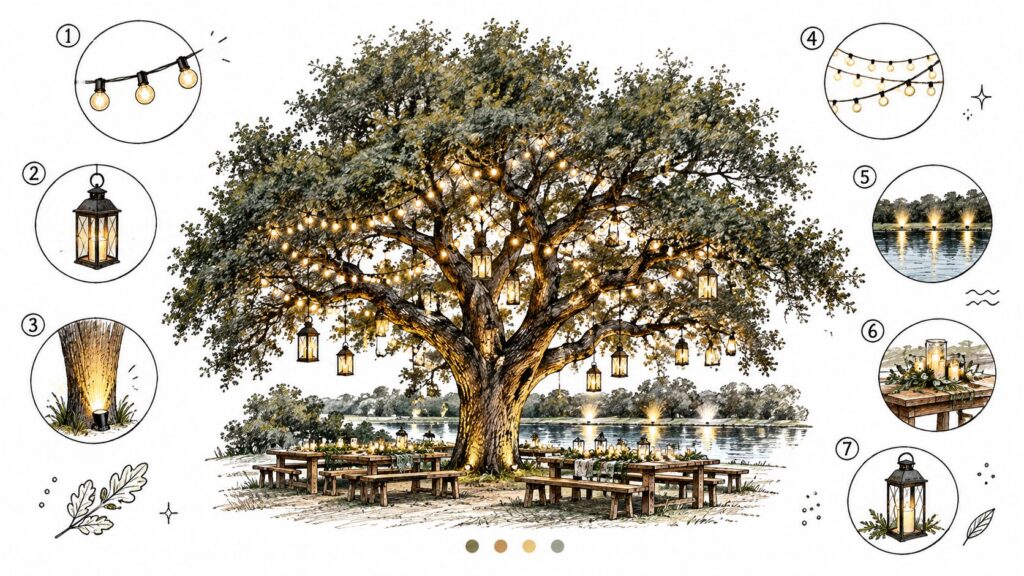
At dusk, the ceremony chairs are still warm from the afternoon sun, the Hill Country trees are turning into silhouettes, and guests are beginning to look for the path toward cocktails. The right outdoor wedding lights make that transition feel effortless. A soft canopy can draw people toward dinner, low path lighting can make uneven ground easier to read, and carefully aimed accents can bring trees, gardens, and water features into the photographs without flattening the scene. The best choice depends on more than bulb style. You'll need to match the design to the venue layout, atmosphere, power access, installation method, weather plan, and whether you're renting equipment for one night or considering a more permanent installation. The seven Central Texas providers below approach those decisions differently, from full production to safety-led site lighting and boutique decorative installs. Compare quotes for design, delivery, installation, operation, strike, safety planning, and contingency support, not just the fixture photos. Table of Contents 1. Austin Event Lighting AEL Where AEL makes sense 2. Altared Weddings & Events A wedding-focused planning process 3. The Light Guys Tension, wind, and property protection 4. DPC Event Services One contract, fewer handoffs 5. Outdoor Lighting Perspectives of San Antonio North Where practical lighting changes the experience 6. TreeFrog Pros Designing for photographs and video 7. Brighter Side Event Lighting Personal attention versus inventory depth 7-Provider Outdoor Wedding Lighting Comparison Turn a Beautiful Lighting Plan Into a Reliable One 1. Austin Event Lighting AEL Austin Event Lighting, or AEL, is a strong fit when the wedding needs more than decorative strings. Its full-service approach can connect festoon canopies, twinkle curtains in trees, path and parking illumination, pinspots, chandeliers, truss, audio, and video into one production plan. That matters at a Hill Country venue where the ceremony, reception, parking area, and photo locations may sit far apart. AEL's inventory includes professional brands such as Elation, Astera, Chauvet, and Clay Paky. The practical advantage isn't the brand list by itself. It's the ability to coordinate fixture color, control, output, and placement across several areas instead of asking separate vendors to create disconnected looks. The company also has experience with café-style and semi-permanent installations, which may appeal to a venue developing a recurring lighting feature. Practical rule: Ask for a lighting map that separates guest navigation from decorative illumination. A bright parking route and a romantic dining canopy need different treatment. Where AEL makes sense AEL is particularly useful for a reception with several production layers, such as overhead festoon, tree lighting, a dance-floor wash, and sound or video support. A single production vendor can also reduce handoffs during load-in and make power planning easier. The trade-off is that pricing is custom quoted, so couples need a detailed scope before comparing the proposal with simpler rental packages. Popular wedding dates can also fill early. If you're considering a venue such as Texas Old Town's indoor and outdoor event spaces, ask whether the proposal includes delivery, installation, on-site operation, removal, generator coordination, and a rain or wind response. Request the fixture count, hanging method, cable route, dimming plan, and responsibility for monitoring the system. Those details tell you more about the final experience than a gallery of finished weddings. 2. Altared Weddings & Events Altared Weddings & Events approaches outdoor wedding lights from a wedding-design perspective. Its services include café and festoon strings, fairy and twinkle strands, uplighting, chandeliers, event design support, entertainment, and special effects. That combination suits couples who want the lighting, music, and reception atmosphere planned as one guest experience. The strongest use case is a ceremony-to-reception transition. Fairy strands can create a softer ceremony backdrop, while café strings and uplighting can give the reception a clearer sense of arrival. A chandelier or feature fixture can then anchor the dining area without requiring every part of the property to carry the same visual intensity. A wedding-focused planning process Altared has served the Austin wedding market since 2010, and its venue familiarity can help with practical questions that first-time planners may not think to ask. A team that knows local properties may already understand access restrictions, common mounting points, load-in routes, and how quickly a ceremony area must be reset for dinner. That convenience comes with a question worth asking. Because the company also provides entertainment and special effects, confirm how much of the proposal is dedicated to lighting inventory and labor on your date. A broader service mix can be useful, but peak weekends may place pressure on specialized equipment and crews. Ask for a room-by-room or zone-by-zone plan: Ceremony: Which elements frame the couple without competing with the surroundings? Reception: Which fixtures light tables, the bar, entrances, and the dance floor? Guest movement: How will the team illuminate steps, path changes, and transitions? Operations: Who adjusts brightness or color during dinner, dancing, and the send-off? A consultation is required for pricing, so bring a site plan, guest-flow sketch, preferred color temperature, and a clear answer about whether entertainment should be included in the same contract. Explore Altared Weddings & Events when cohesive wedding production is more important than selecting a standalone lighting rental. 3. The Light Guys The Light Guys are a practical option for couples who want professional string-light installation now and may also be interested in a lasting feature later. The Austin-area company offers bistro and café lighting, LED and PAR fixtures, event rentals, installation, and permanent outdoor lighting sales and installation. Its service area includes Kyle, Buda, Dripping Springs, and nearby Hill Country communities. The distinction between a temporary wedding installation and a permanent venue improvement matters. Temporary strands may need careful tensioning, removable anchors, protected power distribution, and a strike plan that leaves no damage behind. A permanent installation brings different questions about mounting, maintenance, control, weather exposure, and how the lighting will serve future events. Tension, wind, and property protection A bistro canopy looks simple in a photograph, but long spans can sag, sway, or transfer force to trees and structures if the

Scroll to Top