You've booked the venue, hired the photographer, and probably saved more bridal-suite photos than you'd admit. Then the wedding morning arrives, and the pretty room has one usable outlet, nowhere to hang the dress, and barely enough floor space for the bride and two stylists. A getting ready space for a wedding isn't a decorative bonus. It's a working production room where beauty teams, photographers, family members, attire, food, and the clock all compete for space.
The right room keeps people moving without making the morning feel rushed. The wrong room turns every simple task, from steaming a veil to finding a missing earring, into a schedule problem. Plan it around usable floor area, vendor choreography, privacy, lighting, and access time, not just the room's appearance in venue photos.
Table of Contents
- What a Wedding Morning Really Looks Like
- What the Getting Ready Space Has to Do
- Venue Suite vs Off-Site Space
- Laying Out the Room for Real Work
- Building the Morning Timeline
- Packing Checklist and Troubleshooting
What a Wedding Morning Really Looks Like
At 7:00 a.m., the room is already working. Two makeup artists have claimed the brightest wall, a hairstylist is unpacking hot tools, and the photographer is arranging rings, invitation pieces, shoes, and perfume for detail photos. The dress is still inside its garment bag, but the photographer has already asked where it can hang without a fire extinguisher, exit sign, or stack of luggage in the background.
A bridesmaid answers the door in a robe while another person calls out, “Who has the missing earring?” A steamer releases a steady cloud beside the bathroom. Hair products, makeup cases, coffee cups, six or more personal bags, and garment packaging begin collecting around the only convenient outlet. The room looked spacious during the tour. With people and equipment inside it, the usable area disappears quickly.
The room fills before the ceremony does
Vendors often arrive close together, not one at a time. Hair and makeup need setup space, the photographer needs a clean shooting surface, the planner or coordinator needs access for timeline questions, and the dress requires a protected place for steaming and hanging. If the partner is preparing nearby, that room also needs its own seating, light, storage, and private changing area.
The first schedule problem usually looks harmless. Lipstick takes longer than expected. Someone needs a bathroom break. A stylist searches for an extension cord. Then the bride's final touch-up overlaps with dress photos, and the photographer loses the clean window needed for detail images. By the time everyone notices, the room is crowded and the timeline is already slipping.
Coordinator's rule: If a task needs a surface, an outlet, a mirror, or a clear walkway, assign that resource before the morning begins.
Couples should give the coordinator authority over the room, rather than asking the bride to manage vendors while getting dressed. A professional day-of wedding coordination service can keep arrivals, room access, detail items, and timeline changes moving without pulling the couple into every decision.
Beauty preparation also deserves advance planning. If you're considering added hair volume or a different style, review practical guidance on clip-in extensions for brides before the wedding morning, so the stylist knows what must be installed, blended, and photographed.
What the Getting Ready Space Has to Do
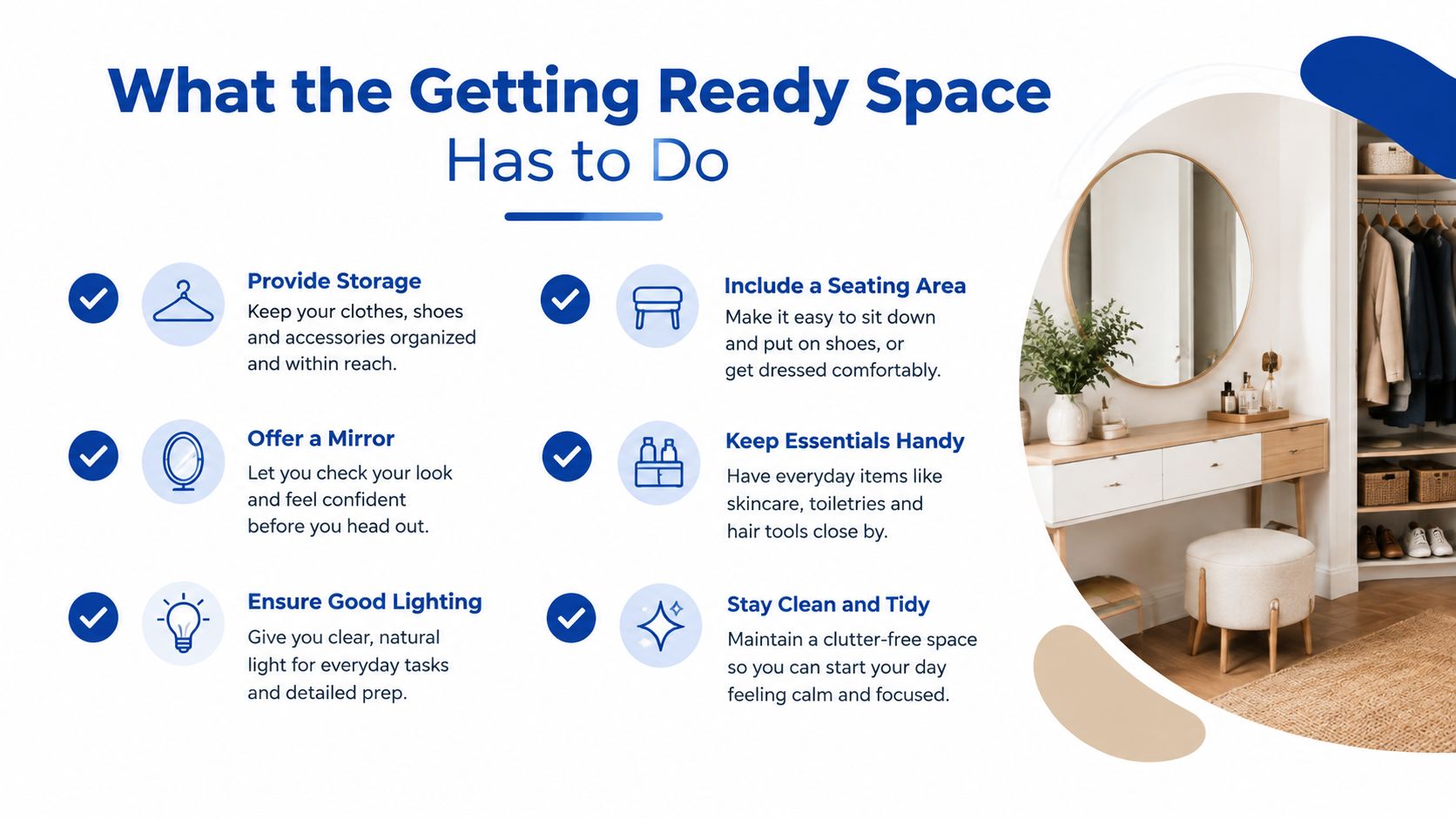
A functional room has several jobs at once. It must support hair and makeup, protect attire, give the photographer room to work, provide privacy for dressing, and keep personal belongings out of the traffic path. If it can only do one of those jobs, it isn't ready for a wedding party.
Start with the usable floor area, not the advertised room size. A practical bridal-suite benchmark is 400 to 600 square feet for most wedding parties, with about 50 to 75 square feet more if the room needs a coat closet, according to event venue sizing guidance. For four bridesmaids, two stylists, and a photographer, planners recommend 500 to 600 square feet of usable area. Adding both hair and makeup artists can push the practical requirement to 700 to 800 square feet. Those figures describe working space, not the area hidden behind furniture or consumed by fixed vanities.
Measure the resources vendors actually use
Before booking, ask the venue to show you:
- Mirrors: Provide enough mirrors for people actively receiving hair and makeup, plus a full-length mirror for attire checks.
- Outlets: Confirm where stylists can plug in curling irons, dryers, flat irons, and airbrush equipment without creating unsafe cable runs.
- Light: Look for strong natural light that can reach makeup stations without forcing stylists to work in front of a window. The recommended setup places primary hair and makeup stations perpendicular to the strongest natural light source.
- Privacy: Verify that the room has a private restroom or a nearby private changing area, especially for stepping into dresses and undergarments.
- Storage: Reserve a secure location for handbags, gifts, valuables, emergency supplies, and empty cases.
- Climate control: Ask how the room handles several hot styling tools running together. A warm, crowded suite becomes uncomfortable quickly.
A full-length mirror should sit near, but not inside, the dressing traffic lane. A garment rack belongs away from direct sunlight, with enough clearance to remove the dress without brushing against furniture. You also need a flat, uncluttered surface for detail photos, such as a table that can hold stationery, rings, shoes, jewelry, and fragrance without competing with lunch.
The room must support the people who aren't being styled. Parents, attendants, and a coordinator need a separate seating zone, not the only chairs at the makeup stations. If the room can't offer that separation, reduce the number of people present or choose another space.
Venue Suite vs Off-Site Space
A venue suite gives you proximity. An off-site room may give you capacity. The correct choice depends on whether your morning is constrained more by travel and access or by space and privacy.
A venue-provided suite usually wins when the ceremony and reception happen at the same property, vendors need easy load-in, and the venue offers a private restroom, vanity areas, climate control, and a clear route to the ceremony. It also removes the need to transport the dress, shoes, florals, personal bags, and photography details between locations.
An Airbnb, hotel suite, or family home can work better for a large group that needs more usable floor area, better window light, overnight accommodations, or a quieter environment. But you'll need written permission for photography, a plan for vendor parking, a way to protect floors and furniture, and a realistic departure schedule. A beautiful rental becomes a poor choice if everyone must load into cars, use elevators, and travel to the venue immediately after dressing.
| Factor | Venue Suite | Off-Site Space |
|---|---|---|
| Setup access | Usually tied to venue access rules and the booked rental window | Depends on check-in, host approval, hotel policy, or family availability |
| Ceremony travel | Minimal when the suite is at the ceremony venue | Requires transportation, loading, parking, and departure coordination |
| Vendor parking | Often covered by venue parking or designated access | Must be confirmed with the hotel, host, or homeowner |
| Photography | Confirm room access, backgrounds, and any venue restrictions | Confirm permission for professional photography and moving furniture |
| Dress and floral transport | Items arrive at the venue and stay there | Items must be protected and transported between locations |
| Privacy | May include a private restroom and designated partner area | Can offer more privacy, but separation from the venue must be managed |
| Space control | Furniture and décor may be limited by venue rules | More flexibility, subject to rental or homeowner restrictions |
| Overnight use | Usually focused on event-day preparation | Hotel rooms and homes may support overnight stays |
Match the room to the pressure points
Choose the venue suite when your ceremony timeline is tight, several vendors need direct access, or the venue provides a long preparation window. Choose an off-site space when the venue suite is visibly cramped, the party needs substantial separation, or the rental offers significantly better usable space and light.
Ask the venue exactly when the room opens, when it must be cleared, whether the partner has a separate room, and who controls access. The Knot's 2025 Real Weddings Study reports that 82% of couples hired their venue first, and serious planning typically began 12 months before the wedding. That makes the suite a booking question, not a detail to solve after the contract is signed.
Laying Out the Room for Real Work
Walk the room before vendors arrive and assign every zone. Don't let the first stylist to unpack decide the entire layout. Once cases, chairs, mirrors, and garment bags settle into place, moving them becomes disruptive.
Build zones around movement
Place the main makeup and hair stations perpendicular to the strongest natural light source, as recommended in wedding getting-ready space setup guidance. This gives stylists useful light without placing a seated person directly in front of the window, which also preserves the window as a photography background.
Keep styling chairs spaced roughly four feet apart when the room allows. That distance reduces elbow collisions and gives stylists room to reach products, tools, and hair sections. If the suite has only two outlets, put a properly rated power strip near the styling zone, keep cords taped or secured along the edge of the room, and ask each vendor where they need to stand before moving furniture.
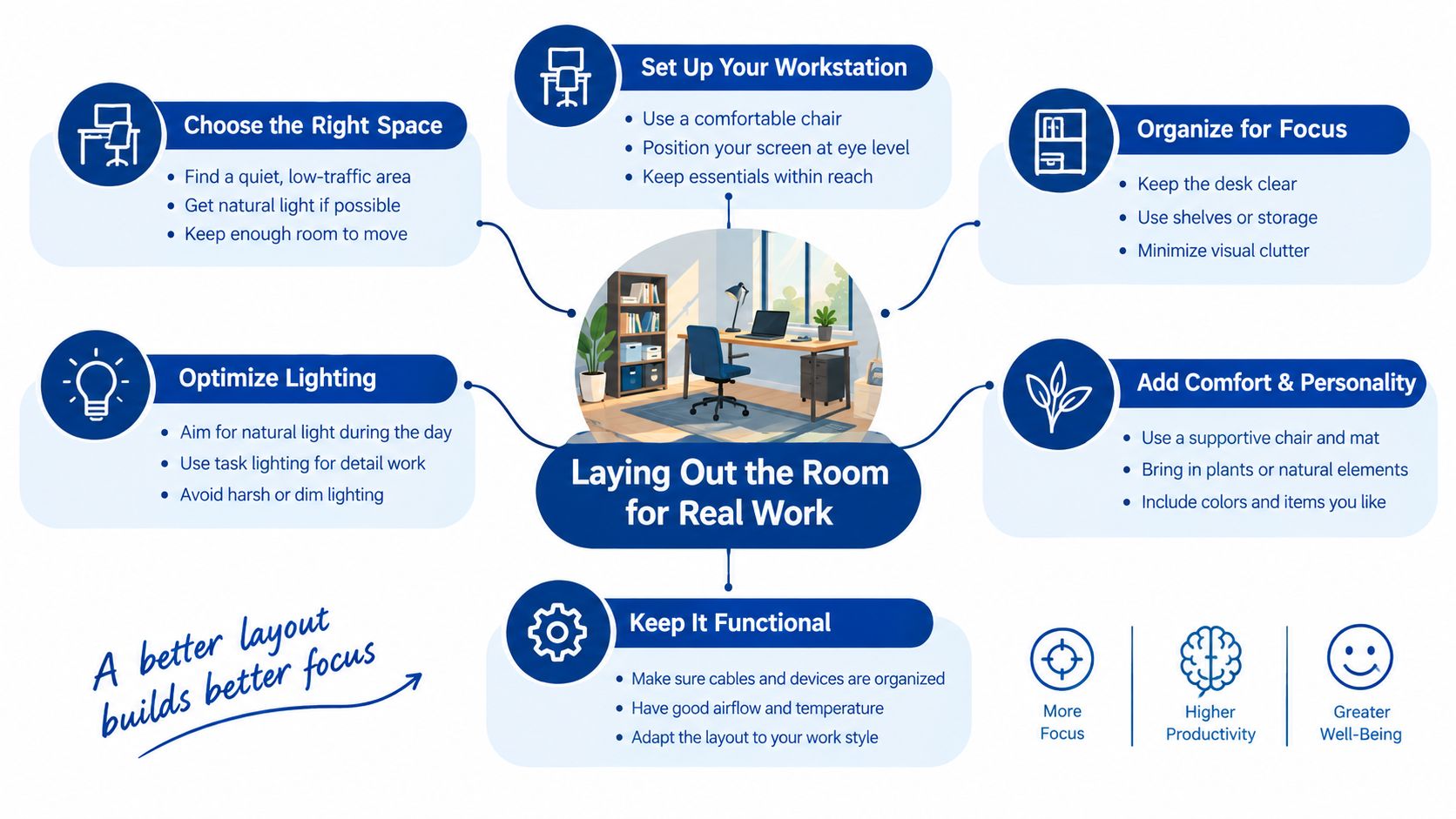
The photographer needs a clear shooting lane, ideally with an uncluttered wall that can serve as a backdrop. Keep the dress rack near a window for available light, but not in direct sun, which can create glare on fabric and affect delicate materials. Put steaming beside the rack, away from the main walkway, and unpack the dress immediately so plastic dry-cleaning bags don't become part of the visual clutter.
Protect the doorway and the clutter corner
The doorway must remain clear. Hair spray fumes need ventilation, the coordinator needs access, and the bride needs an unobstructed route when it's time to dress or leave for portraits. Don't park suitcases, makeup cases, or food trays in that path.
Create one deliberate clutter corner for cases, lunch bags, coffee cups, extra hangers, and personal items. This is not an invitation to pile everything randomly. Label the area and keep valuable items in a closed tote or under the control of the maid of honor.
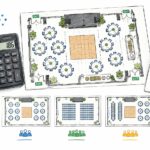
Use the venue's floor plan to test the arrangement before the wedding. A wedding venue floor plan resource can help you think through the relationship between preparation rooms, ceremony routes, reception spaces, service access, and guest circulation.
Building the Morning Timeline
Work backward from the ceremony, not forward from the alarm. The ceremony time determines when the bride must be dressed, when portraits must begin, when the room must be cleared, and when transportation needs to move.
For a standard eight-person bridal party, plan roughly three hours for hair and makeup, 90 minutes for portraits after the dress is on, and 30 minutes to clear the room. Those planning benchmarks mean the team should generally arrive four to five hours before walk-down. Build them into your schedule with the source's operational guidance, rather than treating them as optional padding.
Use blocks, not optimistic appointment times
A practical sequence looks like this:
- Vendor arrival and setup: Hair, makeup, photography, coordination, steaming, and room preparation happen before the first person sits down.
- First people in chairs: Start with attendants who aren't needed for early photos or family responsibilities.
- Detail photography: Capture rings, shoes, stationery, jewelry, perfume, invitation pieces, and attire while beauty services continue.
- Final beauty work: Schedule the couple and anyone in the ceremony party who must be photographed fully ready.
- Dressing: Move the bride into a private, uncluttered area with the dress, veil, shoes, and accessories already together.
- First look or portraits: Leave the room before the final departure rush, rather than trying to photograph while everyone is still packing.
- Room clear-out: Remove bags, cases, food, and emergency supplies before guests or family members begin crossing the route.
Put a 15-minute buffer between major phases. Someone will need a touch-up, a restroom break, a garment adjustment, or a quick answer from the coordinator. The buffer protects the ceremony preparation instead of forcing you to steal time from it.
Schedule discipline: If the morning starts late, adjust the sequence immediately. Don't pretend the original departure time still works.
Send the written timeline to every vendor the week before the wedding, then confirm arrival windows by phone the day before. Include suite access, parking instructions, the address, the coordinator's contact information, photo deadlines, dressing time, first-look timing, and the final departure. A detailed morning-of wedding guide can help attendants understand what they need to bring and when they need to be ready.
Use a day-of event schedule template to put names beside tasks and assign one person to make decisions. The bride shouldn't be the person answering vendor calls while someone buttons her dress.
Packing Checklist and Troubleshooting
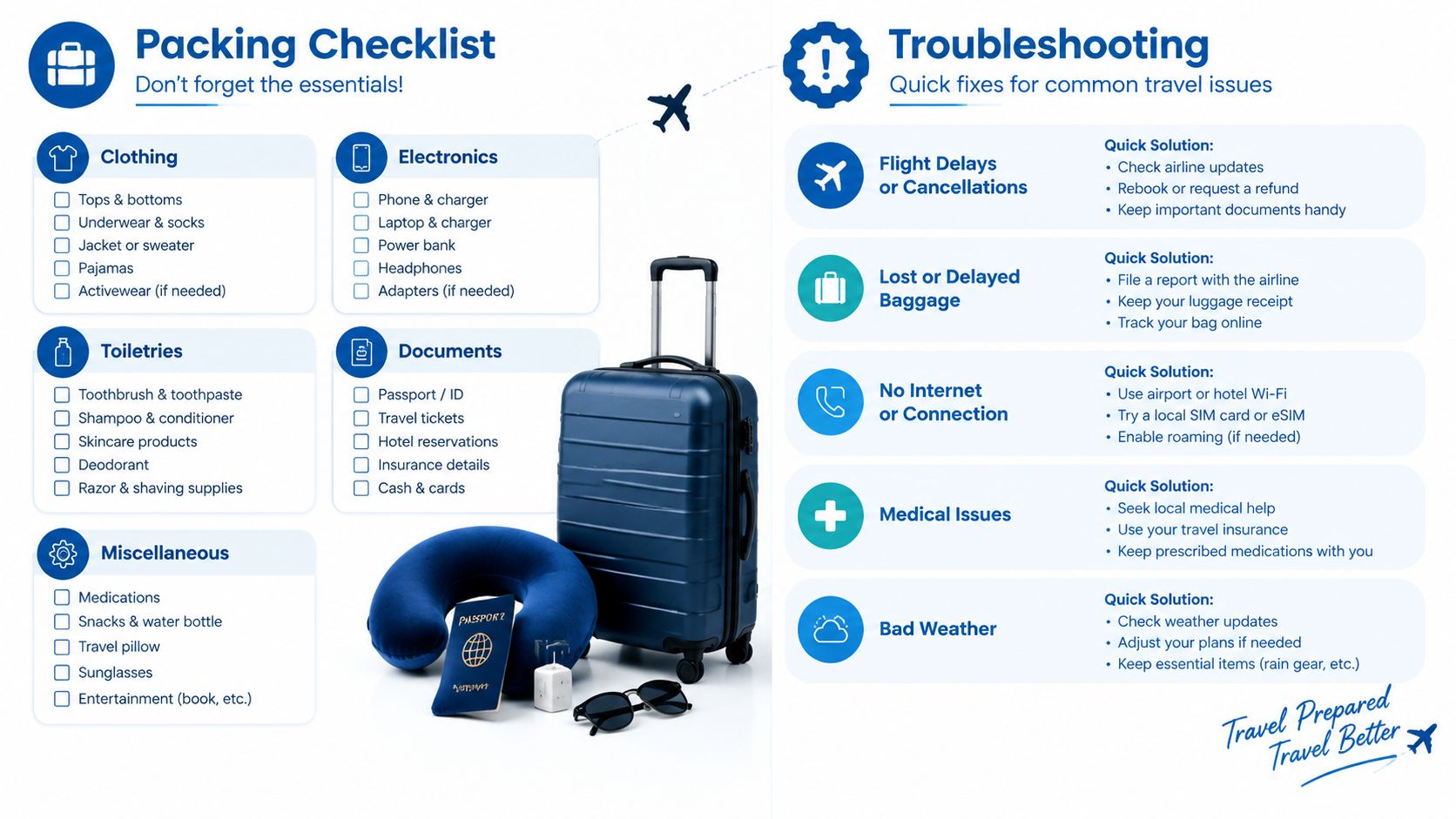
A busy suite becomes a workroom as soon as vendors arrive. Pack by function, label every container, and give the coordinator a retrieval system that does not depend on memory.
Use three labeled totes
- Attire tote: Dress accessories, veil, shoes, rings, vows, steamer, hanger, garment clips, and fabric-safe supplies.
- Personal tote: Jewelry, perfume, touch-up makeup, tissues, safety pins, fashion tape, steamer water, snacks, and a full change of clothes for leaving the dress later.
- Vendor-supplies tote: Extension cords, a power strip, ring boxes, touch-up lipstick, lint roller, sewing kit, stain-care supplies, and spare chargers.
Give the photographer one detail box containing the items for detail shots. Keep the emergency kit with the coordinator, not under handbags. Tape the emergency contact list inside the suite door so anyone can find it quickly.
Food and drinks need one designated surface. Close beverages once people are dressed, and keep snacks away from the attire rack. The bridal-suite checklist guidance recommends unpacking garments immediately, removing plastic bags, placing the steaming station away from traffic, labeling outfits, and controlling food and drinks after dressing.
Solve problems by protecting the ceremony
If hair and makeup run late, cut portrait time before cutting ceremony preparation. Tell the photographer and coordinator immediately, then keep the dressing and departure sequence intact. Do not hold the entire party in place while everyone searches for an answer.
If a vendor does not arrive, the maid of honor should have backup contacts saved in her phone. If the room lacks natural light, set up two ring lights by the mirror before the photographer arrives. Secure the cords and keep the doorway open. If someone forgets an item, send one runner with the hotel or home address, an exact description, and enough return time to protect departure.
For a six-hour suite window serving four to six people alongside hair and makeup staff, use approximately 40 square feet of usable space per person as a planning rule of thumb. Reserve separate areas for steaming, hanging attire, and hiding clutter. Cases, bags, photography equipment, and garments consume floor space quickly, so measure the room before assigning stations.
Tour the suite with your actual party size in mind. At Texas Old Town, check the private restrooms, vanity areas, vendor parking, access routes, and ceremony transition, then confirm whether the 16-hour exclusive venue access from 8:00 a.m. to midnight fits your setup and troubleshooting needs before signing.