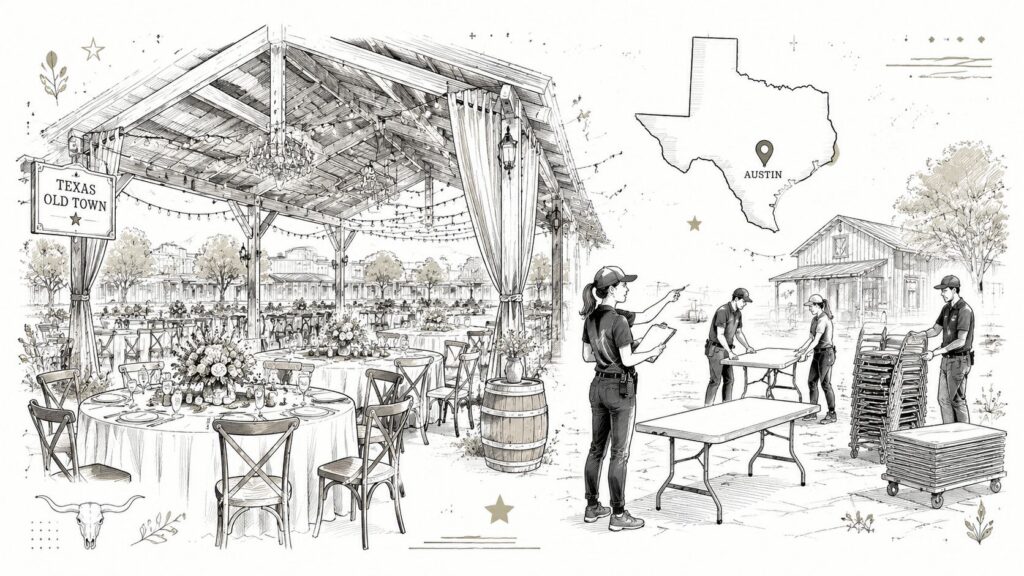
texas old town

Top 7 Texas Wedding Venues Hill Country for 2026

Finding the right Hill Country venue usually starts the same way. You open six tabs, save a dozen Instagram posts, and realize every place looks gorgeous at sunset. Then the important questions hit. Can your guests get there easily, will the rain plan still feel beautiful, and are you comparing actual costs or just teaser pricing? That's where most couples get stuck with Texas wedding venues in the Hill Country. The scenery is easy to fall in love with. The logistics are what make or break the weekend. In this part of Central Texas, those logistics matter even more because the market is dense, demand is high, and venues can look similar online while operating very differently in practice. Dripping Springs alone grew from a single venue two decades ago to more than 35 venues within a 15-square-mile radius, and that corridor now hosts about 1,000 weddings a year, according to Texas Monthly's report on Dripping Springs' wedding industry. That concentration gives couples real choice, but it also means you need a sharper filter than “pretty views.” This guide is built for that moment. It starts with a practical venue framework, then moves into seven strong options, with a deeper spotlight on Texas Old Town so you can see how an experienced planner evaluates a property beyond the photo gallery. Table of Contents How to Choose Your Perfect Texas Hill Country Venue 1. Finalize Your Guest Count & Budget 2. Match the Venue Style to Your Vision 3. Prioritize Your Ideal Ceremony Indoor vs Outdoor 4. Understand the Inclusions & Policies 1. Texas Old Town Why It Stands Out Best Fit 2. Camp Lucy Where It Excels 3. The Addison Grove Planning Notes 4. Canyonwood Ridge Why Planners Like It 5. Ma Maison Where It Shines 6. The Arlo Who It Serves Best 7. Prospect House Style and Trade Offs Texas Hill Country Wedding Venues, 7-Venue Comparison From Venue Tour to I Do Your Next Steps Venue Spotlight A Deeper Look at Texas Old Town The Ultimate Booking Checklist & Timeline Frequently Asked Questions How to Choose Your Perfect Texas Hill Country Venue Before you tour anything, get honest about what matters most. Couples waste time visiting venues that were never right for them because they started with aesthetics instead of fit. A good shortlist should already match your budget, guest count, travel pattern, and tolerance for coordination work. The Hill Country has a wide range of pricing and venue styles. All-in wedding costs in the region typically range from $8,000 to $35,000, while venue rental fees commonly fall between $3,000 and $15,000 depending on location, amenities, and season, based on this Hill Country venue pricing overview. That spread is exactly why “it depends” isn't a useful planning strategy. 1. Finalize Your Guest Count & Budget Guest count decides almost everything. It affects venue fit, catering minimums, parking pressure, bar setup, room layout, and whether the dance floor feels lively or empty. Don't shop for a venue as if your guest list is flexible if it really isn't. If you're inviting a larger crowd, capacity ceilings matter fast. Vista West Ranch is listed at about 350 guests, Camp Lucy at around 300, and venues like Ma Maison and The Milestone around 250, according to the same regional venue and pricing summary. Even when a venue can technically hold your number, I always tell couples to ask what the room feels like at that count, not just what the legal maximum says. Practical rule: Build your venue budget around the full event footprint, not the rental line alone. If a venue looks affordable but pushes you into extra rentals, transportation, or restricted vendors, it may stop being the deal you thought it was. 2. Match the Venue Style to Your Vision The Hill Country can do rustic, polished, modern, European-inspired, and resort-style very well. What it doesn't do well is becoming the opposite of what it already is without a lot of money. If you want crisp modern architecture, don't force a ranch venue to act like a gallery. If you want warm Texas character, don't choose a blank white room and then spend your floral budget trying to soften it. A venue should carry part of the visual load for you. Mature oaks, limestone, clean interior lines, historic buildings, or a dramatic dance hall can all save money because they already give the day a point of view. 3. Prioritize Your Ideal Ceremony Indoor vs Outdoor Texas weather asks for humility. Couples love an outdoor ceremony until the forecast says wind, heat, or rain. The key question isn't whether a venue has a backup. Almost all strong venues do. The primary question is whether you'll still feel good getting married in that backup location. Some venues have an indoor option that feels intentional. Others have a backup that feels like tables got shoved aside at the last minute. Ask to see photos of both setups. Ask where guests wait if the weather changes late. 4. Understand the Inclusions & Policies Two venues can quote similar prices and deliver very different planning experiences. One may include furniture, setup, cleanup, sound equipment, dressing suites, and on-site support. Another may hand you an empty room and a list of restrictions. Neither model is wrong, but they are not equal in workload. For families split between Austin and San Antonio, location policy is also part of logistics. Texas Old Town points out a planning gap many venue roundups miss. Kyle sits at the midpoint of the Austin-San Antonio corridor, which helps couples avoid pushing one side of the guest list too far past the airport, as explained in Texas Old Town's guide to Hill Country venue access between both cities. 1. Texas Old Town If convenience matters as much as scenery, Texas Old Town belongs near the top of the list. It's set in Kyle on a Hill Country campus with four distinct halls, so couples can match guest count and aesthetic without

Your Reception Schedule Template for a Flawless Event

Most reception advice starts from the wrong assumption. It assumes your job is to fit everything into a standard evening block. That works if your venue only gives you a narrow window. It doesn't work nearly as well when you have all-day access and enough room to pace the event properly. In that setting, copying a generic reception schedule template often creates two bad outcomes: either the day still feels rushed for no reason, or the extra hours get filled with loose, unplanned downtime that makes the event feel disjointed. A better approach is to treat time as structure, not filler. If your venue gives you a long rental block, use it to separate setup from guest time, protect photo time, build in vendor breathing room, and keep the actual reception moving with purpose. The reception itself should still feel lively and well-timed. The difference is that the pressure moves out of the guest experience and into a smarter plan. Table of Contents Why Standard Reception Templates Fail at Modern Venues The Building Blocks of a Flawless Reception Timeline What each reception block is doing How the blocks should connect Downloadable Timelines for Weddings Quinceañeras and Corporate Events Classic wedding evening flow Extended wedding flow with room to breathe Quinceañera celebration flow Corporate gala and awards dinner flow Adapting Your Timeline to Your Texas Old Town Venue Match the hall to the pace of the event Use movement intentionally The Vendor Coordination Checklist Your Timeline Needs The handoff points that matter most What to send vendors before the event Building a Rock-Solid Weather Contingency Plan Make the indoor plan real Keep communication simple Why Standard Reception Templates Fail at Modern Venues The internet is full of reception schedule template examples built around one familiar model: a short, tightly packed evening. That's useful up to a point, but it leaves a major planning gap for clients using venues with longer access windows. The mismatch is real. Existing reception schedule templates overwhelmingly assume a 4 to 5 hour standard window, leaving couples with longer venue rentals without much guidance on how to use that extra time well. The average wedding reception lasts 5 hours, and over 30% of Reddit users report confusion when their timeline depends on venue rental length rather than a fixed duration, according to The Knot's traditional reception timeline discussion. That confusion usually shows up in one of two ways. First, people compress the day anyway. They have a long rental, but hair and makeup run late, decor setup overlaps with family arrivals, photos get squeezed, and the reception still starts with everyone already feeling behind. Second, they stretch a short template into a long day without changing the logic. That creates dead air. Guests wait too long between ceremony and dinner. Formalities stack up. The dance floor opens too late. Vendors stand by for cues that should have been decided earlier. Practical rule: A longer rental should make the event feel calmer for guests and easier for vendors. It should not make the reception itself slower. A good plan separates the all-day venue access from the guest-facing momentum. Those are not the same thing. You might use morning and early afternoon for setup, private meals, detail photos, rehearsed entrances, and protected family time. Then you let the reception run with a clear rhythm once guests arrive. Here's the trade-off in plain terms: Planning approach What happens in real life Standard short template copied as-is Important moments get rushed Long day with no structure Guests feel gaps and drift Purpose-built long-rental plan Setup feels relaxed, reception still feels sharp The best timelines don't ask, "How do we fill sixteen hours?" They ask, "Which parts of the day deserve space, and which parts should stay tight?" That's the shift that makes a long-rental venue work in your favor. The Building Blocks of a Flawless Reception Timeline A reception schedule template works best when you stop treating it like one rigid script and start treating it like a set of modules. Every strong timeline uses the same core pieces. What changes is the spacing, the order of a few moments, and how much pressure you put on each block. As a baseline, the average wedding reception lasts approximately 5 hours, usually with a 1-hour cocktail reception followed by 4 hours for dinner and dancing. Within that framework, the grand entrance often takes 10 to 15 minutes, dinner service runs 60 to 90 minutes, and toasts are kept to 15 to 20 minutes in this reception timeline guide. That baseline matters because it gives you a reference point. You don't have to copy it exactly, but you should understand what each part is supposed to accomplish before you start moving pieces around. What each reception block is doing Cocktail hour is a transition tool. Guests need a place to land after the ceremony. This is when the bar opens, passed appetizers or light bites do their job, and the couple can finish any last photos without making guests feel parked. Grand entrance creates a clean reset. It signals that the event is moving from mingling into hosted celebration. If it drags, the room loses lift before dinner even begins. Dinner service does more than feed people. It stabilizes the room. If guests are seated efficiently and served on time, everything after dinner gets easier. If dinner starts late, every later event gets squeezed. How the blocks should connect The middle of the evening is where many timelines wobble. Toasts, blessings, welcome remarks, first dances, parent dances, cake cutting, and open dancing can either build momentum or stall it. I generally advise clients to think about these moments in three categories: Energy-building moments like the entrance and first dances Seated moments like dinner and toasts Release moments like opening the dance floor and late-night fun The best reception schedule template doesn't cram every tradition into one cluster. It spaces formal attention and social energy so guests never feel trapped in their chairs

Best Wedding Venues Kyle TX: Your 2026 Planning Guide

You've probably opened fifteen tabs already. One venue looks gorgeous at sunset, another seems affordable until you start wondering what the quote doesn't include, and a third has the right style but vague policies on catering, bar service, cleanup, and timing. That's the point where venue shopping stops feeling fun and starts feeling like project management. Kyle is a smart place to look when you want Hill Country atmosphere without guests traveling to a far-flung destination. It sits in a practical corridor between Austin and San Antonio, and that matters more than most couples realize at the start. Guest travel, vendor access, rehearsal logistics, hotel blocks, and end-of-night transportation all get easier when the map works in your favor. The bigger issue is this: most guides to wedding venues in Kyle TX focus on scenery, ceremony backdrops, and reception photos. Those matter. But the venues that feel easy on the wedding day are usually the ones that solved the operational details long before the first guest arrived. Table of Contents Starting Your Search for the Perfect Kyle Wedding Venue Start with the decisions that affect the whole day Decoding the Kyle TX Venue Landscape How to narrow the field quickly What venue style changes in practice The Hill Country Decision Indoor vs Outdoor Ceremonies What outdoor weddings do well Why indoor plans often feel calmer Crafting Your Kyle Wedding Budget and Timeline How to read a venue quote correctly A practical booking timeline Spotlight A Tour of Texas Old Town's Four Venues A side by side look at the halls How each hall fits a different wedding The Hidden Logistics That Ensure a Stress-Free Day What couples ask too late What a well managed venue changes Final Questions for Your Kyle Wedding Venue Questions worth asking before you sign What gives couples confidence Starting Your Search for the Perfect Kyle Wedding Venue Most couples don't begin with a clean spreadsheet and a perfectly ranked shortlist. They begin with a mood board, a guest estimate that keeps changing, and a lot of uncertainty about what matters once the wedding day is in motion. That's normal. In practice, the venue search gets easier when you stop asking, “Which place is prettiest?” and start asking, “Which place will still feel workable at 10:00 a.m. during setup, at 5:30 p.m. when the ceremony starts late, and at the end of the night when everyone is tired?” The prettiest venue in photos can become the hardest one to manage if its policies create friction all day long. Kyle gives couples a strong mix of Hill Country character and accessible geography. It works well for local weddings, hybrid guest lists, and families pulling people from both the Austin and San Antonio sides. That convenience helps, but it doesn't replace due diligence. Before touring, it's worth reviewing a practical venue selection checklist like this guide on how to choose a wedding venue, because the right questions save more stress than the right Pinterest board. Start with the decisions that affect the whole day I advise couples to lock in four basics before falling in love with a space: Guest count reality: Not your dream number. Your likely number. Indoor fallback: Not whether a venue has one, but whether it's somewhere you'd want to marry. Vendor freedom: Especially catering and bar service. Rental window: Enough time for setup, celebration, and breakdown without rushing every vendor. Practical rule: If a venue makes simple logistics sound complicated during the tour, they won't become simpler on the wedding day. A good Kyle venue should function like a partner, not just a backdrop. That's the standard worth keeping in mind from the start. Decoding the Kyle TX Venue Landscape A couple tours three Kyle venues in one Saturday and comes home with the same reaction every time: all of them looked good, and none of the comparisons felt clear. That usually happens because they are comparing style before they compare operations. Kyle gives you several distinct venue models. Some are simple space rentals with a lower starting price and more self-management. Some are polished properties with stronger infrastructure, clearer process, and more on-site support. The hard part is not finding attractive options. The hard part is figuring out which one will still feel manageable once contracts are signed, vendors are booked, and the wedding day is in motion. How to narrow the field quickly The fastest filter is the venue's operating model. That means asking how the property runs a wedding. Does it allow outside catering, or are you working from a short approved list? Is bar service bundled, restricted, or fully flexible? Who manages ceremony-to-reception transitions? How much setup time is included before your florist, planner, DJ, and rental team start paying for extra hours? Couples who sort venues this way usually get to better finalists faster than couples who sort only by architecture or photo appeal. If you are still weighing ceremony format at the same time, this guide on indoor versus outdoor weddings in Texas helps frame the decision around guest experience and backup-plan quality. Here's the first filter I use with clients: Venue type Usually suits Watch for Rustic barn or dance hall Larger guest lists, relaxed celebrations, strong dance floor energy Heat control, acoustics, rain backup quality Stone manor or estate Formal or semi-formal weddings, classic photo style Vendor restrictions, room flow, parking distance Garden or outdoor-forward venue Nature-driven ceremonies, softer visual style Weather exposure, ground conditions, lighting after sunset Hybrid indoor-outdoor property Couples who want flexibility without losing atmosphere Whether both ceremony options feel equally intentional What venue style changes in practice Style changes the work behind the scenes. A rustic hall with direct access to the ceremony site can save real time during transitions and simplify audio coverage. A large estate may photograph beautifully but create longer walks, more staffing needs, and harder logistics for grandparents or guests in heels. A hybrid property can be the most forgiving choice, but only if the indoor

Top 7 Wedding Venues Central Texas: 2026 Picks

You've probably already done the frustrating part. You opened a dozen tabs, saved screenshots of oak trees and sunset ceremony lawns, and realized most venue pages tell you almost nothing about the parts that decide whether your day runs smoothly. Rental hours, vendor restrictions, cleanup, bar rules, indoor backup, and how far guests have to walk often matter more than the hero photo. That's why this guide focuses on practical fit, not just aesthetics. These are seven strong options for couples comparing wedding venues in Central Texas by style and logistics, with an eye on the details that change your budget and timeline. If you're also thinking about day-of attire alongside venue style, Dandylion Style wedding suits is worth a look. Table of Contents 1. Texas Old Town Why it works so well in practice Best fit and watch-outs 2. Camp Lucy Where Camp Lucy stands out The real trade-off 3. Ma Maison What planners like about it Who should skip it 4. The Addison Grove Why the setup window matters Where couples need clarity 5. The Arlo The budget advantage What to ask before signing 6. Canyonwood Ridge Where it stands out Who should ask harder questions 7. Villa Antonia Why couples choose it Where the limits show Top 7 Central Texas Wedding Venues Comparison Making Your Venue Choice with Confidence 1. Texas Old Town A couple wants Hill Country character, but they also want a wedding day that runs on time, gives vendors enough setup room, and does not force guests through awkward space changes. Texas Old Town usually makes the shortlist for that reason. On 55 acres in Kyle, it offers four separate halls with different capacities: Tejas for up to 320 guests, Sage for up to 300, Stone for up to 300, and Redbud for up to 150. That range matters in practice. A 140-person wedding feels very different in Redbud than it would in a hall built for more than 300. The strongest selling point is the operating model, not just the setting. Couples get exclusive 16-hour access from 8:00 a.m. to midnight, plus on-site venue management, cleanup, furniture breakdown, dressing suites, a prep kitchen, a built-in beverage bar, indoor and outdoor ceremony options, and Bluetooth-enabled PA with a wireless mic. Those inclusions cut down on rented labor, rushed vendor schedules, and last-minute work at the end of the night. Why it works so well in practice Long rental windows solve real problems. Hair and makeup can start without pushing photography behind. Florals and rentals can load in without colliding with catering. Family members are less likely to get pulled into setup because the clock is already working against the team. Texas Old Town is also easier to plan than venues that look flexible online but stay vague during the booking process. Furniture counts are documented. Parking is private and ample. The layout is accessible. Those details are not glamorous, but they are the details that keep a timeline from breaking on wedding day. Planner note: Ask whether cleanup and furniture breakdown are included by the venue team or billed through a separate staffing plan. That answer affects both budget and exit timing. For couples comparing Central Texas properties, this practical guide on how to choose a wedding venue based on policies and logistics is a useful checklist. It covers the questions that directly affect the planning workload, such as access hours, vendor rules, and backup plans. Best fit and watch-outs Texas Old Town fits couples who want room to customize the vendor team without taking on a full DIY venue. You can bring your own caterer and work from a preferred vendor list, which gives more control than an all-inclusive property. That flexibility is a real advantage if food is a priority or if the couple already has trusted vendors. The trade-off is that flexibility creates a few extra decisions. Exact pricing requires a direct quote, so comparison shopping takes more effort than it does at venues with a public rate sheet. The BYOB structure can save money, but it also adds a coordination step because couples still need approved bartending service and a clear alcohol plan. The short version: Best for fit: Four halls give couples a better chance of matching the room to the guest count and wedding style. Best for timeline control: A 16-hour rental window gives vendors and the wedding party more breathing room than many competing venues. Best for practical inclusions: Dressing suites, prep kitchen, parking, cleanup support, and built-in audio reduce outside rentals and staffing pressure. Watch-out: Pricing and date-specific costs require an inquiry. Watch-out: Couples who want a fully in-house bar package may prefer a different venue model. 2. Camp Lucy Camp Lucy works best when the wedding is really a weekend. If you want guests to stay on-site, move between ceremony and reception spaces, and treat the event as a full destination-style experience, it's one of the strongest names in the Dripping Springs market. The property offers multiple distinct settings, including chapel, oak grove, vineyard, and indoor event spaces, plus lodging and restaurant amenities. That versatility is its biggest appeal. A couple can choose a more formal ceremony setting and still host a different-feeling welcome party or brunch without leaving the estate. For families with a lot of out-of-town travel, that consolidation can simplify the entire weekend. Where Camp Lucy stands out Camp Lucy gives couples several aesthetics on one property, which is rare to find executed at a high level. It's also easier to coordinate a multi-event celebration when lodging is already integrated into the venue ecosystem. That's a practical benefit, not just a luxury one. For couples still sorting out what matters most during tours, this guide on how to choose a wedding venue asks the right practical questions about fit, policies, and logistics. A large venue campus can feel effortless to guests and complicated to vendors at the same time. Ask where each event actually happens and how people move between spaces.

Best Wedding Venues Near San Antonio: 2026 Guide

You get engaged, open a dozen tabs, and within an hour every wedding venue near San Antonio starts to blur together. The photos are gorgeous. The practical distinctions are not. What matters is how each venue handles rain, parking, vendor rules, setup time, noise limits, guest flow, and the budget surprises that show up after you sign. That is the filter for this guide. Pretty matters, but logistics decide whether your wedding feels calm or stressful. Some venues are better for couples who need flexibility. Some work best for a tight guest experience with everything in one place. And some are easier to plan because they reduce the number of decisions you have to manage. Texas Old Town stands out for that reason. It gives couples near San Antonio a Hill Country setting with practical advantages that make planning simpler, especially if you want room to customize without building the entire day from scratch. If you are still sorting out priorities, this guide on choosing the right Texas Hill Country wedding venue is a smart place to start. The sections below are built to help you shortlist faster. Each venue is framed as a solution to a specific planning problem, so you can choose based on budget, timeline, vendor freedom, and guest experience, not just the photos. Table of Contents 1. Texas Old Town Why Texas Old Town solves the biggest planning headaches Best fit 2. Kendall Point Where Kendall Point shines Best fit 3. Lost Mission What couples are really choosing here Best fit 4. Signia by Hilton La Cantera Resort & Spa Why resort weddings work Best fit 5. Hyatt Regency Hill Country Resort & Villas The guest experience advantage Best fit 6. San Antonio Botanical Garden What to watch before you book Best fit 7. McNay Art Museum Why this venue is different Best fit Comparison of 7 San Antonio Wedding Venues Take the Next Step From Shortlist to I Do 1. Texas Old Town You tour a venue, fall for the view, and only later find out the rental window is tight, the vendor rules are strict, and the final invoice climbs fast. Texas Old Town avoids that trap. For couples looking at wedding venues near San Antonio, it solves the planning problems that usually show up after the tour, not just the ones that look good in photos. The venue sits in Kyle on 55 acres, and that extra breathing room helps. You get four separate private halls, Tejas, Sage, Stone, and Redbud, with capacity options that work for both midsize and larger weddings. That makes guest count easier to match to the room, which is one of the simplest ways to improve flow, noise level, and overall comfort. Why Texas Old Town solves the biggest planning headaches Start with time. Texas Old Town gives you exclusive 16-hour access from 8:00 a.m. to midnight. That is a real operational advantage, especially for outdoor weddings where weather changes, setup delays, and ceremony timing can throw off the day. A long rental window gives your planner, caterer, florist, and photo team enough room to do their jobs without compressing your schedule. Practical rule: A beautiful venue with a rushed timeline still feels rushed. Pricing is another reason this venue belongs near the top of the list. Many couples get into trouble when the base rate looks reasonable but service charges, gratuity, and other fees show up later. Texas Old Town's quoted price includes sales tax and gratuity, which makes the budget easier to build from the start and easier to defend when family starts asking what everything costs. Vendor flexibility is the third big win. You can choose your own caterer, bring your own beverages with an approved bartending company, and use preferred vendors or your own team. That matters for couples with strong food priorities, cultural catering needs, or a vendor lineup they already trust. Personalized payment plans also help when you want more control over cash flow during the planning process. The trade-off is simple. You do more decision-making yourself. There is no in-house catering package doing all the choosing for you, and BYOB means bartending needs its own line item and coordination. For many couples, that is a good trade because it keeps quality, budget, and guest experience in your hands. Best fit Texas Old Town is ideal for couples who care more about clear pricing, a long rental window, and vendor freedom than an all-in-one in-house package. Choose Tejas, Sage, or Stone for a standard-to-large guest count and a layout that does not feel cramped. Choose Redbud for a smaller wedding that still feels intentional, not like you rented too much room. Choose Texas Old Town first when your biggest planning concerns are budget clarity, setup time, and the freedom to build your own vendor team. 2. Kendall Point Kendall Point works for couples who want a purpose-built wedding estate, not a general event space trying to do weddings on the side. It sits about half an hour from downtown San Antonio and delivers the polished Hill Country look many couples want: southern-style architecture, a dedicated ballroom, outdoor ceremony options, and a private lake backdrop for photos. Its biggest strength is how “wedding-ready” the property feels. You've got getting-ready suites, covered verandas for weather flexibility, and planning resources that help couples understand the flow before they ever tour. That's useful if you're still deciding what kind of venue support you need. Where Kendall Point shines Kendall Point is a strong choice when you want elegance without a downtown hotel feel. The venue photographs well on its own, which can reduce how much décor you feel pressured to add. For couples who want a classic, estate-style wedding with a structured planning process, that's a solid value even when exact pricing isn't posted publicly. Good venue planning starts with traffic flow, not floral mood boards. The main drawback is the same one I warn couples about often: when rates aren't fully public, you need

The Best Wedding Venue in Texas Hill Country: Top 7 for 2026

Beyond the scenery, this decision usually gets real when you start comparing contracts instead of photo galleries. One venue looks perfect until you notice the short rental window. Another has great views but locks you into a narrow vendor list. A third seems affordable until bar service, staffing, and cleanup start showing up as separate line items. That's why choosing a wedding venue in Texas Hill Country works better when you evaluate it like a planner would. Rental hours affect your timeline. Vendor rules affect your budget and your stress level. Indoor backup space matters more here than many couples expect, especially if you're planning an outdoor ceremony and assuming the weather will cooperate. If you want to boost event planner communication, venue clarity matters from the first inquiry. This guide keeps the list practical. These seven venues stand out not just because they're beautiful, but because they solve different logistical problems for different kinds of events. Table of Contents 1. Texas Old Town Why planners like the setup Best fit and trade-offs 2. Camp Lucy Where it shines What to watch 3. Ma Maison 4. The Addison Grove The practical advantage Who should book it 5. Canyonwood Ridge Why weather-conscious couples shortlist it The planning trade-off 6. Hidden Falls Remi's Ridge and Hayes Hollow Walters Wedding Estates What makes it different Best use case 7. The Arlo What modern couples like here The key limitation Top 7 Texas Hill Country Wedding Venues Comparison Making Your Final Decision Key Factors to Consider 1. Texas Old Town A couple based in Austin wants Hill Country character without sending guests an hour past the airport, and the family in San Antonio wants the drive to feel manageable. Texas Old Town is one of the few venues that solves that problem cleanly because Kyle sits in the middle. That location affects more than convenience. It usually widens your vendor pool, shortens transportation runs, and makes hotel coordination less complicated for mixed guest lists coming from both cities. The property has four separate venue options on one campus: Tejas, Sage, Stone, and Redbud. According to an overview of Hill Country venue capacity ranges, venues in this region can host anything from around 50 guests to 300 or more depending on layout and property design. Texas Old Town fits that range well, which is why planners use it for weddings, larger family celebrations, and events that need room to scale up without changing markets. Why planners like the setup The operational advantage is time. The 16-hour access window, from 8:00 a.m. to midnight, gives the day breathing room for hair and makeup, vendor load-in, portraits, ceremony, reception, and breakdown. At tighter venues, every delay pushes into the next vendor's schedule. Here, the timeline is easier to build and easier to protect. The included support also covers the parts couples often forget to price separately. Documented furniture counts, dressing suites, indoor and outdoor PA systems, on-site venue management during the event, cleanup, furniture breakdown, and parking all reduce how many extra rentals or labor add-ons you need to patch in later. Short rental windows create expensive problems fast. Pricing structure matters here too. The venue's approach is straightforward, with quoted pricing that includes sales tax and gratuity, plus payment plan options. A guide to Texas Hill Country venue pricing notes that many venues in the region fall between $5,000 and $15,000 for standard packages, while luxury properties can run past $20,000 depending on season, headcount, and inclusions. That context helps when comparing Texas Old Town against venues that look cheaper at first glance but add mandatory costs later. Best fit and trade-offs Texas Old Town works well for couples who want structure without a fully bundled venue model. You can choose your own caterer, which matters for cultural menus, family-style service, or couples who already have a restaurant or specialty vendor in mind. Beverage flexibility is another advantage, since you can bring your own alcohol, but bar service still has to run through an approved bartender. That setup saves money for some couples and adds coordination for others. If you want one contract that wraps bar, catering, staffing, and rentals together, this will feel more hands-on than a venue with in-house packages. If you want more control over food and beverage costs, it is a smart option. The other practical note is pricing transparency versus published pricing. Texas Old Town is clear in the quote process, but you will still need to request numbers rather than compare a public rate sheet online. Couples early in the search process should review this guide on how to choose the right Texas Hill Country wedding venue for your priorities before booking tours, especially if rental hours, vendor rules, and weather backup plans matter as much as aesthetics. 2. Camp Lucy Camp Lucy is what I recommend when a couple says they want the venue to carry the whole weekend, not just the ceremony and reception. It's less of a single event space and more of a full hospitality property. That changes how you build the schedule. The estate offers multiple venue settings across a large property, plus on-site lodging, dining, spa access, and in-house planning support. For destination-style weddings, that combination removes a lot of moving parts. Guests don't have to bounce between hotel blocks, dinner reservations, and transportation plans nearly as much as they do with a standard venue-only model. Where it shines Camp Lucy works best when the wedding weekend is the product. Welcome gatherings, rehearsal dinner, wedding day, and brunch all make more sense when the venue already has the hospitality infrastructure to support them. It also helps couples who want one aesthetic family but not one look. You can choose between very different settings without changing properties. The biggest advantage here isn't just beauty. It's continuity. Your guests arrive, settle in, and stay in the same orbit all weekend. There's also value in having planning, catering, rentals, and food and beverage tied closely together.

Scroll to Top
Texas Old Town Open House August 2026